
Ukraine’s air-defense problem is no longer simply how to find enough weapons to stop Russia’s drones. It is increasingly about whether the right weapons can reach them in time. The Geran-5, a newly deployed Russian jet-powered attack drone, appears designed to sharpen precisely that dilemma: it is reported to fly faster and higher than earlier Geran models, while retaining a range sufficient to threaten targets far from the front.
That combination matters more than any single headline specification. Ukrainian Air Force spokesperson Colonel Yuriy Ihnat said in a Financial Times interview on September 14, 2026, that Ukraine was intercepting about 60 per cent of attacks involving the Geran-5, compared with roughly 95 per cent for other drone variants. Those figures, if sustained, point to a meaningful change in the demands placed on Ukrainian defenses. They do not by themselves establish the drone’s performance in every circumstance, but they suggest that Russia has introduced a target requiring different tactics and a more expensive mix of responses.
The strategic question is whether the Geran-5 can do more than complicate individual interceptions. If Russia can produce and deploy it at scale, the drone could force Ukraine to spend scarce missiles, divert fighter aircraft, and protect a wider set of potential targets at once. The outcome will depend not only on the drone’s engineering, but also on production volumes, component supply, Ukraine’s warning and tracking network, and the cost of each side’s response.
A faster target changes the defensive calculation
Russian descriptions put the Geran-5’s maximum speed at about 600 kilometres per hour, its operating altitude at up to roughly 6,000 metres, and its range at as much as 1,000 kilometres. These are reported specifications, rather than independently verified performance figures. Even with that qualification, the profile marks a substantial departure from the slow, propeller-driven aircraft that defined the earlier Geran family.
The Geran-5’s shape also reflects its changed role. A cylindrical fuselage and straight wings give it a more missile-like appearance than the familiar outline of a small propeller drone. Its reported speed can shorten the time available between detection and impact. Its altitude may put it beyond the most convenient engagement envelope for some short-range defenses, while its range can expose targets far from the battle line to attack. The combination narrows the window in which defenders must identify, classify, assign a weapon to, and engage an incoming object.
These characteristics should not be mistaken for invulnerability. Speed and altitude create difficulties, but they also make a target more dependent on reliable navigation, propulsion, and control. Detection remains possible, and aircraft or suitable ground-based systems may be able to engage it. The challenge is to do so consistently without consuming resources that Ukraine needs against other threats.
Ihnat’s reported interception figures illustrate the difference in operational burden. An interception rate near 60 per cent leaves a larger share of attacks unresolved than the approximately 95 per cent figure he cited for other drone types. But these percentages are not a complete measure of battlefield effectiveness. They do not, on their own, reveal how many drones were launched, what targets were assigned, how many were diverted or malfunctioned, or whether the reported rates cover comparable conditions. The figures are a warning signal, not a full accounting of damage or defensive performance.
The central test is not whether the Geran-5 can evade every defense. It is whether Russia can make Ukraine spend disproportionately to stop enough of them.
That cost-exchange problem is familiar across modern air warfare. A defender may successfully destroy an incoming drone and still lose strategically if the interception requires a scarce, high-value missile while the attacker can replace the drone more cheaply. Conversely, a drone’s apparent low cost does not guarantee an advantage if engines, electronics, production capacity, or launch opportunities become limiting factors. The balance depends on the entire system on both sides, not simply on the price of an airframe.
Ukraine turns to aircraft as the threat evolves
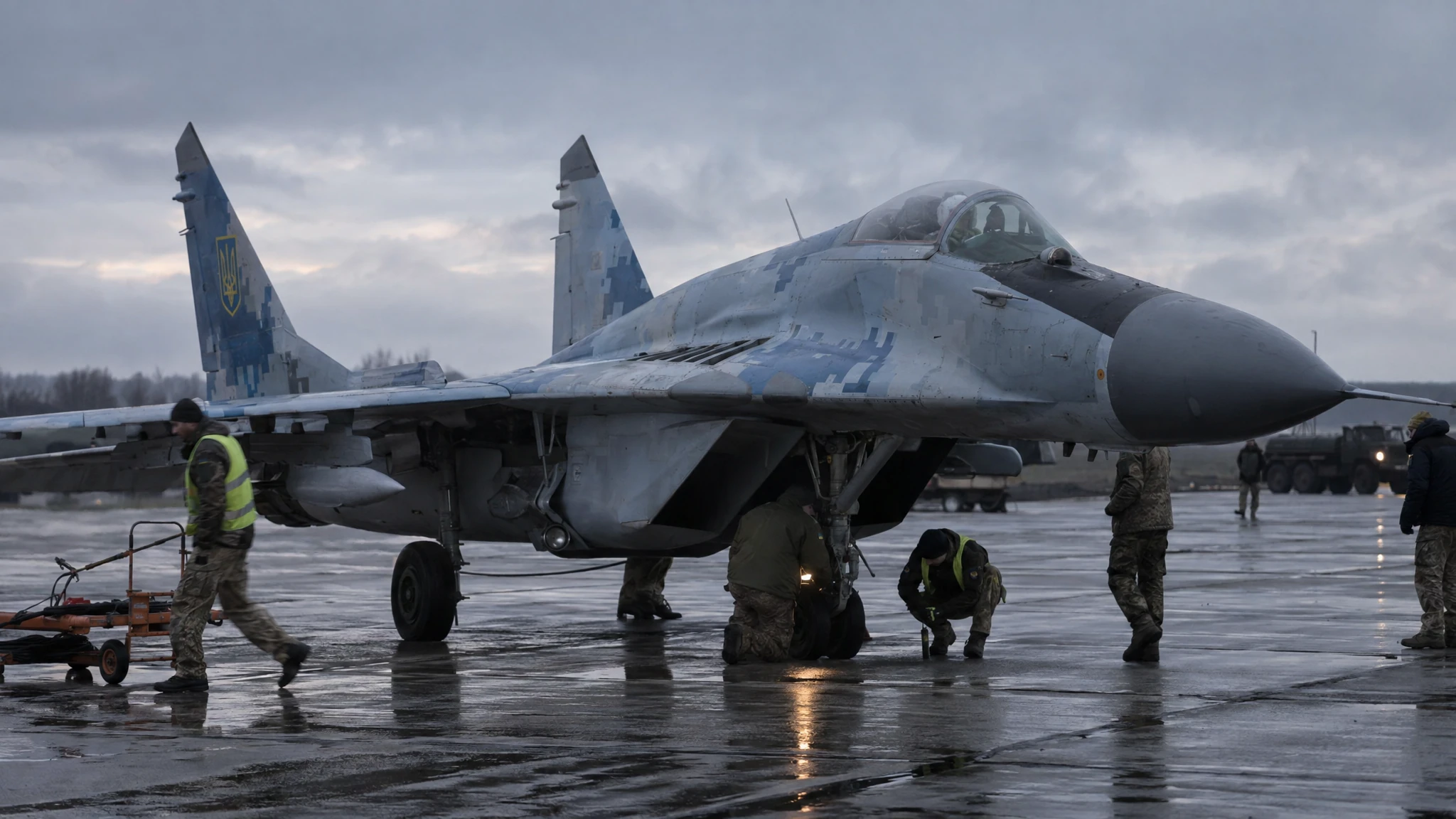
Ihnat said Ukraine had made very intensive use of fighter aircraft since Russia began operating the Geran-5 in August 2026, with pilots shooting down the drones directly. That response indicates that Ukraine is adapting its interception methods rather than relying on a single layer of ground-based defenses. It also reveals the pressure created when a new target does not fit neatly into existing engagement patterns.
Fighter aircraft can cover territory quickly and bring weapons to an engagement beyond the immediate reach of a fixed air-defense position. But using them to hunt drones has trade-offs. Aircraft and trained pilots are valuable assets; sorties require maintenance, fuel, coordination, and suitable conditions. A fighter committed to intercepting a drone cannot simultaneously perform another mission. The tactic may therefore be useful without being an unlimited substitute for surface-to-air systems.
Nor does a reported speed of 600 kilometres per hour mean that every engagement is a simple contest of maximum speed. Detection distance, flight path, weather, weapon availability, rules of engagement, and the location of friendly aircraft all influence whether an interception is feasible. The relevant question for Ukrainian planners is not simply whether a fighter can catch a Geran-5, but how to allocate aircraft and missiles across many simultaneous threats and broad areas of infrastructure.
Ukraine’s air defense has had to manage this allocation problem throughout the war. Russia has attacked with combinations of missiles and drones, while Ukraine has had to decide which threats merit its most capable interceptors. The arrival of a faster drone adds another category to that problem. If Geran-5 attacks occur alongside slower drones or other weapons, defenders may face a more complex task: identify which objects are most dangerous, preserve premium interceptors for targets that cannot be handled otherwise, and avoid leaving cities or critical facilities exposed.
From aircraft duels to long-range attrition
The evolution of the Geran series sits within a larger transformation in the air war since Russia’s full-scale invasion in 2022. Early expectations of sustained, decisive operations by crewed aircraft gave way to a more constrained contest. Air defenses on both sides made it dangerous for aircraft to operate freely over contested territory. As a result, the conflict increasingly relied on attacks launched from outside the most threatening defensive zones.
Russia’s use of glide bombs was one stage in that adjustment. By adding wings and navigation equipment to bombs, Russian forces could release them from a distance; the reported stand-off range reached around 70 kilometres. The aircraft carrying the bomb could remain farther from many defensive systems, while the weapon continued toward its target. This approach did not eliminate the risk to aircraft, but it changed how that risk was managed.
Long-range drones expanded the same logic. They can be launched in quantity, do not carry a pilot, and can be directed against targets well behind the front. Their utility lies partly in their ability to keep pressure on infrastructure and force a defender to maintain a wide-area response. A drone that is intercepted still may compel Ukraine to activate sensors, move units, and expend time and ammunition. The attacker can seek operational effects even when a particular aircraft fails to reach its intended target.
Russia’s earlier Geran-1 and Geran-2 systems, described as Russian-upgraded versions of Iran’s Shahed-136, relied on propeller-driven designs. Their relatively modest speed made them more manageable for many defenses, although their range and the ability to launch them in numbers still made them consequential. The Geran-2 has been reported to have a potential range of up to 2,500 kilometres. That figure should not be directly compared with the Geran-5’s stated 1,000 kilometres without accounting for different configurations, payloads, routes, and operating conditions.
The jet-powered branch of the family appears to prioritize a different balance. The Geran-3, deployed in 2025, was reported to reach around 330 kilometres per hour—faster than the roughly 185 kilometres per hour attributed to the Geran-2—but to have a shorter range of approximately 600 kilometres. Its ability to fly at higher altitudes was also described as reducing vulnerability to some defenses. The Geran-4 appeared later in 2025, with a reported maximum speed of about 500 kilometres per hour and a range near 850 kilometres.
According to the reporting on the Geran-5, its operational use began in August 2026. Its reported speed of around 600 kilometres per hour and range of up to 1,000 kilometres extend the trend toward faster jet propulsion without matching the longest reported reach of the propeller-driven Geran-2. This is not necessarily a linear upgrade in which every model is superior in every respect. It is better understood as a family of systems with different operating characteristics, giving Russia options for different missions and forcing Ukraine to account for multiple profiles.
Scale may matter as much as the airframe
Ukrainian military intelligence reports say Russia is prioritising production of the Geran-4 and Geran-5 to build stocks ahead of an autumn and winter campaign. That reported production focus is strategically significant, but it does not establish how many aircraft Russia can manufacture, how many are ready for use, or what share of the planned stock will actually be deployed. Those are crucial unknowns. A technically improved weapon changes the war most when its producer can deliver enough of it, reliably, over time.
Stockpiling would give Russia flexibility over timing and volume. It could use drones in concentrated attacks, combine newer jet-powered models with slower variants, or preserve some systems for periods when weather and seasonal demand place additional pressure on Ukrainian infrastructure. The source reporting does not confirm a particular target list or operational plan. The broader point is that a larger inventory can make the defender’s allocation problem harder even when the attacker’s weapons do not all penetrate.
For Ukraine, an autumn and winter buildup would intersect with a demanding defensive season. Energy infrastructure and other essential services have been prominent concerns in past campaigns, and cold-weather conditions can raise the consequences of disruption. But the appearance of the Geran-5 does not prove that a specific campaign will succeed. Outcomes will depend on warning time, dispersal and repair capacity, the number and mix of incoming weapons, and Ukraine’s ability to maintain functioning layers of defense.
The difference between production plans and battlefield effect deserves emphasis. A state may announce or pursue higher output yet encounter constraints in engines, electronics, skilled labor, machine tools, testing, or assembly. It may also face competing demands on the same industrial base. Ukrainian intelligence’s assessment of Russian priorities is an important indicator of intent, not a substitute for verified production data. Observers should look for evidence in repeated launch patterns, recovered hardware, production-site activity, and the rate at which new variants appear.
Foreign components expose the supply-chain contest
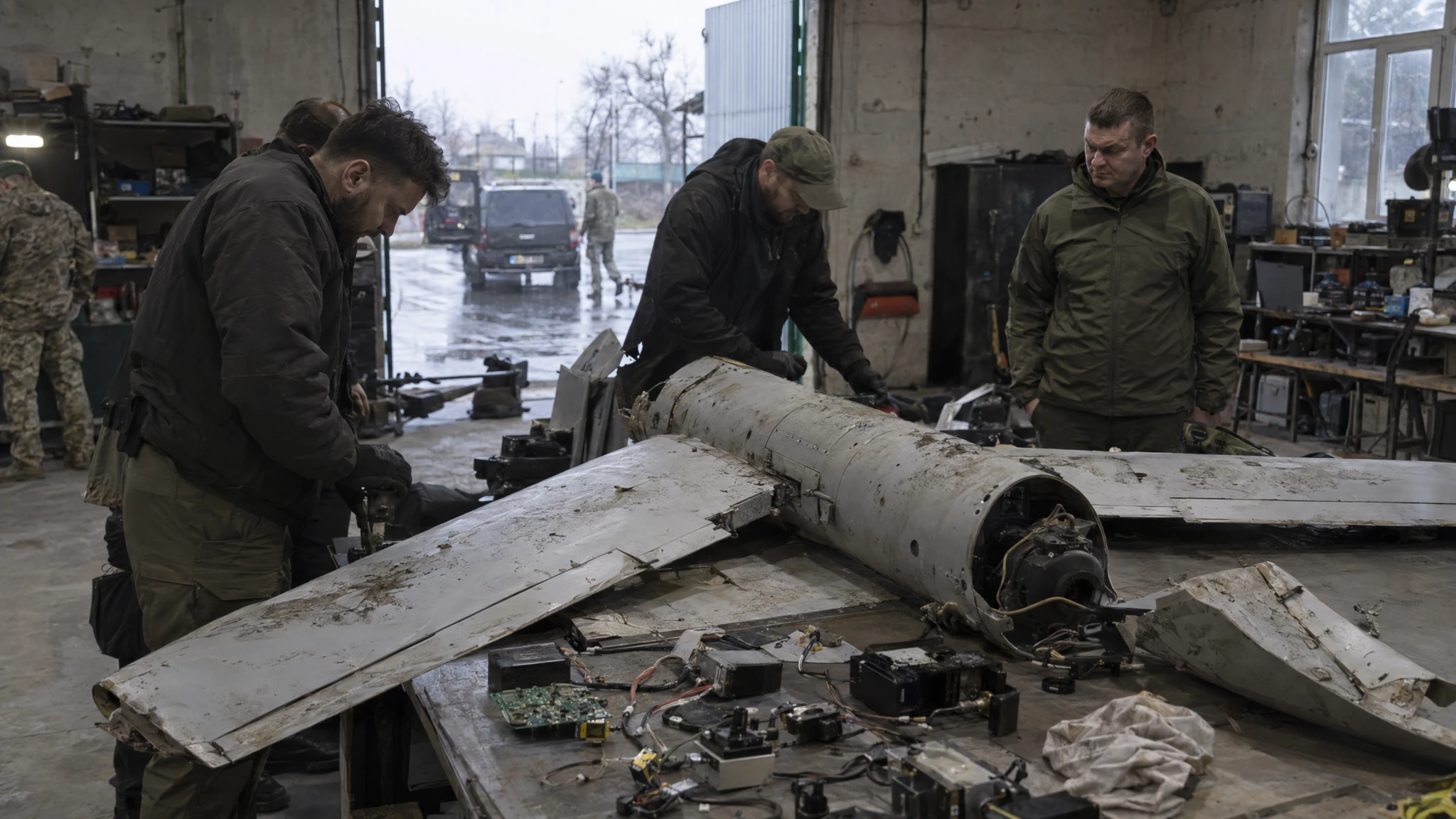
Ukraine’s military intelligence service has published information about components it says were identified in the Geran-5. The reported list includes a Chinese-supplied jet engine, digital processors manufactured in the United States, and transistors made in Germany. These findings, if accurate, underscore how a weapon assembled in Russia can incorporate technology and parts that originate in several countries.
That is not the same as proving that the governments of those countries knowingly supplied military equipment to Russia. Commercial components may move through distributors, intermediaries, or re-export markets before reaching an end user. The presence of a component made in a particular country does not, on its own, establish the route it took, who sold it, or whether export rules were violated. Those details require supply-chain investigation beyond the identification of a part in a recovered system.
Still, the reported components raise a serious enforcement question. Sanctions can restrict direct access to military goods while leaving vulnerabilities in trade networks for commercially available electronics and industrial products. Russia’s ability to acquire foreign-made components and assemble finished systems domestically suggests that controls must be assessed not only at the level of direct exports, but also across distribution, financing, re-export, and end-use monitoring.
The policy challenge is to close pathways without assuming that every commercially available component can be monitored perfectly. More effective enforcement generally depends on identifying specific high-risk parts, tracing distributors and intermediaries, sharing evidence among governments, and acting against entities that knowingly facilitate diversion. Overly broad restrictions can impose costs on legitimate commerce without necessarily stopping procurement. Narrow, evidence-led controls are more likely to focus pressure where it can disrupt military supply chains.
There is also a design implication. If Russia can substitute components when particular items become harder to obtain, sanctions pressure may raise costs and slow production rather than halt it. If a component is unusually difficult to replace, tighter controls could have a greater effect. Public information about the Geran-5’s parts is therefore useful, but its strategic meaning depends on whether those components are standard, replaceable, or production bottlenecks. The available reporting does not settle that question.
Patriot missiles and the scarcity of premium defenses
The reported Geran-5 challenge comes as Ukraine is said to be running low on Western-supplied Patriot missiles. The source reporting describes Patriot as the only truly effective means of shooting down the new drone, but that characterization should be treated cautiously. Ihnat’s account also describes fighter aircraft engaging the Geran-5. The broader point is not that only one defensive option exists, but that Ukraine may lack sufficient weapons that can reliably engage the most demanding targets at scale.
Patriot interceptors are high-value resources designed for difficult aerial threats. Using them against drones can be operationally justified when the target is dangerous and alternatives are inadequate; it can also create a sustainability problem if the incoming weapons are produced more cheaply or in greater numbers. Ukraine’s planners must weigh the risk of allowing a drone through against the opportunity cost of spending an interceptor that may be needed for a missile or a more urgent threat.
In August, Ukraine’s deputy head of military intelligence, Major General Vadym Skibitskyi, said the country needed interceptor missiles with enough speed to meet the latest jet-powered Gerans. His remarks point to a capability gap that cannot necessarily be filled by simply increasing the number of existing systems. The speed, altitude, and flight profile of a target influence which interceptors can engage it, how much warning is needed, and whether a system can cover the relevant area.
There is no single solution to this problem. A resilient defense would combine early detection, command systems that can distribute target information quickly, aircraft where appropriate, and several classes of ground-based interceptors. It would also include passive measures: protecting or dispersing vulnerable equipment, improving repair capacity, and making critical systems harder to disable with a limited number of strikes. Such measures cannot prevent every attack, but they can reduce the consequences of successful penetrations.
For Ukraine’s partners, the issue is therefore broader than supplying one particular missile. Assistance can include replenishing interceptors, supporting maintenance and training, improving radar coverage, and helping Ukraine develop or acquire lower-cost options for less demanding targets. Any new interceptor still has to be tested, integrated, produced, and supplied in meaningful quantities. A promised capability offers little immediate relief if production timelines do not match the threat’s deployment.
What the Geran-5 does—and does not—show
The Geran-5 is evidence of an evolving Russian effort to adapt attack drones to a more contested air environment. It is not, on the information currently reported, proof that Ukraine’s air-defense network has been overcome. The cited 60 per cent interception rate indicates a significant difference from the rate reported for other drone variants, but it does not tell us whether the drone is consistently reaching high-value targets or whether Ukrainian defenses will improve with experience.
Claims about machine vision add another layer of uncertainty. Russian military expert Yuri Knutov has said the system uses machine vision linked to a digital map of terrain, enabling it to identify and select targets autonomously. That is a claim attributed to a Russian commentator, not independent confirmation of the system’s actual capabilities in combat. If the technology is present and effective, it could make the drone less dependent on uninterrupted external guidance. But claims of autonomy should be evaluated against recovered hardware, observed behavior, and technical evidence—not accepted as fact solely because they appear in public commentary.
Even limited onboard autonomy could matter if it helps a drone navigate through disrupted communications or distinguish among features on the ground. Yet autonomous target selection is not synonymous with reliable precision. The effectiveness of such a system would depend on the quality of its sensors and maps, its ability to function in changing conditions, and the rules embedded in its software. The public reporting provided does not establish how these elements perform under Ukrainian electronic warfare or battlefield conditions.
These distinctions matter because wartime accounts often mix confirmed observations, intelligence assessments, manufacturer or government claims, and expert speculation. The Geran-5’s reported speed, range, and composition are important indicators, but they should be tracked with attention to their source and confidence. A sound assessment separates what Ukrainian officials have said about interception rates from specifications attributed to Russian sources and from comments about possible onboard autonomy.
A broader framework for judging the threat
Research and analysis by organizations such as RUSI, RAND, CSIS, IISS, the Atlantic Council, and the Institute for the Study of War have examined wider issues relevant to this contest, including air-defense capacity, military adaptation, industrial production, and the strategic use of drones. Those bodies of work provide useful frameworks for asking how a new system might affect the balance. They should not, however, be read as independent confirmation of the Geran-5’s reported performance figures unless a specific assessment says so.
Three measures will be especially revealing in the months ahead. First, the frequency and scale of Geran-5 launches will show whether Russia can turn a new design into a recurring operational capability. Second, the performance of Ukraine’s defenses should be assessed across more than a single interception percentage: analysts will need to consider the number of drones launched, losses to technical failure, target damage, and the resources used in each engagement. Third, evidence about component sourcing and production will help determine whether Russia can sustain the new variant or whether it remains constrained by supply and manufacturing bottlenecks.
Those measures should be considered together. A high interception rate may still come at a strategic cost if it requires large quantities of scarce munitions. A lower rate may not translate into major damage if drones fail, miss, or strike less consequential targets. And a technically capable aircraft may have limited influence if Russia cannot build enough of them. The operational picture is therefore a balance of effectiveness, scale, and the price each side pays to continue the exchange.
Three paths through the coming campaign
One plausible outcome is that the Geran-5 remains a limited but disruptive addition to Russia’s arsenal. In that case, its principal value may be to force Ukraine to adapt, draw on fighter aircraft, and reserve its most capable ground-based defenses for particular threats. The drone would raise the complexity of defense without displacing older models or fundamentally changing the character of the air campaign.
A second possibility is that Russia builds sufficient stocks to use the Geran-4 and Geran-5 in larger, coordinated attacks. Mixed formations could complicate target prioritization by presenting defenders with different speeds, altitudes, and likely engagement requirements. That would not guarantee penetration, but it could increase the demands on sensors, command networks, and available interceptors. The size of any effect would depend on whether Russia can sustain the tempo and whether Ukraine can distribute its defenses effectively.
A third path is that Ukrainian adaptation reduces the Geran-5’s early advantage. Better recognition of its flight profile, revised tactics, additional interceptor options, and more efficient use of aircraft could improve engagement outcomes. New systems take time to understand, and an initially low interception rate does not have to remain fixed. The same is true in reverse: Russia may modify routes, tactics, or the drone itself in response to Ukrainian countermeasures.
These scenarios are not mutually exclusive. A system can be disruptive, prompt adaptation, and still retain a useful role for its operator. The conflict is an iterative contest in which each side learns from the other’s choices. The relevant measure of success is not whether one side has found a permanent technical answer, but whether it can keep its defenses and production arrangements functioning as the adversary changes tactics.
What governments should watch and do
For Kyiv and its partners, the immediate priority is to match the response to the threat rather than treat every drone as a target for the most expensive available interceptor. That requires reliable threat identification, rapid information-sharing, and a layered system able to reserve premium weapons for engagements where cheaper or more flexible options are inadequate. Fighter aircraft can be part of that system, but their use should be balanced against other operational demands and the risks to aircraft and crews.
Partners should also focus on the industrial timeline. Ukraine needs not only commitments of advanced systems but dependable deliveries of missiles, replacement parts, and maintenance support. If a faster drone creates a requirement for a different class of interceptor, decisions about research, procurement, and integration cannot wait for a complete understanding of every technical detail. At the same time, procurement should be guided by evidence about the threat rather than claims that have not been independently tested.
On the sanctions front, governments should treat the reported US-made processors, German transistors, and Chinese-supplied engine as leads for investigation, not as a complete map of the supply chain. Tracing how components reach Russian manufacturers can identify intermediaries and clarify where enforcement might have the greatest effect. Coordination among exporting states matters because restrictions in one market can be undermined if procurement simply shifts to another route.
Finally, Ukrainian defense planning should account for the possibility that Russia will continue to diversify its unmanned systems. The Geran-5 may be one part of a broader mix rather than a replacement for older drones. Planning for a single profile risks leaving gaps when the attacker combines different aircraft, launch volumes, and tactics. Resilience—through layered interception, protected infrastructure, repair capacity, and careful management of scarce munitions—will matter as much as the performance of any one weapon.
The real contest is endurance
The Geran-5’s significance lies in the pressure it may place on Ukraine’s defensive choices. Faster flight and a reported range of up to 1,000 kilometres could compress response times and broaden the area at risk. Ukraine’s reported reliance on fighter aircraft and its lower cited interception rate suggest that the new variant is harder to handle than its predecessors. Russia’s reported effort to expand Geran-4 and Geran-5 stocks gives the issue added urgency ahead of autumn and winter.
But specifications do not decide an air campaign by themselves. Production, component access, targeting reliability, Ukrainian adaptation, and the supply of interceptors will determine whether the drone’s advantages translate into lasting effects. The reported foreign components also show why the conflict’s industrial dimension extends well beyond Russia and Ukraine, even where the precise routes of procurement remain unclear.
The challenge for Ukraine is to defend more effectively without exhausting weapons and aircraft that are difficult to replace. For its partners, it is to provide sustained support while improving the enforcement of controls that limit Russia’s access to critical technology. For analysts, it is to distinguish verified battlefield outcomes from claims and projections. The Geran-5 raises the cost and complexity of defense; whether it changes the strategic balance will be decided by which side adapts—and sustains that adaptation—more effectively.


Reader discussion
No comments yet. Start the discussion.
Comments are closed for this article.