
For some Russian soldiers captured near Lyman, the first dependable meal in weeks came after they had surrendered to Ukrainian forces. Their accounts describe a front-line experience marked not by a decisive battlefield maneuver but by shortages of water, food and medical care. They also raise a difficult question: what does the treatment of enemy prisoners reveal about the competing military systems on either side of the line?
In an interview published by NV on Oct. 5, Marharyta Burkovska, head of the 3rd Army Corps medical press service, and medical personnel described Russian captives arriving exhausted, dehydrated and carrying injuries that had gone untreated for days or weeks. The accounts are testimony from prisoners and Ukrainian caregivers, not an independently verified survey of Russian units. Even with that limitation, their detail offers a useful view of how deprivation, morale, recruitment and battlefield medicine intersect in the war around Lyman.
The central finding is not that every Russian formation is supplied in the same way, or that every captive’s account can be taken at face value. It is that the cases described by the corps point to a consequential gap between the demands placed on some Russian troops and the support they say they received. Ukraine’s medical response, meanwhile, serves several purposes at once: it is a professional duty, a legal obligation, a source of intelligence about enemy conditions and part of a prisoner-exchange process that matters to families and governments on both sides.
What the Lyman accounts show—and what they cannot
Burkovska told NV that the 3rd Army Corps had captured roughly 250 Russian soldiers and commissioned officers during three seasonal phases of Operation Vivaldi. The corps said the operation liberated 176 square kilometers in northern Donetsk Oblast and that its fighters killed or wounded more than 5,000 Russian troops. These are figures reported by the Ukrainian formation; the interview did not provide independent verification of them.
Burkovska attributed the prisoner count to Ukrainian assault teams striking fortified positions and to weak morale among some Russian infantry. She described one disoriented soldier who found an abandoned drainage pipe and crawled inside, apparently waiting for a chance to surrender without being shot. The image is striking, but its wider significance lies in the choice it represents: for a soldier who believes his position is untenable, capture may appear less dangerous than remaining with his unit.
That calculation should not be confused with a reliable measure of morale across the Russian army. Prisoners are a selected group: they have survived, been captured and chosen, or been compelled, to give an account while under Ukrainian control. Their statements may be shaped by fear, exhaustion, self-justification or a desire to improve their treatment. The medical observations are more directly assessable than explanations of motivation, but even clinical findings from one corps cannot establish conditions across an entire front.
Those caveats do not make the accounts unimportant. They define how to use them. In military analysis, testimony from prisoners is most informative when it is treated as a set of specific claims to compare with other evidence—not as a complete portrait of an opposing force. The conditions described by the Ukrainian doctors can illuminate possible failures in supply and casualty evacuation, while the prisoners’ stories about command decisions and enlistment require additional corroboration.
Water, rations and the cost of holding a position
One of the captives identified in the interview was Russian Captain 3rd Rank Aleksandr Manankov, captured near Lyman. He said his forward detachment had almost no rations or potable water and lacked basic dressings for wounded personnel. According to the account, troops drank rainwater from muddy puddles and, in extremis, their own urine to stave off dehydration. Another prisoner recalled a fellow soldier dying from dehydration. One captive said that after six weeks on the line, his first proper meal came in captivity.
These statements describe more than hunger. A force can sometimes tolerate short periods of reduced food, but water shortages rapidly affect judgment, physical endurance and the ability to fight. When injuries cannot be dressed and evacuated, the consequences compound: a wound that might be survivable with timely care can become disabling or fatal. A unit cut off from supplies is therefore not merely uncomfortable. Its ability to hold ground, communicate and respond to an assault may deteriorate with each passing day.
A 24-year-old Russian officer treated by the 4th Separate Medical Battalion had been trapped in a trench for two weeks with an untreated open leg wound. A company commander in the battalion, identified by the callsign Tourist, said the men had been assigned to the position for a six-month period and received water and canned meat only once during that stretch. The officer reportedly wrote that his platoon had no combat medic and that requests for rotation or resupply were answered with a single instruction: wait.
When Ukrainian assault forces entered the trench system, the soldiers surrendered. Doctors found a severe infection in the officer’s lower right leg, multiple fragment injuries, burns to his face and ruptures in both eardrums. The blast injuries had left him unable to hear, so he and the medical staff communicated by writing notes. Tourist said the infection and surrounding injuries might have killed him within days had he remained in the dugout.
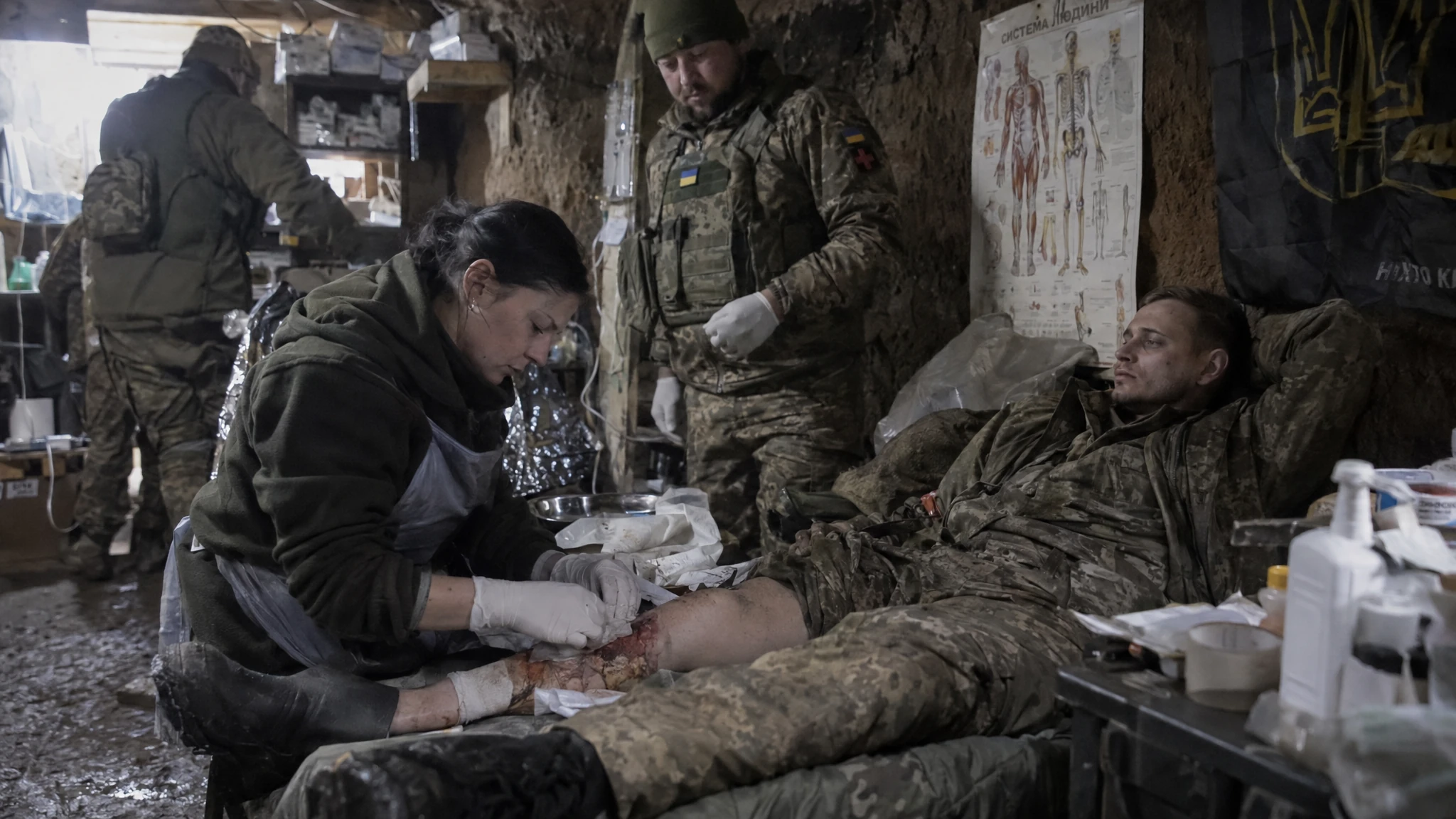
The episode suggests a familiar but strategically important problem in static warfare: positions that are tactically valuable can become liabilities if commanders cannot sustain the troops ordered to occupy them. A trench protects against some threats, yet it can also isolate a unit from resupply and evacuation. If the line is held at any price, the result may be a garrison that remains physically present but loses the capacity to fight effectively.
That is a plausible interpretation of the testimony, not proof that Russian command deliberately abandoned these particular men. The accounts do not establish why deliveries failed, whether routes were interdicted, whether local commanders made decisions that prevented movement, or whether the conditions were typical. Those distinctions matter. Combat logistics fail for many reasons, including enemy action, poor planning, strained transport networks and command choices. The immediate consequence for the soldiers can be the same even when the cause differs.
Medical examination as evidence of attrition
According to the 3rd Army Corps, nearly 90 percent of the newly captured Russian personnel had undergone clinical screening by the time of the NV interview. Medical staff said many arrived with severe fatigue, dehydration and neglected shrapnel or blast injuries, often affecting their limbs. The doctors also reported chronic conditions they associated with prolonged damp exposure, inadequate sanitation and poor personal hygiene in earthen positions.
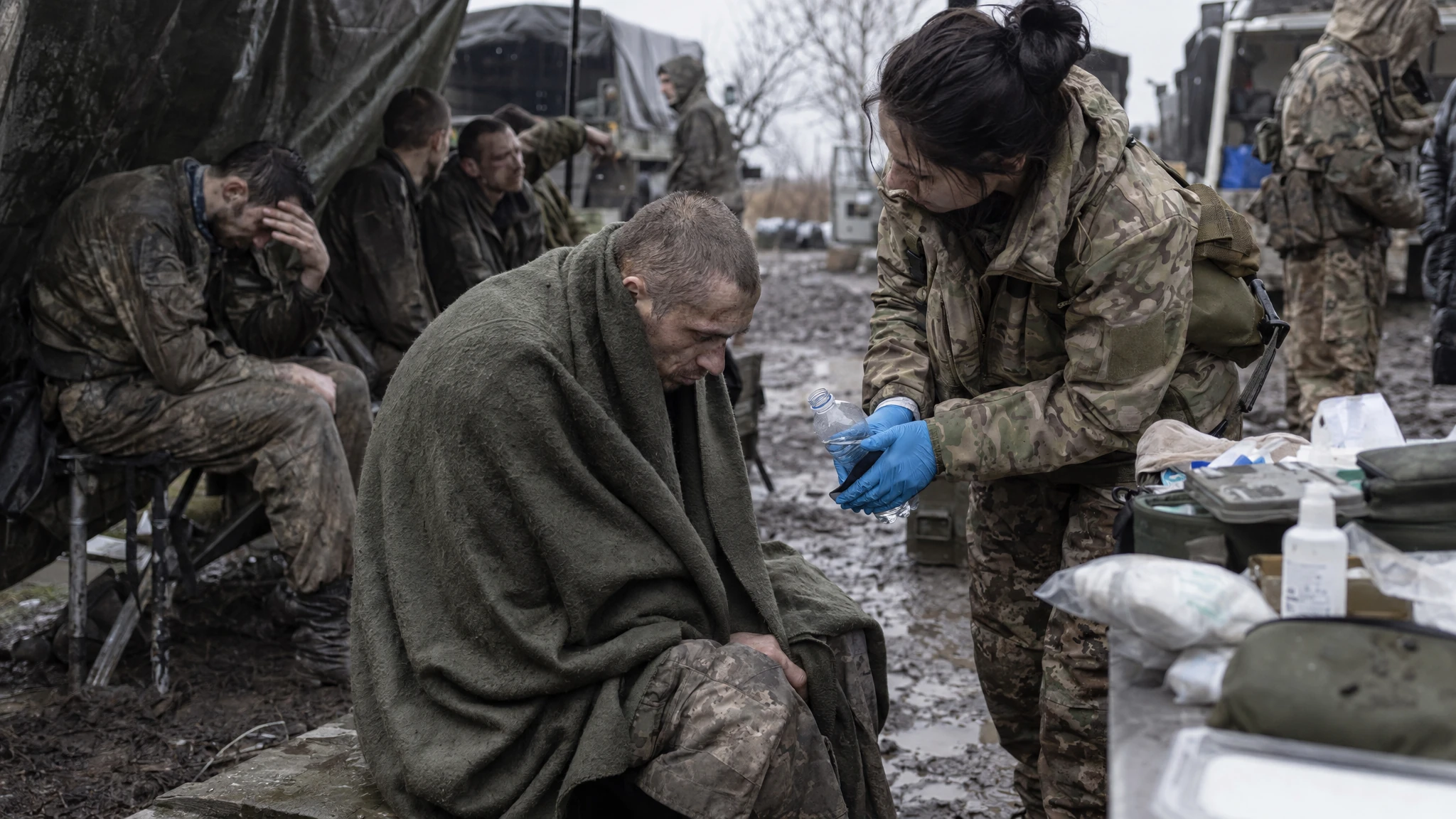
Tourist described captives as markedly underweight and said some appeared far older than their documents indicated. He cited arthritis, sciatica and serious joint degeneration among the conditions doctors encountered, including a soldier who looked elderly but was only 35. The interview also reported that the 3rd Army Corps doctors saw little evidence of careful health screening or extensive combat preparation among many of the prisoners they treated.
Clinical observations can reveal the accumulated effects of service, but they should not be treated as a population study. The prisoners reaching a medical station after capture are not a random sample of Russian personnel. Wounded, isolated or exhausted soldiers may be more likely to surrender and more likely to require examination than those who remain with functioning units. A responsible assessment would compare these reports with medical data from other captured groups, battlefield documentation, Russian recruitment records and evidence from independent monitors.
Still, the pattern described by the doctors has operational relevance. Chronic illness and poor conditioning reduce the margin a soldier has to withstand cold, limited sleep, heavy equipment and irregular food. A force can add personnel through recruitment and mobilization, but headcount alone does not measure combat power. Training, health, unit cohesion, competent leadership and the ability to keep people supplied all shape how much fighting capacity those personnel can deliver.
That distinction is central to understanding attrition. Losses are not only the people killed or wounded. They also include troops who are present on paper but ineffective, units weakened by preventable illness, and commanders forced to commit reserves to sustain positions that have become difficult to support. The Lyman accounts do not quantify any of those effects across the Russian military. They do offer individual examples of how neglect, if repeated, can turn manpower into a deteriorating resource.
Why these soldiers say they enlisted
The prisoners’ explanations for joining the war were mostly practical, according to the Ukrainian medical personnel interviewed. Some said they sought higher pay or enlistment bonuses; others claimed they had not expected to enter actual combat. Some reportedly signed contracts to avoid prison sentences. An orthopedic trauma surgeon identified as Luer also treated a resident of occupied Mariupol who said occupation authorities had forcibly conscripted him into Russian service.
Tourist said he had not encountered a prisoner who convincingly described fighting to “liberate” Ukraine or invoked the Kremlin’s stated rationale of “denazification.” That observation is relevant as an account of the particular captives he had met, but it cannot establish that Russian troops as a whole lack ideological commitment. Nor does a prisoner’s stated motive necessarily capture every reason he enlisted. Pay, coercion, social pressure, political belief and limited alternatives can coexist.
Burkovska offered a separate caution: prisoners did not display overt hostility during intake, and some understood Ukrainian, but captivity leaves people unusually vulnerable. A captive may be polite, grateful or guarded because his immediate safety depends on the people treating him. Such behavior cannot, by itself, show what he believes or how he will speak once returned to Russian custody.
This distinction matters in an information war. Luer expected some exchanged prisoners to repeat Russian state narratives about their treatment after returning home, even if they had thanked Ukrainian doctors while in captivity. That possibility does not make their expressions of gratitude insincere; it shows why public statements made under different conditions should be interpreted carefully. A soldier’s words in a medical ward, a formal interview and a state-controlled broadcast may reflect different pressures and incentives.
Recruitment motives also help explain the varied experiences of individuals sent to fight alongside the Kremlin’s public narrative. A state can present war as a national mission while filling units through financial inducements, legal pressure or coercion in occupied territory. The available accounts do not measure the relative weight of these mechanisms. They do show why simplistic descriptions of the Russian rank and file—as either uniformly committed or uniformly unwilling—are analytically weak.
Care for an enemy is a military obligation
Ukrainian doctors described a disciplined separation between the task of treating a patient and the question of what that person may have done in combat. Burkovska said caring for wounded enemy personnel was a conscious professional choice, even when it was emotionally difficult. Luer said he tried to avoid speculation about individual prisoners because it could impair his clinical focus. Tourist framed the standard as complete and qualified treatment, including sterile equipment, appropriate medicines and effective pain management.
That approach is consistent with the basic principle that wounded people who fall into an adversary’s hands must receive care without discrimination based on which side they served. In armed conflict, medical neutrality and humane treatment are not optional public-relations gestures. They are part of the legal and professional framework that protects the wounded and medical personnel. The facts of any particular case should be assessed against applicable law, but the core obligation to care for wounded combatants does not depend on whether the patient is popular, cooperative or politically sympathetic.
The practical demands are substantial. Medical teams must stabilize serious injuries, prevent infection, relieve pain, document conditions and manage the security requirements of treating prisoners. The case of the young officer with ruptured eardrums and an infected open wound illustrates how care may require improvisation—in this instance, written communication—as well as time and scarce resources. Treating an enemy soldier is not simply an ethical statement; it is an operational task performed under the pressures of a war zone.
Burkovska also linked the treatment of captives to the prospect of bringing Ukrainian prisoners home. Luer described each Russian soldier stabilized and transferred into the exchange process as a potential counterpart for a Ukrainian captive. That captures a real strategic and humanitarian incentive, but it should not be read as a guaranteed one-for-one arrangement. Prisoner exchanges are negotiated processes. The number, timing and terms depend on decisions by the parties, not on an automatic formula attached to each capture.
The exchange dimension nevertheless gives battlefield capture a value beyond immediate tactical gains. A prisoner can provide information, become part of negotiations and offer evidence about conditions on the front. At the same time, the state holding a captive assumes responsibilities for his safety and treatment. A policy that combines lawful care with careful documentation protects prisoners, supports the credibility of Ukraine’s conduct and may strengthen diplomatic efforts to secure the release of Ukrainians held by Russia.
Evidence, credibility and the information contest
The interview comes from NV, drawing on statements by Burkovska and members of the 3rd Army Corps medical service. That is a clear source trail, but it is not the same as independent confirmation of every battlefield claim. The corps is a participant in the fighting and has an interest in communicating its operational record. The captives, meanwhile, are speaking while in the custody of the opposing side. Readers should therefore distinguish between what the interview documents directly—such as the medical staff’s reported examinations—and what prisoners recount about events inside Russian units.
Independent analysis can help situate such testimony without pretending to verify details it has not examined. The Institute for the Study of War, the Royal United Services Institute, RAND, the Center for Strategic and International Studies, the International Institute for Strategic Studies and the Atlantic Council have all produced work on military operations, force generation, logistics, attrition or the broader conduct of the war. Their research offers frameworks for assessing how supply, manpower and command decisions affect combat effectiveness. It should not be cited as confirmation of these particular prisoner accounts unless a specific report independently addresses them.
That standard of attribution is especially important in a conflict where both sides seek to shape international opinion. Claims of mistreatment can be weaponized; so can carefully staged examples of humane conduct. The answer is not to dismiss testimony, nor to accept it uncritically, but to preserve the chain of evidence: identify who made each claim, describe what was directly observed, note what remains unverified and seek corroboration where possible.
Medical records, photographs taken with appropriate safeguards, consistent accounts from multiple captives and independent inspections can strengthen the evidentiary picture. Any documentation must also protect the privacy and dignity of prisoners. Publishing identifiable images or details without careful consideration can endanger people or turn medical care into spectacle. Transparency is valuable, but it should not displace the patient’s rights or the confidentiality required for sound medical practice.
Strategic implications beyond the trench
The accounts matter because they connect whether a unit can be supplied, whether its soldiers can remain in place, and whether its wounded can be evacuated—three questions that are often examined separately. A breakdown in one area may worsen the others. An isolated unit with inadequate water is less capable of defending itself; a shortage of medics makes injuries more costly; failed rotations erode trust that commanders will protect their troops. The testimony does not prove a systemic Russian failure, but it gives planners a set of warning signs to test against other evidence.
For Ukraine, capturing rather than killing an isolated opponent can produce several effects. It removes a combatant from the immediate fight, generates a potential exchange case and gives Ukrainian authorities a chance to gather information lawfully through established channels. It may also influence enemy calculations if soldiers believe surrender offers a better chance of survival than remaining in an unsupported position. But the effect should not be overstated: a few accounts cannot demonstrate that Russian units broadly intend to surrender, and the prospect of capture is only one factor in combat behavior.
For Russian commanders, persistent failures to rotate or supply forward elements could undermine the very purpose of holding ground. A position is useful only if its defenders can continue to function. Replacing exhausted troops with new recruits may maintain nominal strength while leaving the force vulnerable to disorganization and avoidable losses. If the accounts reflect a broader pattern, the challenge would be not just acquiring more personnel but building the logistics and medical systems that keep them capable of fighting.
For foreign governments supporting Ukraine, the cases reinforce the value of assistance that improves battlefield medical care, evacuation and documentation, as well as the weapons and ammunition more commonly associated with front-line resilience. Medical capacity is not separate from combat power: prompt treatment can save lives, return some personnel to duty and preserve the professional standards that distinguish a disciplined force. Support for prisoner exchanges and monitoring mechanisms also remains relevant, though negotiations themselves are politically sensitive and cannot be reduced to battlefield arithmetic.
For humanitarian organizations and legal observers, the central task is to assess treatment through verifiable evidence and consistent standards. The fact that Ukrainian doctors report treating Russian captives humanely is significant, but it does not settle every question about conditions in detention or the treatment of Ukrainian prisoners in Russian hands. Each allegation requires its own examination. Reciprocity should be a hope and a diplomatic objective, not the condition on which humane treatment depends.
Three possibilities for the months ahead
The first possibility is that the Lyman cases remain localized. In this scenario, the deprivation described resulted from a particular unit’s isolation, disrupted supply routes or command failures that do not characterize Russian forces more broadly. Additional reporting from other sectors would show a more varied picture, with some units supplied and rotated more effectively. The testimony would still reveal the extreme consequences of local breakdown, but it would not support a theater-wide judgment.
A second possibility is that similar conditions recur in other sectors as Russian forces sustain long-duration positions with uneven logistics and personnel quality. If more captured soldiers present with untreated injuries, dehydration and accounts of missed rotations, analysts would have stronger grounds to investigate a wider pattern. The important indicators would be corroboration across formations, consistent medical findings, evidence about delivery frequency and records showing whether requests for evacuation or relief were denied.
A third possibility is that pressure on both armies makes medical and prisoner systems increasingly central to the war’s political dimension. More casualties and captives could intensify demands for exchanges, increase the value of reliable documentation and put greater strain on field hospitals. Under those conditions, the side that can sustain care, maintain records and demonstrate compliance with legal standards may gain diplomatic credibility even where battlefield outcomes remain uncertain.
These are analytical scenarios, not predictions. To distinguish among them, observers should track the quality of corroboration rather than the emotional force of any single account. Useful questions include whether the same supply failures appear across units; how often captives report being unable to reach medical help; whether clinical assessments show repeated patterns; and whether independent monitoring confirms conditions after capture.
A measure of military discipline
The most consequential detail in the NV account may be the contrast between what the Russian prisoners said they endured before capture and the care they reportedly received afterward. That contrast is not a complete verdict on either military. It is a set of cases presented by Ukrainian personnel, with the evidentiary limits that follow from wartime testimony. But it highlights a basic measure of military effectiveness: a force must be able to sustain its people, treat the wounded and retain enough trust for soldiers to believe that command will not simply leave them in place.
Ukraine’s doctors describe humane treatment as both professional duty and strategic responsibility. Those purposes are compatible. Care for a wounded captive protects the individual, upholds legal standards and supports the possibility of future exchanges. It also strengthens the credibility of a military that says it is defending a rules-based order. None of those benefits makes a prisoner’s account automatically true, or guarantees reciprocal treatment for Ukrainian captives.
The wider lesson from Lyman is therefore narrower—and more useful—than a sweeping claim about an entire army. In the cases described, a position became a trap when water, food, medical care and rotation failed to reach the people holding it. The prisoners’ choices, the injuries documented by Ukrainian clinicians and the care they received after surrender offer evidence of how logistics and discipline shape human outcomes at the front. Whether that experience is isolated or symptomatic will depend on corroboration from beyond these first accounts.


Reader discussion
No comments yet. Start the discussion.