
The Exospheric Escalation: Moscow's New Strategic Frontier
Since the beginning of the decade, the primary domains of great-power conflict have been violently contested on the plains of Eastern Europe, the shipping lanes of the Black Sea, and the shadowy depths of cyberspace. Yet, as the war in Ukraine grinds through its fifth year in April 2026, the most alarming geopolitical escalation is occurring silently, 300 miles above the Earth's surface.
According to recent assessments by Western defense intelligence and aerospace monitors, the Russian Federation has crossed a long-feared threshold: the active deployment and testing of advanced anti-satellite (ASAT) technologies, including the suspected orbital placement of components for a space-based nuclear weapon. This development, which first sparked a classified intelligence panic in Washington in early 2024, has now matured from theoretical engineering into a tangible architectural threat in Low Earth Orbit (LEO).
As Western C4ISR (Command, Control, Communications, Computers, Intelligence, Surveillance, and Reconnaissance) networks continue to grant Ukrainian forces a decisive terrestrial edge, Moscow has recognized its inability to establish conventional space dominance. In response, the Kremlin is retreating to a familiar doctrine: asymmetric, catastrophic deterrence. By holding the world's critical orbital infrastructure hostage, Vladimir Putin is attempting to rewrite the fundamental rules of modern warfare and diplomatic leverage.
The Anatomy of Orbital Annihilation
To understand the gravity of Russia's new orbital architecture, one must distinguish between traditional kinetic kill vehicles and the devastating potential of a high-altitude nuclear detonation. For decades, powers like the United States, China, India, and Russia have tested direct-ascent ASAT missiles—ground-launched rockets designed to physically ram a target satellite. While disruptive, these weapons are highly specific and create localized clouds of hazardous space debris.
The current Russian capability tracked by the Pentagon represents a paradigm shift. Analysts at the Center for Strategic and International Studies (CSIS) note that Moscow's "Project K" (as it is colloquially referenced in defense circles) is not designed to shoot down a single American spy satellite. Instead, it is designed to unleash a massive electromagnetic pulse (EMP) and a wave of ionizing radiation across a vast swath of LEO.
"A nuclear detonation in space does not create a fireball or a blast wave like it does on Earth. In the vacuum of space, the energy is released as an intense burst of gamma rays, X-rays, and an electromagnetic pulse that can instantly fry the delicate microelectronics of unshielded satellites hundreds of miles away." — CSIS Space Threat Assessment Report
The physics of such a weapon are uncompromising. A single low-yield nuclear detonation in the right orbital plane would artificially pump the Earth's Van Allen radiation belts with highly charged particles.
Within weeks, the accumulated radiation dose would degrade the solar panels and onboard computers of thousands of commercial and military satellites, rendering them inert. The resulting "dead zone" could persist for months, effectively blinding early-warning missile systems, severing global communications, and degrading the precise GPS signals upon which modern economies and militaries rely.
The Starfish Prime Precedent
History offers a chilling preview of this scenario. In 1962, the United States conducted the Starfish Prime test, detonating a 1.4-megaton warhead 250 miles above the Pacific Ocean. The EMP knocked out streetlights in Hawaii and crippled one-third of all satellites in orbit at the time, including those that were safely over the horizon from the blast.
Today, there are nearly 10,000 active satellites in orbit—the vast majority belonging to Western commercial entities like SpaceX's Starlink, which has been instrumental in providing resilient communications to Ukrainian forces. The deployment of a Russian orbital device capable of replicating the Starfish Prime effect is a direct assault on the economic and military nervous system of the 21st century.
The Strategic Deficit: Why Moscow Needs a Space Weapon
The Kremlin's decision to risk international condemnation by violating the spirit—if not the exact letter, prior to detonation—of the 1967 Outer Space Treaty is born of profound strategic desperation. The war in Ukraine has ruthlessly exposed the limitations of Russia's conventional aerospace capabilities. While Moscow's GLONASS navigation network has suffered from degradation and Western electronic warfare, NATO's intelligence-sharing apparatus has provided Kyiv with near-real-time transparency over Russian troop movements, logistics hubs, and naval deployments.
- Intelligence Asymmetry: Commercial synthetic aperture radar (SAR) satellites provided by Western companies can see through cloud cover and darkness, denying Russian forces the element of surprise.
- Communications Resilience: Proliferated LEO constellations, consisting of thousands of small satellites, have proven immune to localized Russian jamming efforts.
- Precision Targeting: The integration of satellite intelligence with long-range strike platforms (such as ATACMS and Storm Shadow missiles) has forced the Russian Black Sea Fleet to abandon Crimea and pushed logistics nodes deep into the Russian interior.
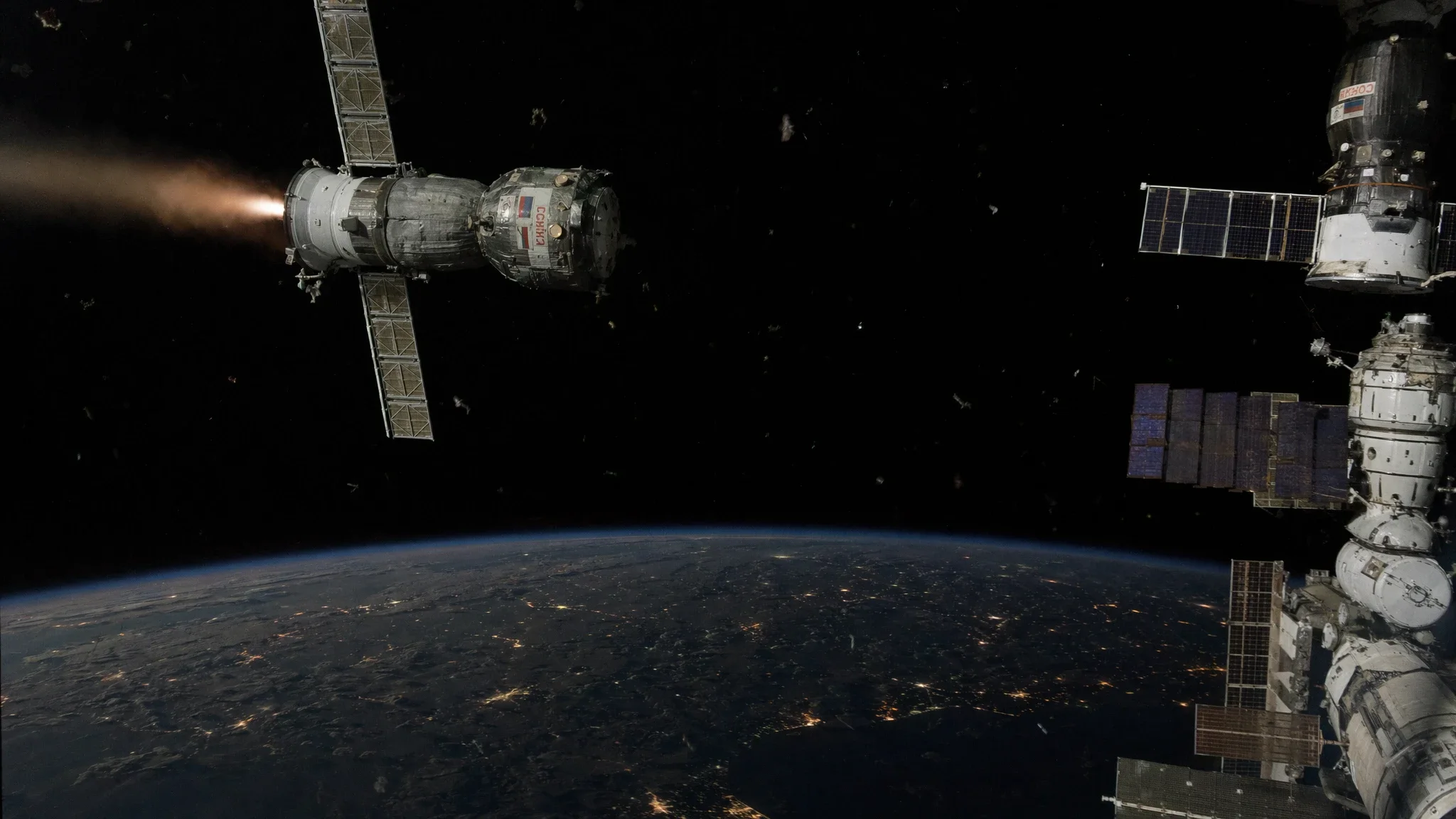
Defense analysts at the RAND Corporation argue that Moscow views Western commercial space assets as legitimate military targets that are unfairly shielded by their civilian status. Unable to shoot down 5,000 Starlink satellites one by one with expensive and limited ground-based interceptors, Russia requires a "shotgun approach." A space-based nuclear EMP weapon provides the ultimate veto power—a geopolitical dead-man's switch that threatens to return the entire world to the analog age if the survival of the Russian state is threatened.
Collateral Damage: The Beijing Factor and Global Commerce
The most profound geopolitical complication of Russia's orbital strategy is its indiscriminate nature. An EMP or artificial radiation belt does not distinguish between an American reconnaissance satellite, a European weather monitor, or a Chinese space station.
This reality has injected severe tension into the "no limits" partnership between Moscow and Beijing. Over the past five years, China has invested hundreds of billions of dollars into its space infrastructure, including the fully operational Tiangong space station (currently inhabited by taikonauts) and the BeiDou navigation constellation. China is also rapidly deploying its own mega-constellations in LEO to compete with Western telecommunications dominance.
According to researchers at the Secure World Foundation, backchannel diplomatic traffic indicates that Beijing has issued stark warnings to Moscow regarding the militarization of LEO. A Russian nuclear detonation in space would cause catastrophic fratricide to Chinese assets, dealing a devastating blow to Xi Jinping's vision of China as the preeminent aerospace superpower.
Furthermore, the economic fallout for the global south would be catastrophic. The synchronized timing of global financial transactions, the routing of maritime shipping, and the management of international power grids all rely on the precise timing signals provided by satellite constellations. Moscow's weaponization of orbit is effectively a threat to hold the global economy hostage, alienating the very non-aligned nations in Africa, Latin America, and Asia that Russia has spent years courting.
NATO's Architecture of Resilience
The revelation of Russia's advancing orbital capabilities has forced a rapid doctrinal shift within the Pentagon and NATO's newly established space commands. The traditional model of relying on a handful of exquisite, multi-billion-dollar satellites—often described by defense planners as "juicy targets"—is obsolete.
In response to the Russian threat, the U.S. Space Development Agency (SDA) has accelerated the deployment of the Proliferated Warfighter Space Architecture (PWSA). This strategy embraces the concept of "resilience through sheer numbers." By fielding hundreds of cheaper, interconnected satellites, the loss of any single node—or even an entire orbital plane—will not critically degrade the network.
However, hardening satellites against a nuclear EMP remains prohibitively expensive and technically daunting for commercial providers. NATO is therefore exploring alternative deterrence mechanisms. Experts at the Royal United Services Institute (RUSI) suggest that the West must develop proportional asymmetric responses. If Russia threatens orbital infrastructure, NATO must make clear that the terrestrial centers of Russian power projection—including its deep-sea critical infrastructure, domestic energy grids, and surviving naval assets—would face immediate and catastrophic conventional retaliation.
The Diplomatic Offensive
Alongside architectural resilience, the United States has launched a fierce diplomatic offensive at the United Nations. In late 2025 and early 2026, Washington introduced a series of resolutions aimed at reaffirming the Outer Space Treaty and explicitly banning the deployment of any mass-disruption weapons in orbit. While Russia predictably vetoed these measures at the Security Council, the diplomatic theater forced China and India to publicly state their opposition to orbital nuclear weapons, isolating Moscow on the global stage.

Conclusion: A New Era of Mutually Assured Destruction
The deployment of Russian anti-satellite technologies into orbit marks the end of space as a pristine sanctuary. For decades, the celestial domain was governed by a fragile consensus that the catastrophic consequences of space warfare outweighed any tactical advantage. As the conventional war in Ukraine exhausts the Kremlin's terrestrial power, Vladimir Putin is willingly shattering that consensus.
The threat of an orbital EMP introduces a terrifying new variable into the calculus of Mutually Assured Destruction (MAD). It blurs the line between conventional disruption and nuclear escalation, daring Western policymakers to guess whether a localized satellite blackout is the result of a solar flare, a cyberattack, or the opening salvo of World War III.
As we look toward the remainder of the 2020s, the security of the free world no longer rests solely on tank battalions in Poland or naval patrols in the Indo-Pacific. It hinges on the silent, high-speed orbits of satellites 300 miles above our heads, and the delicate balance of terror required to ensure the skies do not suddenly go dark.


Reader discussion
No comments yet. Start the discussion.
Comments are closed for this article.