
Few governments with an economy smaller than many mid-sized provincial cities have made two nuclear-armed great powers compete for their attention. North Korea is doing it now. In the autumn of 2026, Kim Jong Un's regime has missile crews stationed in western Russia and soldiers' graves scattered across the Kursk region. It has also restored passenger trains to Beijing, and its leader hosted a June summit with Xi Jinping meant to show that the old alliance still matters.
Pyongyang is no longer simply a client trying to keep one patron happy. Increasingly, it is a seller in a market with two eager buyers.
This article examines how that happened and what it reveals about Moscow, Beijing and Pyongyang, the three capitals Western commentators often lump together as an "axis." It also asks what Washington could do about it.
The central argument is simple. The Russia-China-North Korea triangle is real, but it is held together less by trust among its members than by their shared hostility to the United States. North Korea has become the member best able to profit from the friction between the other two.
An Old Playbook With New Stakes
Kim Jong Un did not invent this strategy. He inherited it. His grandfather, Kim Il Sung, became adept at balancing his communist sponsors. That skill was learned in the shadow of a war both sponsors helped make possible.
Joseph Stalin approved Kim Il Sung's plan to invade South Korea in June 1950. When U.S.-led United Nations forces pushed the shattered North Korean army back toward the Yalu River later that year, troops from the newly founded People's Republic of China (PRC) crossed the border and saved the regime. Mao Zedong described the relationship as being "as close as lips and teeth." Chinese officials have repeated that phrase for more than seventy years.
The Sino-Soviet split of the late 1950s and 1960s gave the elder Kim his first chance to play the two powers against each other. In 1961 he signed separate treaties of friendship and mutual assistance with Moscow and Beijing within days of each other. He then moved between the two capitals for decades, taking aid from both and committing fully to neither. The doctrine of juche, or self-reliance, served partly as ideological cover for that independence.
The Cold War ended the arrangement. The Soviet Union established diplomatic relations with Seoul in 1990, and China followed in 1992. Both patrons had concluded that South Korea's booming economy was worth more than ideological loyalty to the North.
For Pyongyang the result was a disaster. Soviet subsidies disappeared, and famine followed in the mid-1990s. The country's leaders learned a lasting lesson: patrons are fickle, and only weapons a patron cannot take away offer real security.
Beijing's Uncomfortable Alliance
From lips and teeth to grinding teeth
China's relationship with North Korea has always been tenser than its public rhetoric suggests. That tension grew sharply once Pyongyang began pursuing nuclear weapons in earnest in the 1990s.
To Chinese planners, a nuclear North Korea is not a strategic asset. It is a source of instability on China's doorstep. It gives Washington reasons to strengthen alliances with Seoul and Tokyo, justifies U.S. missile defense deployments in the region, and could one day push Japan or South Korea toward nuclear weapons of their own.
Chinese annoyance turned to open irritation in 2003, when North Korea ignored Beijing's advice and withdrew from the Nuclear Nonproliferation Treaty. China responded by hosting the Six-Party Talks. Those talks produced several statements of principle but did not stop the program.
Over the following fourteen years Pyongyang carried out six underground nuclear tests, the last in September 2017. Each one embarrassed China, which had presented itself as the diplomatic manager of the problem. North Korea's steady progress on medium- and long-range ballistic missiles, including systems that can reach the continental United States, added to Beijing's frustration.
The irritation showed up in China's voting at the UN Security Council. In 2017 Beijing supported some of the toughest sanctions packages ever imposed on Pyongyang, restricting coal, textiles, seafood and refined petroleum. For a regime that conducts the large majority of its trade with China, those measures hurt.
The pressure did not change the outcome. Western analysts now estimate North Korea's arsenal at a minimum of 50 warheads, and some estimates are considerably higher. Chinese officials appear uneasy about where Pyongyang's ambitions will stop. The arsenal leaves Beijing with an awkward dilemma: a neighbor it cannot control is now armed with weapons it cannot remove.
Why China still cannot let go
China has never been willing to cut North Korea loose, for reasons rooted in geography and history. A collapse in Pyongyang could send refugees across the Yalu. A Korea unified under Seoul's leadership could put U.S. forces on China's border, the very outcome Mao sent his armies to prevent in 1950. China's minimum goal has therefore always been the survival of a functioning North Korean state that leans toward Beijing.
The June 2026 summit between Xi and Kim should be read in that light. Its purpose was to show both the lasting importance of the PRC-DPRK partnership and its compatibility with China's broader aims. The unstated audience for that message was in Moscow.
Russia's Rediscovery of an Ally
From embarrassment to asset
Russia's turn toward North Korea has been more dramatic than any shift in Chinese policy. After the Soviet Union dissolved at the end of 1991, Russia's new non-communist leaders saw North Korea as an awkward leftover of the Soviet past.
Boris Yeltsin's government let the 1961 mutual-defense treaty lapse and pursued profitable ties with Seoul. Vladimir Putin repaired some of the damage early in his presidency, visiting Pyongyang in 2000 and signing a new friendship treaty that contained no defense obligation. For the next two decades, Moscow mostly followed the international consensus on North Korean nonproliferation, including UN sanctions.
The full-scale invasion of Ukraine in February 2022 changed Moscow's thinking. Russia needed artillery shells in quantities its own factories could not quickly produce. It also faced deepening isolation from the West and found that partners willing to ignore sanctions had become valuable. North Korea offered both: huge stockpiles of Soviet-standard munitions and a political system that faces no public scrutiny over arms deals.
The 2024 treaty and its consequences
The turning point came in June 2024. Putin made a state visit to Pyongyang and signed a "comprehensive strategic partnership" with Kim that included mutual-defense guarantees. That restored a military alliance that had been dead for more than three decades. Moscow also made clear that it would no longer back UN sanctions on North Korea, a position foreshadowed earlier that year when Russia vetoed the renewal of the UN panel of experts that monitored sanctions compliance.
Pyongyang has delivered a great deal in return. It has supplied ammunition, ballistic missiles and special operations forces for Russia's war.
In 2024, Ukrainian and South Korean estimates put the number of North Korean soldiers sent to Russia's Kursk region at 14,000 to 15,000. Those troops helped Russian forces push back Ukraine's cross-border offensive. It was the first time since the Korean War that North Korea had deployed large ground forces into active combat.
In August 2026, according to an intelligence official in Kyiv, North Korea went further and stationed a missile unit in western Russia to support the war. Reports suggest the unit could have as many as 120 ballistic missiles and six launchers. That would make it Pyongyang's most significant role in any war since the 1950s. Through the autumn, Western media widely reported that Kim was preparing another wave of ground troops to reinforce his ally.
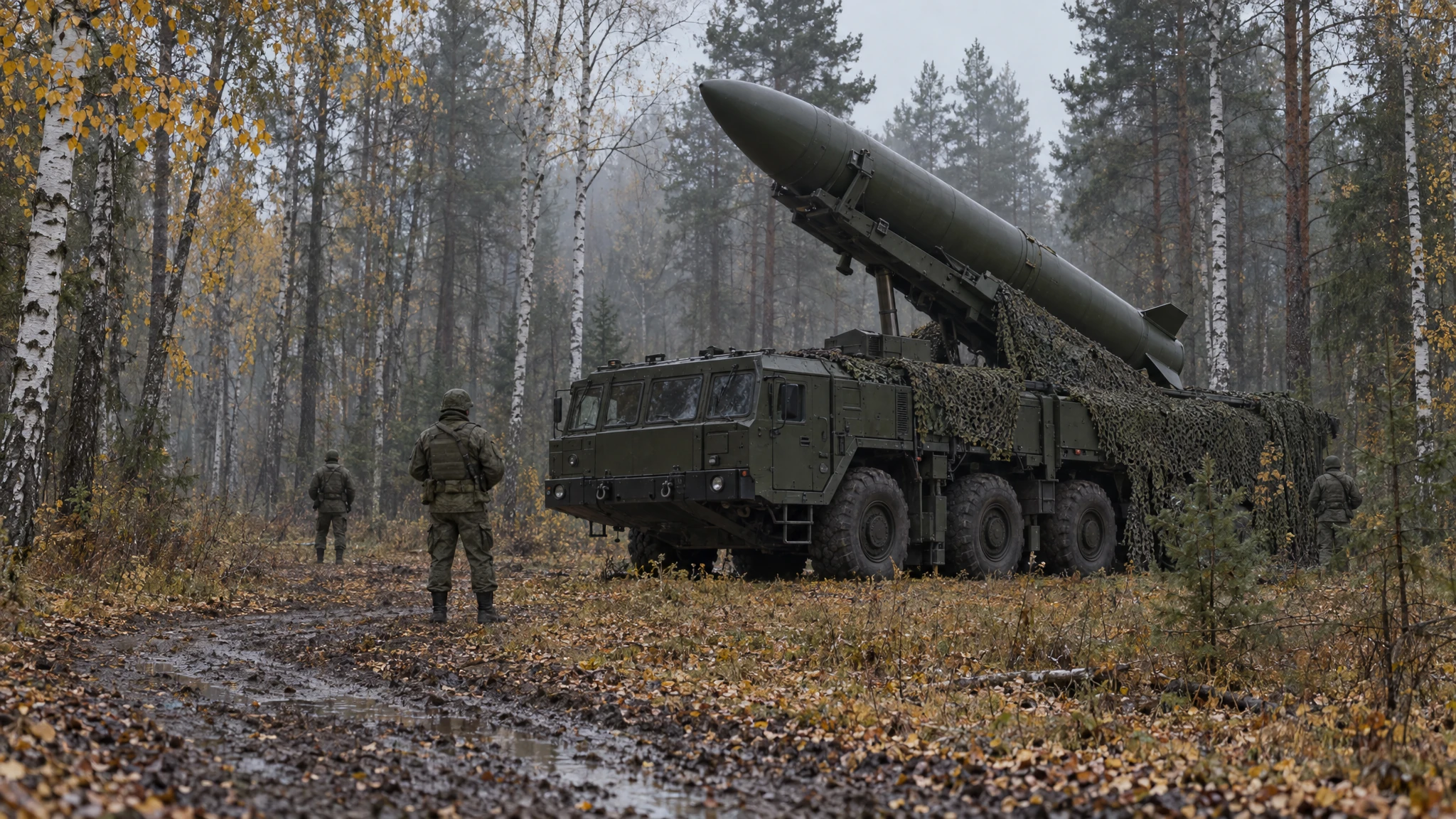
A country that spent seventy years as a military client now exports combat power. That reversal, more than any single summit, explains why both Moscow and Beijing now treat Pyongyang with new care.
What North Korea gains
The benefits for Pyongyang go well beyond cash and food. The Kursk deployment gave the Korean People's Army something it had not had in generations: combat experience in a modern war shaped by drones, electronic warfare and dense artillery fire. Analysts at institutions including RUSI and CSIS have noted that this experience will likely shape North Korean doctrine for years.
Firing ballistic missiles in real combat provides performance data that no test range can match. Western governments have also voiced persistent concern that Moscow may pay for North Korea's help with sensitive military technology in areas such as satellites, submarines or missile guidance. That fear has not been fully confirmed in public, but it shapes allied planning in Seoul, Tokyo and Washington.
North Korea's political gains may matter even more. With a permanent Security Council member openly opposing sanctions, the multilateral pressure campaign that peaked in 2017 has effectively ended. Pyongyang has become a sanctioned state that the sanctions system can no longer reach.
The Bidding War Explained
Beijing's restrained response
Beijing views the revived Russia-North Korea military partnership with caution but not open hostility. Mel Gurtov, Professor Emeritus of Political Science at Portland State University and Senior Editor of Asian Perspective, summed up China's position well: "for Beijing, the challenge is managing this growing Russia-North Korea alignment."
The problem has several parts. North Korean troops fighting in Ukraine undercut China's effort to present itself as a neutral party, and possibly a peacemaker, in the war. Each report of North Korean missiles striking Ukrainian cities makes it harder for China to say the war is a regrettable European dispute it has nothing to do with. The partnership also brings North Korea's military closer to Russia's defense industry in ways Beijing cannot monitor or limit.
Yet China cannot complain too loudly. Beijing knows it is competing with Moscow to be Pyongyang's most influential patron. If China pressed Kim hard over his support for Putin, it would hand Russia an advantage, because the Kremlin asks for no restraint on nuclear or missile programs and offers no lectures.
China therefore faces a classic patron's dilemma. Pushing the client too hard drives it toward a rival, while indulging it rewards behavior China dislikes.
China raises its offer
China's recent conduct suggests it has decided to compete rather than scold. Kim made an unannounced trip into China across a new bridge connecting the two countries, a structure that has come to symbolize warmer relations.
The Wall Street Journal observed that Beijing-Pyongyang ties had recently been strained by Kim's nuclear advances. It noted that North Korea's closer relationship with Russia had given China added reason to protect its influence over the regime. The paper also pointed to concrete signs of improvement: passenger rail service between the two capitals has resumed, and bilateral trade has returned to pre-pandemic levels.
Those developments matter. During the COVID-19 pandemic North Korea sealed its borders almost completely, and trade with China collapsed. A full recovery gives Pyongyang an economic lifeline that complements, rather than replaces, the money and goods flowing from Russia.
Kim now has two supply lines, two diplomatic shields and two sources of prestige. He can use each one as leverage against the other.
How Pyongyang sets the terms
The logic of this bargaining can be described simply. Pyongyang appears to be pursuing four goals, each of which benefits from great-power competition:
- Acceptance of its nuclear status. If neither patron will press for denuclearization, for fear of driving Kim toward the other, North Korea's arsenal becomes an accepted reality within the triangle.
- Economic survival without reform. Russian payments for munitions and Chinese trade together reduce the pressure for internal economic opening that sanctions were supposed to create.
- Military modernization. Combat experience in Ukraine and possible technology transfers speed up capabilities that North Korea could not develop alone.
- Diplomatic insurance. Two Security Council vetoes are better than one. Pyongyang has also learned from the 1990s that relying on a single patron is dangerous.
None of this means North Korea controls the relationship. Russia and China remain vastly more powerful, and either could hurt Pyongyang badly if it chose to. But in a competitive market the smaller party gains bargaining power, and Kim has clearly realized this.
The Limits of the Authoritarian Triangle
It is tempting to picture Moscow, Beijing and Pyongyang as a tightly coordinated bloc, especially after Kim stood beside Xi and Putin at Beijing's military parade in September 2025. The reality is more complicated. China and Russia are competing for influence in Pyongyang, which limits how far the three can coordinate strategically.
China has its own interests in stability on the Korean Peninsula, in its trade with South Korea and Japan, and in avoiding new Western sanctions on its companies. Those interests do not always align with Russia's wartime needs or with North Korea's appetite for risk.
Still, the three governments share one clear goal: weakening what remains of American global primacy. That shared aim, more than any affection among them, holds the partnership together. A recurring theme in analysis from institutions such as the Atlantic Council and IISS is that this kind of alignment tends to deepen when outside pressure pushes its members together, and to weaken when they have reason to look elsewhere.
Washington's Record and the Debate Over Strategy
A critique gaining ground
This raises uncomfortable questions about U.S. policy. Ted Galen Carpenter of the Randolph Bourne Institute has argued pointedly that Washington has done a reasonable job of managing tensions with China but has badly mishandled both North Korea and Russia. In his view, American leaders have spent decades chasing complete North Korean nuclear disarmament, a goal he calls an absurd chimera. The only exception was the brief flexibility toward Pyongyang during Donald Trump's first term.
Carpenter is even harsher about Russia policy. He argues that NATO's expansion toward Russia's borders created an unnecessary crisis, and that the United States has since become entangled in an open-ended, European-led proxy war against Russia. He concludes that Washington's mistakes are the main glue holding the fragile authoritarian triangle together, and that U.S. leaders should give one or more of its members reasons to break away.
That argument is contested. Many analysts, including much of the transatlantic security establishment, reject the claim that NATO enlargement caused Russia's invasion of Ukraine. They note that sovereign states chose to join the alliance and that Moscow's war aims have gone well beyond security concerns.
Supporters of the denuclearization goal argue that formally abandoning it would weaken the global nonproliferation regime and alarm allies in Seoul and Tokyo. Some in those capitals already discuss acquiring nuclear weapons of their own.
Where the critique has force
Even so, one part of the critique deserves attention whatever one thinks of its broader claims. Under current policy, no member of the triangle has much reason to defect. North Korea has been offered nothing realistic in exchange for restraint.
The talks that began in Singapore in 2018 collapsed in Hanoi in 2019, and the denuclearization demand remains effectively all-or-nothing. A Pyongyang that sees no path to normal relations with Washington has every incentive to sell its services to Moscow and Beijing for the highest price.
In earlier eras, American strategy succeeded by exploiting divisions within the communist world. The opening to China in the early 1970s was the clearest example. In today's triangle, the most obvious divisions run between Beijing's interest in stability and Pyongyang's appetite for risk, and between China's discomfort with the Ukraine war and Russia's dependence on North Korean munitions.
Scenarios for the Next Phase
Scenario one: the bidding continues
The most likely near-term outcome is more of the same. Russia keeps paying for North Korean missiles and manpower for as long as the war lasts, and China keeps matching that support with trade and political visits. Kim gains from both. The main risk is gradual: North Korea's arsenal and conventional capabilities keep growing with little outside restraint, and the region's security environment slowly worsens.
Scenario two: a Ukraine settlement changes the market
If the war in Ukraine ends or settles into a stable ceasefire, Russia's demand for North Korean munitions and troops would drop sharply. Pyongyang's leverage over Moscow would shrink, and China's incentive to outbid Russia would weaken with it. This is the scenario Kim most likely fears.
It would also open a window for Washington. A North Korea losing its Russian income might again be interested in talks with the United States, if Washington offered something more realistic than full disarmament as a precondition.
Scenario three: an escalation that forces Beijing's hand
A less likely but more dangerous path would involve a sharp North Korean provocation, such as a seventh nuclear test or a crisis on the peninsula, while Russia and North Korea are closely tied militarily. China would then have to choose between restraining Pyongyang, at the risk of pushing it further toward Moscow, and tolerating behavior that threatens its own security. Such a crisis would test the triangle in a way that rhetoric cannot.
Policy Considerations
Several practical lessons follow for U.S. and allied policymakers, whatever their view of the broader strategic debate:
- Treat the triangle as a set of separate relationships. Policy that addresses each bilateral link on its own terms is more likely to find openings than policy aimed at a single "axis."
- Make use of Beijing's discomfort. China has a real interest in limiting the Russia-North Korea military relationship. Quiet diplomacy that highlights shared concerns about proliferation and technology transfer could find more support than public accusations.
- Consider interim goals for North Korea. Freezes, verification steps and arms-control arrangements short of full disarmament deserve serious discussion. The aim would be to change Pyongyang's incentives, not to reward it.
- Keep allies close. Any change in approach must be closely coordinated with Seoul and Tokyo, whose confidence in U.S. commitments is the main barrier to wider nuclear proliferation in Northeast Asia.
- Plan for the end of the Ukraine war. The period after a settlement may offer the best chance in a decade to separate North Korea from Russia. Diplomatic preparation should begin now.
Conclusion: Two Patrons, One Opportunist
The "lips and teeth" image has always concealed more than it explained, and the same is true of today's talk of a unified authoritarian bloc. North Korea's relationship with China is warm in public but uneasy in private. Its relationship with Russia, revived in 2024 and strengthened on Ukrainian battlefields, depends on a war that will not last forever. Between the two, Kim Jong Un has rebuilt the balancing strategy his grandfather perfected during the Sino-Soviet split, now backed by a nuclear arsenal of at least 50 warheads.
The main lessons are clear. Pyongyang has turned great-power rivalry into economic aid, military experience and diplomatic cover. Beijing has chosen to compete with Moscow rather than restrain its client. The partnership among the three, though it looks impressive, is held together mainly by their shared opposition to the United States.
That last point is a warning and also an opportunity. Partnerships held together by outside pressure can sometimes be weakened by changing that pressure. Whether Washington can do so, without abandoning allies or rewarding aggression, is likely to be one of the central strategic questions for Northeast Asia in the years ahead.


Reader discussion
No comments yet. Start the discussion.