
The Assembly Lines are Running, but the Stations are Empty
In the sprawling industrial city of Nizhny Tagil, the Uralvagonzavod tank factory—the beating heart of Russia’s ground warfare capabilities—has switched to a mandatory triple-shift schedule.
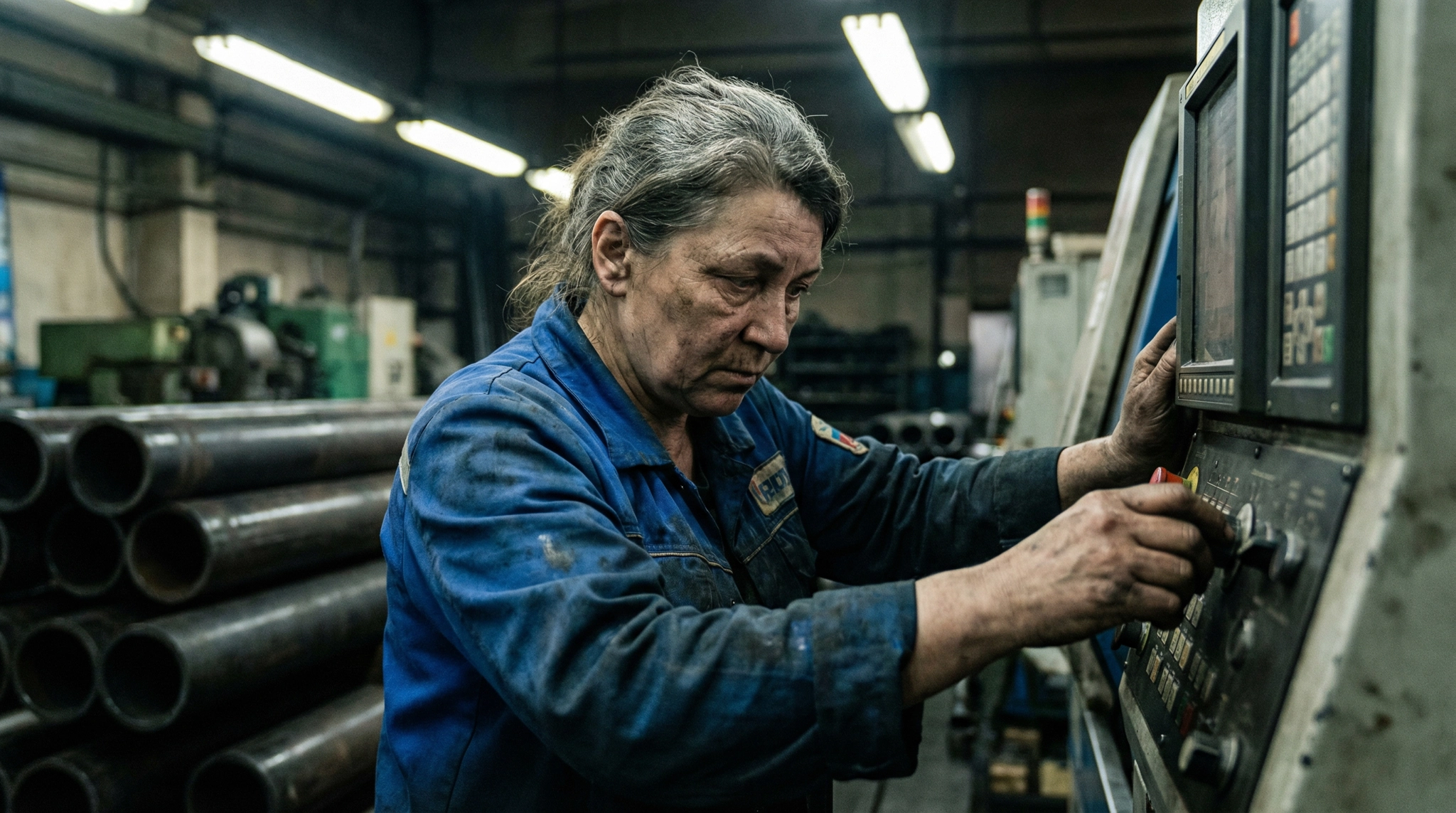
On paper, production is surging. But inside the cavernous assembly halls, a different reality is taking hold. Stations designed for veteran engineers are being manned by vocational students and retrained pensioners.
The backlog of unfinished T-90M chassis is growing, not because of a lack of steel or microchips, but because there are simply no hands left to weld them.
For four years, Western analysts have obsessively tracked the flow of semiconductors and ball bearings into Russia, searching for the choke point that would stall Vladimir Putin’s war machine. We analyzed the Caspian supply lines and the shadow fleets.
Yet, in early 2026, the Kremlin is colliding with a blockade that no amount of sanctions evasion can bypass: demographics.
Russia is running out of people. The convergence of the 1990s demographic collapse, the mobilization of 2022-2024, and the mass exodus of skilled professionals has created a labor deficit of nearly 4.8 million workers.
This is no longer an economic statistic; it is a strategic vulnerability that is beginning to dictate the tempo of operations on the Ukrainian front.
The 4.8 Million Worker Deficit
Data smuggled out of Rosstat and corroborated by central bank insiders paints a grim picture. The Russian defense industrial base (DIB) currently requires approximately 850,000 additional skilled workers to meet the procurement targets set by the Ministry of Defense for 2026.
These are not infantrymen; they are CNC operators, electrochemical engineers, and master welders—specialists who take years to train.
"We are seeing a cannibalization of the Russian economy unseen since the frantic industrial evacuations of 1941," says Dr. Elena Kogan, a senior fellow at the Center for European Policy Analysis. "But unlike 1941, there is no reservoir of Soviet peasantry to draw from. Putin is robbing Peter to pay Paul, pulling engineers from the energy sector to fix tanks, which in turn degrades the revenue engines keeping the state afloat."
The shortage has triggered a wage spiral that is fueling hyperinflation in Russia's industrial regions. In Sverdlovsk and Chelyabinsk, salaries for factory floor workers have tripled since 2023, often surpassing the pay of junior military officers.
This wage inflation is effectively a massive, unacknowledged tax on the defense budget, meaning every ruble spent on procurement buys significantly less hardware than it did at the war's onset.
The 'Ghost Shift' Phenomenon
Intelligence reports indicate that major conglomerates like Rostec have begun instituting what workers call "ghost shifts." To meet quotas, factory managers are keeping assembly lines active 24/7, even when they lack full crews. The result is a precipitous drop in quality control.
In late 2025, reports surfaced of artillery barrels produced at the Motovilikha Plants failing after only a few hundred rounds—a direct result of skipped tempering processes and inexperienced metallurgists.
When skilled labor is scarce, institutional knowledge evaporates. The men who knew the precise tolerances for a 152mm howitzer barrel are either retired, dead, or overworked to the point of error.
Cannibalizing the Civilian Future
To plug these gaps, the Kremlin has resorted to desperate measures that mortgage Russia's economic future. In January 2026, a decree quietly authorized the "labor mobilization" of students from technical universities, effectively drafting them into defense plants before graduation.
While this provides warm bodies for the factories, it hollows out the pipeline of future engineers needed for the civilian sector.
- The Energy Sector Drain: Gazprom and Rosneft have reported critical shortages of maintenance crews, as high wages in the defense sector lure workers away from remote oil fields. This poses a long-term threat to the energy infrastructure that funds the war.
- The Construction Collapse: Civil infrastructure projects across Russia have ground to a halt. The migrant labor force from Central Asia, which historically filled these roles, has dwindled due to the weak ruble and the threat of forced military recruitment.
- The IT Exodus: Despite draconian exit bans, the brain drain of the IT sector continues. The defense industry is struggling to find the coders necessary to program the guidance systems for drones and missiles, relying increasingly on pre-programmed, illicitly imported Chinese modules that cannot be modified for evolving battlefield conditions.
The North Korean Solution and Its Limits
Much has been made of the "Defense Common Market" between Moscow, Tehran, and Pyongyang. While North Korea has supplied artillery shells and ballistic missiles, recent intelligence suggests they are also supplying labor.
Reports from the Russian Far East indicate the arrival of thousands of North Korean workers to shipyards and lumber processing facilities.
However, this is a stopgap, not a solution. North Korean laborers, while disciplined, lack the technical proficiency to operate modern German or Japanese CNC machines that still form the backbone of high-end Russian manufacturing.
Furthermore, integrating a foreign workforce that speaks no Russian into sensitive, secret manufacturing facilities creates a security nightmare that the FSB is struggling to manage.
Strategic Implication: The reliance on unskilled foreign labor forces a simplification of production. Russia is increasingly prioritizing quantity over quality, moving away from complex systems like the T-14 Armata (which has effectively vanished from procurement lists) back to modernized variants of 1970s hardware that can be assembled by less skilled hands.
Conclusion: The Unyielding Ceiling
For the past three years, Western sanctions policy has focused on cutting off Russia’s access to capital and components. These efforts have had mixed success, as illustrated by the resilient Caspian logistics routes. However, the West has largely overlooked the internal friction that is now grinding the gears of the Russian war machine.
Vladimir Putin can print rubles, and he can smuggle chips. But he cannot print 30-year-old skilled engineers.
As 2026 progresses, the labor crisis will impose a hard ceiling on Russian military reconstitution. The Kremlin will face a stark choice: scale back the war effort to preserve the civilian economy, or push the pedal to the floor until the engine seizes completely. The stations in Nizhny Tagil are waiting for workers who are never coming back.


Reader discussion
No comments yet. Start the discussion.
Comments are closed for this article.