
The Democratization of Deep Strike
On a freezing night in early March 2026, the night sky over the Ryazan oil refinery, nearly 500 kilometers southeast of Moscow, was illuminated by a series of catastrophic explosions. The primary crude distillation unit, a critical node in Russia's domestic fuel supply chain, was engulfed in flames. However, the weapon that bypassed layers of Russian air defense was not an American ATACMS or a British Storm Shadow missile. It was a Ukrainian-designed, domestically manufactured drone, guided not by vulnerable satellite signals, but by an onboard artificial intelligence system capable of matching terrain to pre-loaded digital maps.
As the war enters its fifth year, the fundamental geometry of the battlefield has shifted. Frustrated by persistent Western hesitation over authorizing the use of imported precision weapons against targets deep inside the Russian Federation, Kyiv has executed a remarkable military-industrial pivot. Ukraine has transformed its nascent tech sector into a formidable defense ecosystem, mass-producing long-range, AI-piloted loitering munitions that are systematically dismantling the economic engine of Vladimir Putin's war machine: his oil refineries.
This relentless aerial campaign has already knocked an estimated 15 to 20 percent of Russia's oil refining capacity offline, triggering localized fuel shortages, forcing Moscow to import gasoline from neighboring Belarus and Kazakhstan, and creating profound logistical nightmares for the Russian military. We analyze how Ukraine's indigenous technological breakout is bypassing geopolitical vetoes and fundamentally altering the strategic calculus of the war.
Bypassing the Western Veto
For much of 2024 and 2025, a familiar diplomatic theater played out in Western capitals. Kyiv would plead for the lifting of restrictions on deep-strike capabilities to hit Russian airbases and logistics hubs. Washington and Berlin, perpetually anxious about nuclear escalation and global energy market volatility, would equivocate, delay, or issue strict caveats. The recent U.S. pause on Iranian strikes to stabilize global energy markets underscores the enduring anxiety in Washington over any kinetic action that might spike oil prices.
Recognizing that their survival could not be permanently tethered to the political weather in Washington or European capitals, the Ukrainian Ministry of Defense and domestic intelligence services (SBU and GUR) accelerated a parallel strategy. Through aggressive deregulation, state-backed venture capital, and deep integration with civilian tech talent, Ukraine incubated hundreds of defense startups.
"What we are witnessing is the most rapid weaponization of commercial technology in modern military history," notes a 2026 report by the Royal United Services Institute (RUSI). "Ukraine realized that if they could not buy the long arm of deterrence, they had to build it."
The crown jewels of this effort are platforms like the Lyutyi (Fierce) and its classified next-generation successors. These aircraft boast ranges exceeding 1,200 kilometers, carrying payloads of up to 75 kilograms of high explosives. Unlike cruise missiles, which cost millions of dollars and require specialized launch platforms, these drones are manufactured for roughly $50,000 to $100,000 apiece, allowing Ukraine to launch swarm attacks that overwhelm traditional point defenses.
The AI Navigation Revolution: Beating Russian Electronic Warfare
The most significant leap in Ukraine's drone campaign is not aerodynamic, but algorithmic. Early in the conflict, Russian electronic warfare (EW) proved devastatingly effective against Ukrainian drones. Powerful systems like the Murmansk-BN and Tobol—which our previous reporting highlighted as blinding Baltic skies—routinely spoofed or jammed the GPS and GLONASS signals required for navigation, sending drones crashing into fields miles away from their targets.
To counter this, Ukrainian engineers integrated machine vision and artificial intelligence to achieve full terminal autonomy. Contemporary Ukrainian deep-strike drones do not rely on constant satellite links or external piloting.
- Terrain Contour Matching (TERCOM): The drones use downward-facing cameras to compare the physical landscape against pre-loaded topographical maps, adjusting their flight paths in real-time.
- Acoustic and Spectral Sensors: Swarms are programmed to communicate with one another using burst transmissions, reallocating targets if a primary drone is destroyed.
- Optical Target Recognition: In the final terminal phase, the drone's AI compares the visual profile of the target to a database of 3D models. It does not just aim for the "refinery"; it specifically identifies and dives into the highly flammable distillation columns or critical cracking units, maximizing secondary explosions.
According to analysts at the Center for Strategic and International Studies (CSIS), this leap in autonomy effectively neutralizes the primary advantage of Russian EW. "You cannot jam a drone that isn't listening," a CSIS defense technologist explained recently. "Once these autonomous systems cross the border, they are essentially flying cruise missiles guided by a brain that ignores the spectral noise around it."
The Economic and Logistical Bleed
The strategic genius of targeting refineries rather than raw crude export facilities lies in the compounding nature of the damage. While Washington has historically pressured Kyiv to avoid striking Russian energy infrastructure for fear of driving up global crude prices, taking out refineries actually has the inverse effect. It traps unrefined crude inside Russia—keeping global supply steady—while starving the domestic Russian market of refined products like gasoline and military-grade diesel.
The impact has been catastrophic for Moscow. Following the massive drone strikes on facilities in Syzran, Kuibyshev, and Tuapse in early 2026, wholesale gasoline prices in Russia surged. The Kremlin was forced to institute a strict six-month ban on gasoline exports, a humiliating concession for one of the world's premier energy superpowers.
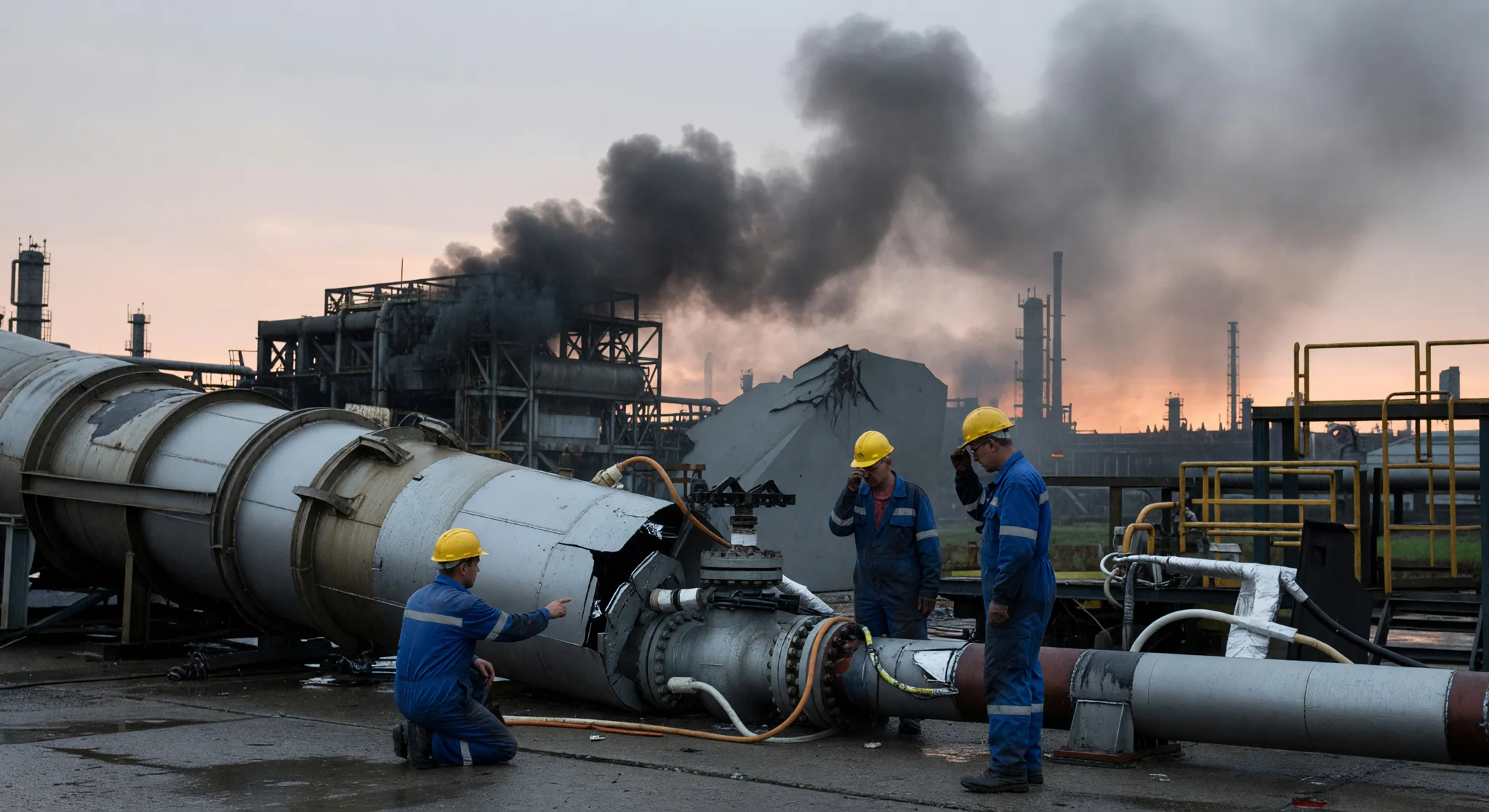
Furthermore, repairing these facilities exposes the deep vulnerabilities created by Western sanctions. The intricate components required for modern oil refinement—specifically high-pressure compressors, specialized valves, and advanced control systems—are almost entirely manufactured in the West or allied nations.
When a Ukrainian drone destroys an atmospheric distillation unit, Rosneft or Lukoil cannot simply order a replacement from a domestic manufacturer. They must navigate a labyrinth of black-market intermediaries, often relying on Chinese equivalents that lack the exact specifications, resulting in months of downtime. As Gazprom collapses under the weight of lost European markets, the systematic destruction of the domestic refining sector is bleeding dry the secondary revenue streams the Kremlin desperately needs to fund its war.
Forcing a Strategic Dilemma
Beyond the economic devastation, the drone campaign has achieved a critical military objective: forcing Russia to make impossible choices regarding its air defense deployments. Russia is a massive country, and its energy infrastructure is spread across thousands of miles of territory.
As the strikes escalated, regional governors and Russian energy oligarchs began publicly demanding protection from the Ministry of Defense. In response, the Kremlin has been forced to pull advanced Pantsir-S1 and S-400 air defense batteries away from the frontlines in Eastern Ukraine and the occupied Crimean Peninsula, repositioning them around critical infrastructure in the deep rear.
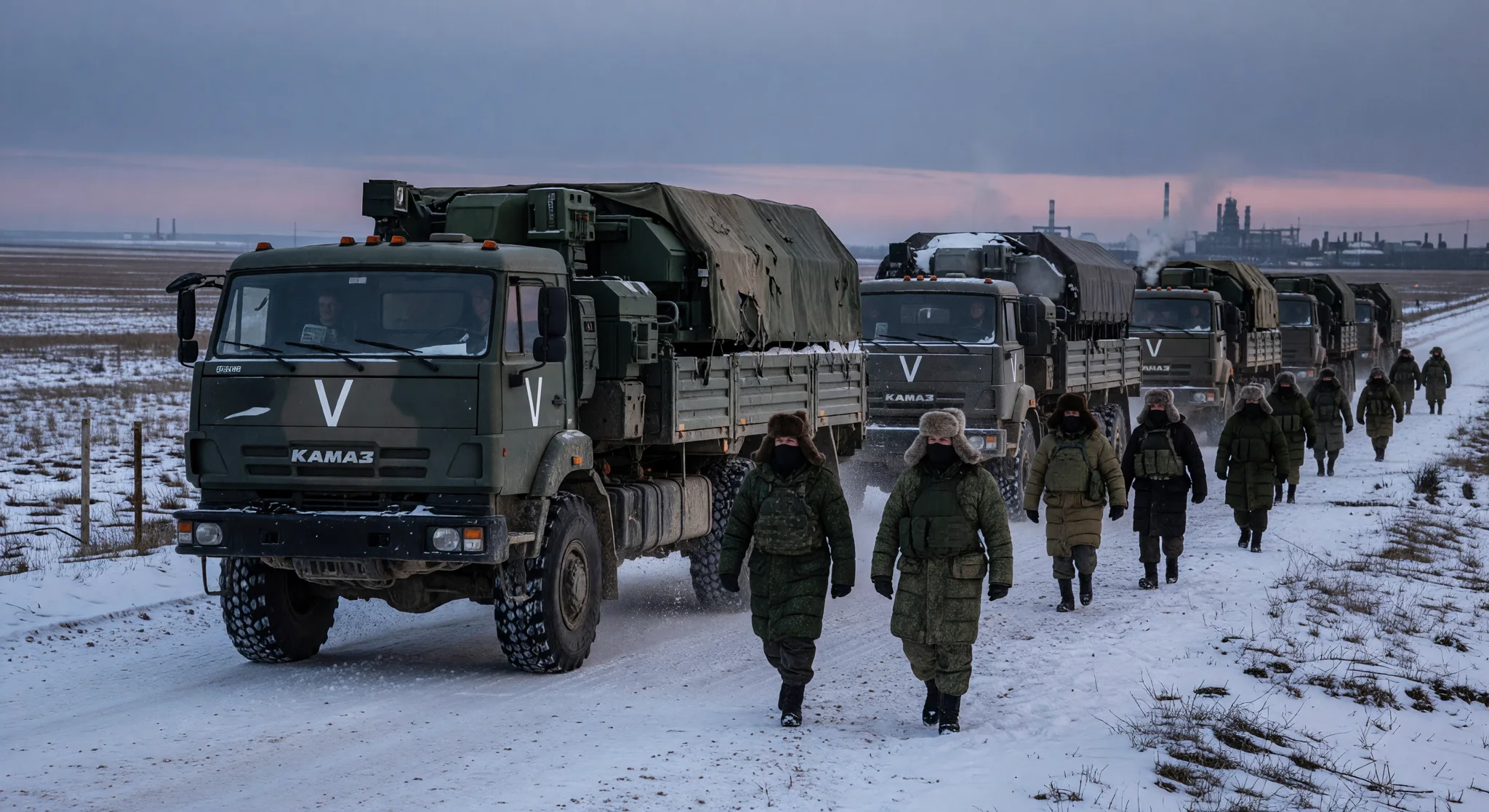
This reallocation thins out the protective umbrella over Russian mechanized infantry and artillery units in the Donbas, leaving them increasingly vulnerable to Ukraine's tactical aviation and newly acquired Western munitions. It is a classic asymmetric dilemma: Russia must either leave its economic engine exposed to devastating strikes, or weaken its combat power at the point of contact.
Moreover, the psychological impact on the Russian populace cannot be overstated. For the first two years of the invasion, the war was an abstraction for citizens in St. Petersburg, Moscow, or Nizhny Novgorod—something watched on state television. Today, the sight of air raid sirens and towering plumes of black smoke over domestic cities serves as a daily, visceral reminder that the state can no longer protect its own interior.
Conclusion: The New Era of Sovereign Deterrence
Ukraine's successful development and deployment of long-range, AI-guided drones marks a watershed moment in the history of warfare. It demonstrates that the monopoly on deep-strike capabilities—long held by superpowers with massive defense budgets and advanced aerospace industries—has been broken.
By bypassing the hesitation of its Western partners, Kyiv has achieved a form of sovereign deterrence. They have proven that a nation fighting for its survival can leverage commercial technology, software engineering, and agile manufacturing to systematically dismantle the strategic depth of a vastly superior adversary.
As NATO planners observe the smoking ruins of Russian refineries, they are absorbing a profound lesson. The future of strategic deterrence is not solely about multi-billion-dollar fighter jets or exquisitely engineered ballistic missiles. It is increasingly about mass, software, and autonomy. Ukraine has not just found a way to strike back; it has fundamentally rewritten the rules of engagement, proving that in the 21st century, silicon and code can bring an empire's economy to its knees.


Reader discussion
No comments yet. Start the discussion.
Comments are closed for this article.