
The Soviet Union's true economic legacy revealed itself in daily life, not propaganda.When I visited in 1989 on a student exchange, my family navigated Moscow atop a motorcycle with a sidecar—likely a replica from the 1940s or 50s. Stores rationed basics like sugar and butter, accessible only with tickets. This firsthand glimpse shattered the myth of a Soviet "economic miracle" and foreshadowed the collapse of the Eastern Bloc. The reality: the USSR lagged behind the US by 20–30 years, a gap that only widened over time.
The Harsh Reality of Soviet Consumer Life
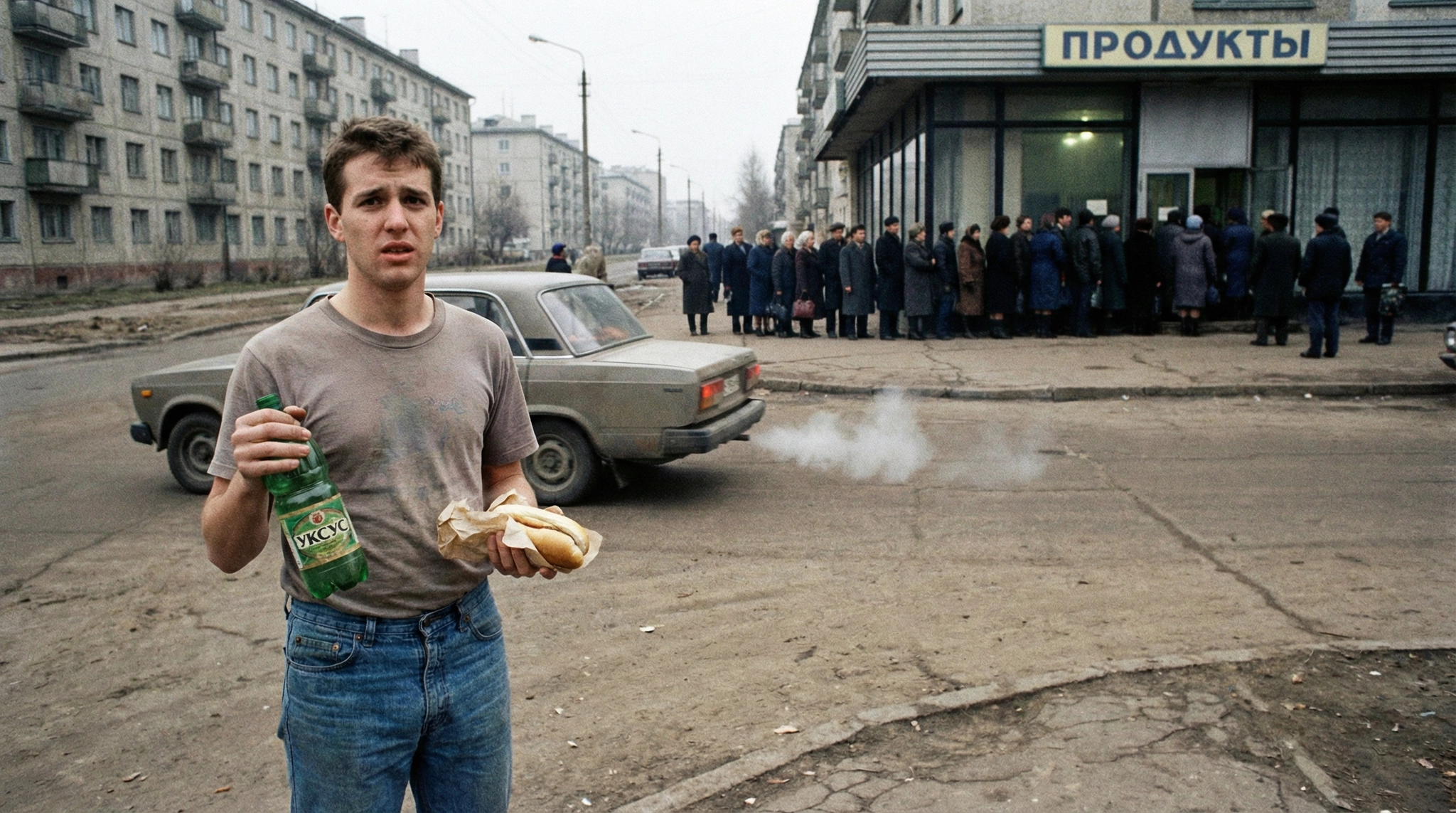
I witnessed scarcity everywhere. In Moscow's "Bulotznaya," milk came in plastic bottles but gave off a fishy odor—kolkhoz cows were fed bone meal from fish waste. The shelves featured:
- Enormous five-liter jars of canned green tomatoes
- Huge gas-inflated buns
- Green plastic bottles filled with vinegar
There was simply nothing else available.Once, mistaking vinegar for mineral water on a park bench, my colleague took a drink and felt ill for hours. Even Western icons like the Rolling Stones couldn’t find basic bottled water during their visit. Mineral water was practically nonexistent in Soviet retail markets.
Leadership and Looming Collapse
The cracks were obvious. Gorbachev, an astute leader, understood the flaws.The Chernobyl disaster further exposed systemic weaknesses.Unlike a typical small nuclear bomb, which might contain 10 kg of enriched uranium, the melting reactor at Chernobyl held hundreds of tons. I recall a BBC documentary that recounted the crucial role of 2,000 miners—ordered to dig beneath the reactor and cool it using CO2/dry ice.Without their intervention, Europe might have been uninhabitable for 370,000 years, forcing humanity underground for generations.
Reflections on Soviet "Wealth"
The so-called “wealth” of the Soviet Union was a façade—everyday experiences proved it was collapsing from within, long before its official end.
Living through the final years of the USSR, I saw that the economic hardships were no anomaly. Instead, they were a fitting symbol of a superpower on the brink—offering valuable lessons for how political systems impact real lives.


Reader discussion
No comments yet. Start the discussion.
Comments are closed for this article.