
December 2025 — In the hushed corridors of Washington and Brussels, a seductive but fatal narrative has taken hold. As the war in Ukraine grinds toward its fourth winter, fatigue has set in.
Diplomatic channels are buzzing with the contours of a potential settlement brokered by the incoming U.S. administration, one that envisions trading sovereign Ukrainian territory for a cessation of hostilities. The logic, seemingly pragmatic, is that freezing the conflict will stabilize the Eurasian landmass.
This calculation is catastrophically wrong.
To view the current conflict merely as a border dispute is to fundamentally misunderstand the nature of the antagonist. The Russian Federation is not a conventional nation-state; it is the world’s last standing colonial empire, an anachronistic construct held together by brute force, mythical historiography, and the suppression of dozens of captive nations.
The diplomatic overtures currently being entertained by President Trump and Vladimir Putin do not promise peace. Instead, by validating territorial conquest, they pour fuel into the engine of a revanchist machine that will not stop at the Dnieper River.
True stability in the 21st century cannot be achieved by accommodating Moscow’s imperial appetites. It requires a fundamental recognition that the Russian state, in its current borders, is structurally incompatible with international order.
The path to enduring peace lies not in appeasement, but in the managed dissolution of the Russian Federation into its constituent republics—a process of decolonization that the rest of Europe underwent decades ago.
The Anatomy of Contiguous Colonialism
Western observers often fail to recognize Russia as a colonial power because its expansion did not involve crossing oceans. Unlike the maritime empires of Great Britain, the Netherlands, or Spain, which projected power via navies to distant shores, Russia practiced contiguous colonization.
Its imperial project relied on the relentless march of armies across land borders, absorbing neighbors like an amoeba. This distinction—land versus sea—has allowed Moscow to masquerade its conquests as "national unification" or "security buffers."
From Muscovy to Empire
The historical record reveals a timeline of aggressive subjugation that rivals the darkest chapters of European colonialism:
- 16th Century: Muscovite forces conquered the Khanates of Kazan and Astrakhan, annexing distinct Turkic and Islamic civilizations.
- 17th Century: The empire bled into Siberia, formalizing control over the Lake Baikal region through the 1689 Treaty of Nerchinsk.
- 18th Century: Russian armies swallowed the Baltic states, partitioned Poland, and seized territories from Sweden.
- 19th Century: The empire wrestled the Caucasus from Persian control and erased the ancient Khanates of Khiva, Samarkand, and Bukhara.
Perhaps most telling is the annexation of the Amur region in 1860, a territory seized from a weakened China that gave Russia its Pacific coastline. While the British Empire may have held more total landmass at its zenith, Russia’s colonial holdings dwarfed the continental possessions of France.
The Legacy of Brutality and Erasure
The methods employed to maintain this sprawling tapestry of conquered lands were—and remain—genocidal in nature. The modern Kremlin’s rhetoric regarding the illegitimacy of Ukrainian identity is not an aberration; it is the standard operating procedure of Russian imperialism.
Consider the fate of the Circassians. Between 1863 and 1878, during the conquest of the North Caucasus, Russian forces orchestrated the displacement or murder of more than 95 percent of the Circassian population.
This was not collateral damage; it was ethnic cleansing designed to pacify a rebellious territory. Similar fates befell the Aleuts, enslaved during the colonization of Alaska, and the indigenous peoples of Siberia, who faced forced displacement and cultural erasure.
Vladimir Putin’s current diatribes against Kyiv are merely echoes of this centuries-old colonial mindset. He views non-Russian identities within the empire’s sphere not as distinct cultures, but as administrative errors to be corrected.
The Myth of the Power Vacuum
Critics of Russian dissolution often cite the fear of chaos—a geopolitical black hole that would destabilize the global order. They point to the violence that accompanied the collapse of the Ottoman and Austro-Hungarian empires. However, this analysis conflates the process of collapse with the result.
Europe is undeniably more stable and prosperous today without the Austro-Hungarian Empire. While Germany’s irredentist thirst for the empire’s remnants certainly contributed to World War II, that was a failure of containment, not an argument for the preservation of the Habsburg monarchy.
The Yugoslav Precedent
The most pertinent parallel for the Russian scenario is Yugoslavia. Western policymakers in the early 1990s were paralyzed by the fear of Yugoslavia’s disintegration. Yet, the lesson of the Balkans is not that separation causes war, but that resisting separation causes war.
The violence that tore through the region was not the inevitable result of independence movements, but the specific product of Slobodan Milošević’s virulent Serbian nationalism. Today, the economic data speaks volumes:
- Serbia: Per capita income has quadrupled since 1990.
- Slovenia & Croatia: Have soared even higher, integrating fully into the European Union.
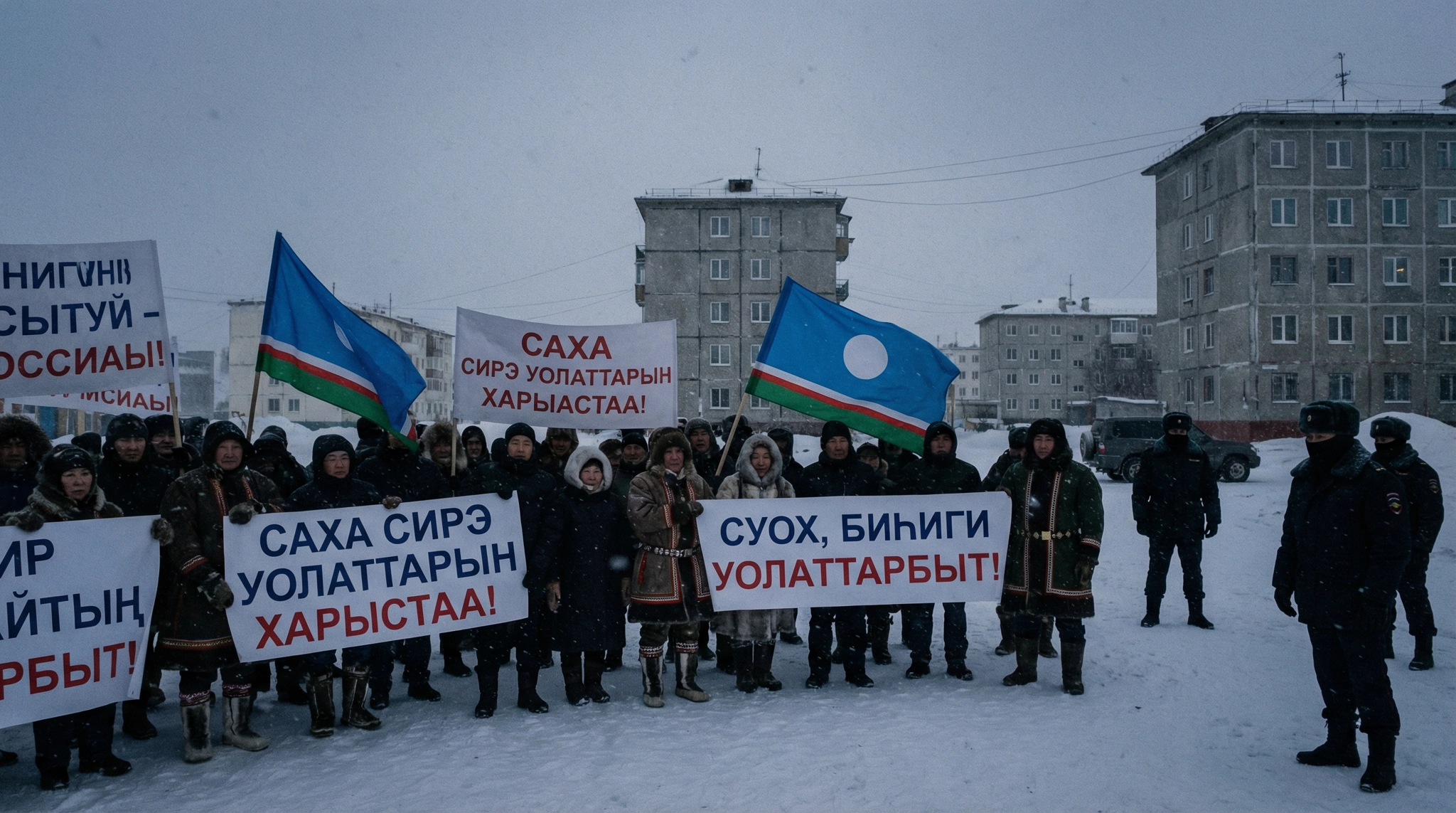
The dissolution of the artificial Yugoslav state unleashed potential that had been stifled by Belgrade’s hegemony. The same economic logic applies to the Russian Federation, where resource-rich regions like Yakutia (Sakha) and Tatarstan see their wealth siphoned off to finance Moscow’s wars while their own infrastructure crumbles.
Mapping the Fracture: The 2025 Reality
The monolithic appearance of Russia on a map betrays its internal fragility. The Federation consists of 83 federal subjects, including 22 ethnic republics that are, in effect, occupied nations.
The war in Ukraine has exacerbated the fissures between the center and the periphery, as ethnic minorities have been disproportionately conscripted to die for a Slavic imperial dream.
A post-Putin Russia will likely face a vacuum of authority similar to the post-Soviet period of the 1990s. But whereas the 1991 Almaty Declaration sought to freeze borders, the next collapse will likely demand a redrawing of the map. The precedent has already been set by Putin himself by carving pseudo-states out of Georgia, Moldova, and Ukraine.
Potential Successor States
Western policy should shift from preserving the Russian center to engaging with its periphery. The United States and its allies must begin to view Russia’s 22 ethnic republics as proto-states with the right to self-determination:
- Chechnya and Dagestan: Regions with a history of fierce resistance.
- Karelia: Possesses a natural European orientation and proximity to Finland.
- Sakha and Buryatia: Resource-rich republics in the east that could become viable independent economic actors.
The independence of a region like Bashkortostan or Komi may seem far-fetched to the conservative diplomat, but in 1989, the independence of Kyrgyzstan or Tajikistan seemed equally implausible. History moves slowly, until it moves all at once.
The Nuclear Archipelago and Population Management
The most legitimate concern regarding the breakup of Russia is the fate of its nuclear arsenal. This is a technical and diplomatic challenge of the highest order, but it is not insurmountable.
We have navigated this precipice before. Following the collapse of the Soviet Union, the Nunn-Lugar Cooperative Threat Reduction Program successfully secured nuclear assets across the post-Soviet space. Ukraine, Kazakhstan, and Belarus inherited vast arsenals and, through diplomatic engagement and security assurances, relinquished them.
A similar framework would need to be applied to a fracturing Russia. As authority devolves to successor states, the control of nuclear silos would shift. This presents an opportunity for disarmament. A newly independent Siberian republic would be far more likely to trade its nuclear inheritance for security guarantees and investment than a paranoid, revanchist Moscow.
Furthermore, the demographic concerns often cited as barriers to dissolution are overstated. While centuries of Russification have left significant ethnic Russian populations in the republics, the trend is reversible. In Kazakhstan, the ethnic Russian population plummeted from 40 percent in 1991 to roughly 15 percent today.
Conclusion: The Strategic Necessity of Dissolution
The current diplomatic trajectory, which seeks to appease Putin with Ukrainian land, is a devil’s bargain. It rewards the aggressor and entrenches the very imperial dynamism that caused the war.
The continued existence of the Russian Federation as a centralized empire is a threat to its neighbors and global security. It is a prison of nations that exports instability to justify its own internal repression.
The West must stop fearing the collapse of Russia and start planning for it. A reduced Russia, stripped of its colonies and defanged of its nuclear blackmail, would be a boon to the world—and ultimately, to the Russian people themselves.
The era of empires is over. It is time for the last one to fall.


Reader discussion
No comments yet. Start the discussion.
Comments are closed for this article.