
While Western satellites scrutinize every movement in the Black Sea and NATO planners map the Baltic approaches, a vital artery of the Russian war machine is pulsing largely undisturbed in the geopolitical blind spot of Eurasia.
The Caspian Sea, the world’s largest inland body of water, has quietly transformed into Moscow’s most secure logistical lung.
Since the closure of the Bosporus to belligerent warships and the mining of Black Sea trade routes, the Kremlin has executed a strategic pivot to the Volga-Caspian axis. Here, protected from Western naval interdiction by geography and international treaty, a 'ghost flotilla' is forging the physical reality of the Russia-Iran axis.
This is not merely about oil or grain. Intelligence indicates that the International North-South Transport Corridor (INSTC) is now the primary vector for the components that keep Russia’s defense industry breathing:
- Gas turbines
- Microelectronics
- Shahed-series loitering munitions
The Astrakhan-Anzali Nexus
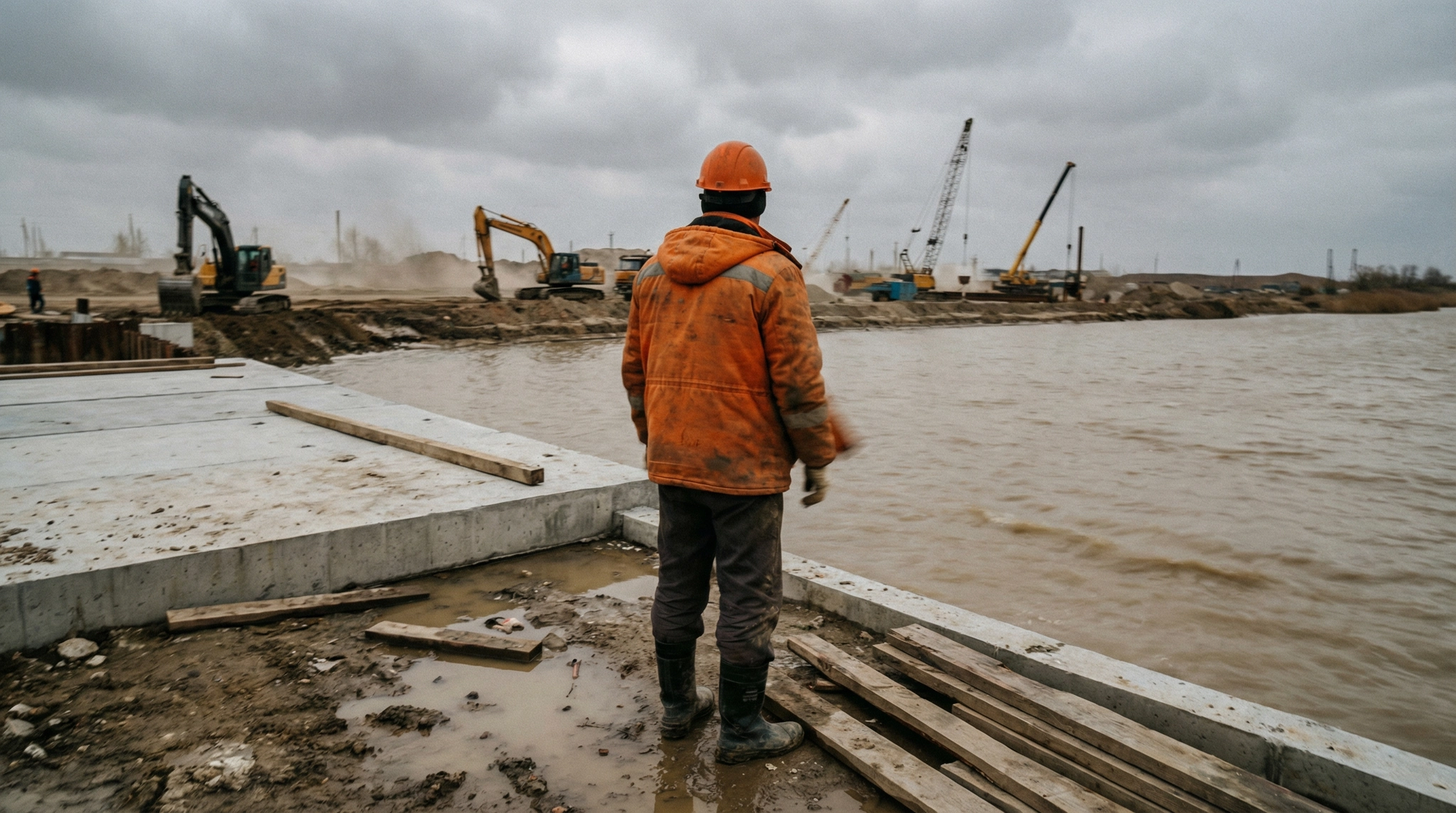
At the heart of this operation lies the rapid expansion of the port of Astrakhan on the Volga delta and its Iranian counterpart, Anzali. Satellite imagery from late 2025 shows aggressive dredging operations at the Volga-Caspian Canal, a project Moscow has accelerated despite environmental degradation and falling water levels.
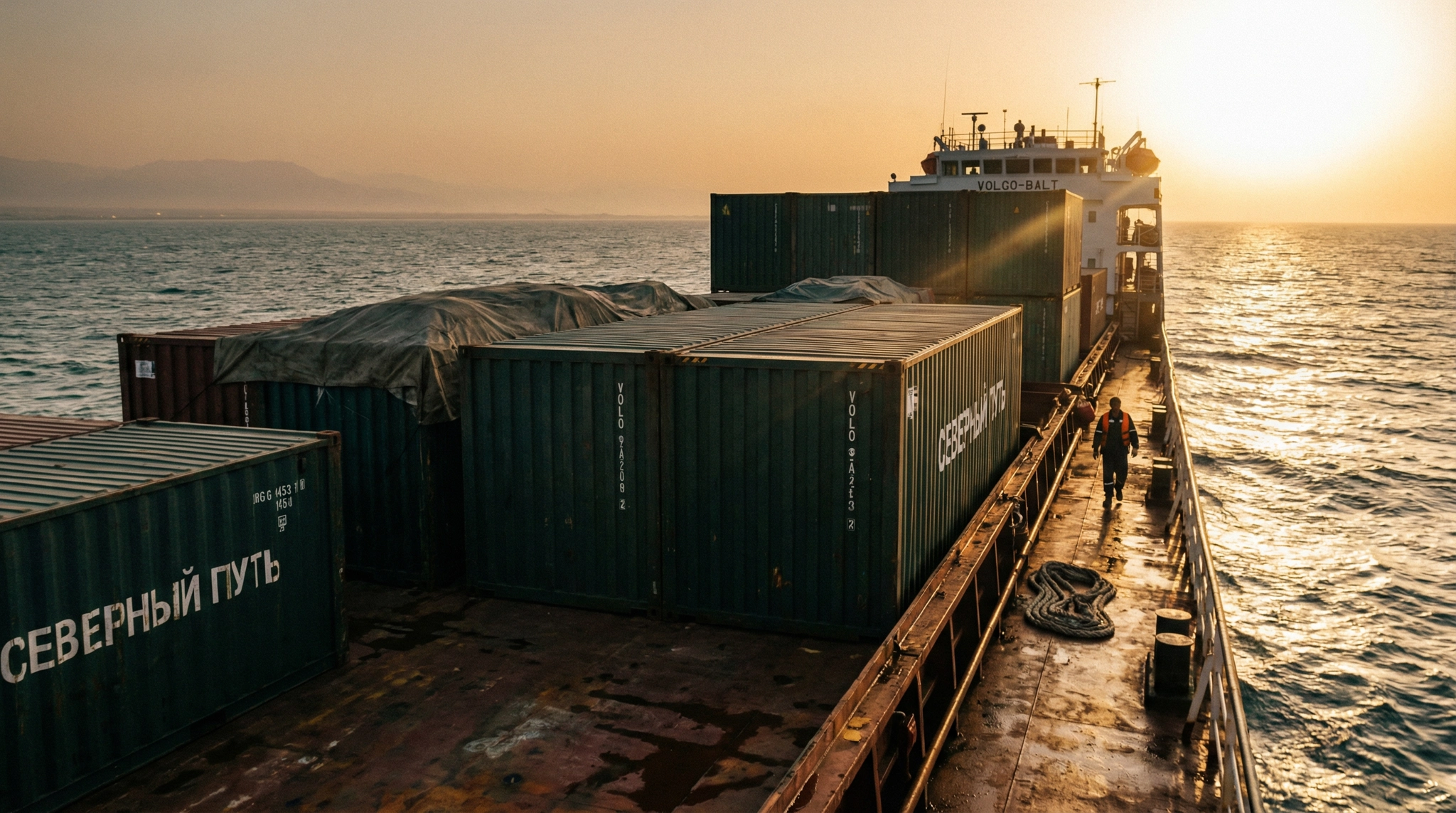
The traffic pattern is distinct and alarming. Russian river-sea class vessels, many switching off their Automatic Identification System (AIS) transponders as they approach the Iranian coast, are ferrying heavy machinery and grain south.
On the return leg, they carry containerized cargo that Western intelligence agencies link directly to the production lines of the Uralvagonzavod and Almaz-Antey defense plants.
"The Caspian has become a 'mare nostrum' for the authoritarian alliance," says Dr. Elena Kogan, a logistics analyst at the Center for Eurasian Security. "NATO cannot patrol it. Turkey cannot block it. It is a closed loop of military replenishment that sanctions regimes struggle to penetrate."
The Limits of Western Reach
The strategic genius of the Caspian route lies in its insulation. Unlike the high seas, where Western navies can board suspicious vessels, or the land borders where Poland and the Baltics enforce strict inspections, the Caspian is legally shared only by Russia, Iran, Azerbaijan, Kazakhstan, and Turkmenistan.
Washington has attempted to pressure Astana and Baku to police this traffic, but the geopolitical leverage is limited. Azerbaijan, while energy-aligned with Europe, is wary of provoking its northern neighbor.
Kazakhstan, as noted in previous analyses, is pivoting economically to China but remains dependent on Russian security guarantees for its own regime stability. Neither capital is willing to physically interdict Russian-flagged vessels moving cargo from Iran.
Furthermore, the nature of the cargo makes interdiction difficult. Dual-use technology flows through the Caspian disguised as civilian automotive parts or industrial equipment. Without physical inspection teams on the docks of Astrakhan—an impossibility—the flow continues unabated.
Dredging for Victory
The bottleneck remains the depth of the Volga. The river, which connects the Caspian to Russia’s industrial heartland, freezes in winter and suffers from silting.
However, Russia’s 2026 infrastructure budget allocates record funds to icebreaker acquisitions specifically for the Volga-Don basin and emergency dredging.
This logistical effort signals a long-term strategic shift. Moscow is resigning itself to the loss of Europe as a trade partner and the hostility of the Baltic.
The "Turn to the South" is no longer just rhetoric; it is being poured in concrete at port terminals and dredged from the riverbed. The goal is to create a seamless river-sea route that connects St. Petersburg to Mumbai via Bandar Abbas, bypassing Western choke points entirely.
Strategic Implications for 2026
For Ukraine and its allies, the Caspian supply line presents a wicked problem. It explains the resilience of Russian missile production despite tightening sanctions. It also highlights the limitations of a containment strategy based solely on financial instruments and export controls.
As long as the Caspian route remains open, the "defense common market" between Tehran and Moscow has a physical highway that is immune to Western kinetic interference.
The West’s only viable counter-strategy may lie in soft power—incentivizing the Central Asian littoral states to prioritize the East-West "Middle Corridor" over the North-South axis—but as the dredging barges in Astrakhan work through the night, it is clear that Moscow is digging in for a long war, supplied from the south.


Reader discussion
No comments yet. Start the discussion.
Comments are closed for this article.