
As the world’s attention centers on visible battlefronts in Eastern Europe, a moreinsidiousconflict is brewing beneath the waves: Russia’s deep-sea spies are targeting NATO’s critical undersea cables. These vital, fiber-optic arteries transport 99% of global internet traffic and trillions in daily transactions, making them a silent yet potentially devastating theater of modern warfare.
The Invisible Front: War Beneath the Waves
While armored columns and aerial duels steal the spotlight, a covert struggle unfolds in the Atlantic’s dark depths. Russia has quietly developed an elite capability few can rival: mapping, tapping, and potentially severing strategic undersea infrastructure at extreme depths.
This shadowy mission is the domain of theMain Directorate of Deep-Sea Research (GUGI). Unlike conventional naval forces,GUGI operates with unique autonomy, reporting directly to the Ministry of Defense and focusing on deep-ocean engineering and specialized operations.
As NATO reinforces its eastern flank, Western intelligence grows increasingly concerned by Russian “oceanographic research” vessels exhibiting suspicious activity around vital cables near Ireland, Portugal, and the United States.
GUGI: The Kremlin’s Hydronauts
Based in Olenya Guba, a secluded bay on the Kola Peninsula, GUGI commands a shadow fleet distinct from traditional ballistic missile subs. Its arsenal includes “motherships” like thePodmoskovyeandBelgorod—huge submarines outfitted to deploy smaller, nuclear-powered deep-diving submersibles such as theLosharik.
Theengineering prowessof these vessels is remarkable, enabling dives to2,500 meters or more, well beyond standard submarine capabilities. Outfitted with robotic arms and specialized sensors, their primary missions areespionage and sabotage.
“We are seeing a significant increase in Russian activity around undersea cables and infrastructure,” remarked a senior NATO intelligence official.“They are mapping the vulnerability of the Western alliance’s nervous system.”
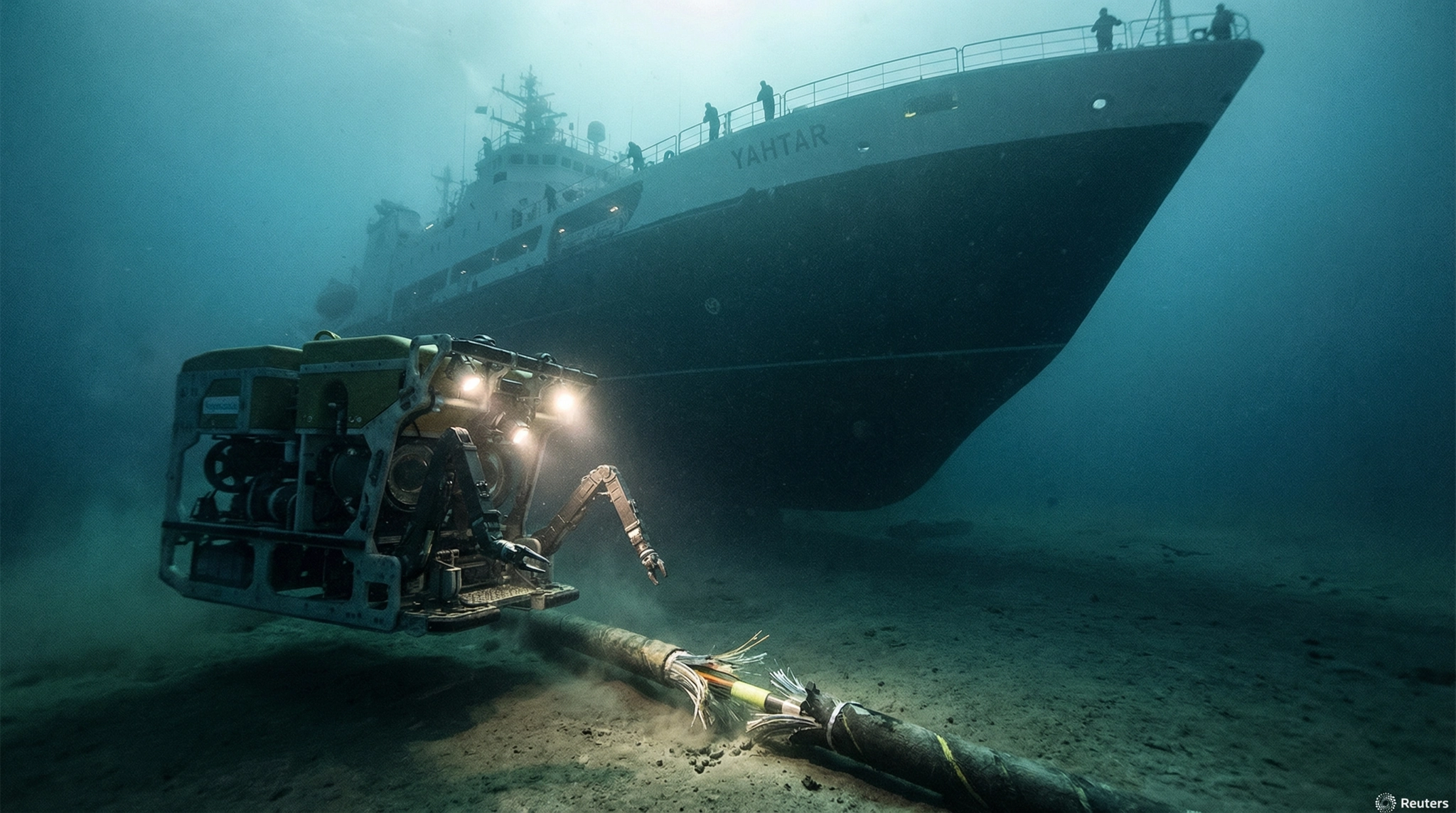
Surface ships are equally vital. The infamousYantar—ostensibly an oceanographic research vessel—has been caught loitering dangerously close to undersea cable routes. With its fleet of manned and unmanned submersibles, theYantarcan purportedly deploy devices to the seafloor, capable of intercepting data or sabotaging critical links.
The Asymmetric Logic: Blinding the Alliance
GUGI’s operations reflect an asymmetric strategy. Rather than matching NATO ship-for-ship, Russia exploits the West’s vulnerability:undersea connectivity. Satellites handle only a small portion of data; most international communications rely on the fragile cables snaking across the ocean floor.
In a broader conflict, severing these vital connections couldcripple economies and military operations. Pinpointing the cause of a break is difficult—was it accidental or deliberate?
- Economic Paralysis:Cutting the transatlantic financial link could freeze markets in London and New York.
- Military Blindness:Secure U.S. drone operations and command communications depend on these same fiber-optic networks.
- Energy Stranglehold:GUGI is also capable of targeting undersea energy assets. The sabotage of the Nord Stream pipelines showcased the physical vulnerability of Europe’s seabed infrastructure, pushing European navies into high alert.
NATO’s Seabed Response
Recognizing this profound vulnerability, NATO has recalibrated its maritime defense. The alliance’s newCritical Undersea Infrastructure Coordination Cellin Brussels now fosters cooperation between member states and private cable-owning companies.
Western navies are stepping up technologically. The UK is fast-tracking Multi-Role Ocean Surveillance (MROS) ships, while France and the U.S. deploy fleets of autonomous underwater vehicles (AUVs) topatrol pipelines and detect tampering.
Yet the challenge is immense:the ocean floor spans thousands of miles. True defense is near impossible. Instead, deterrence now relies on early detection and swift attribution. The undersea cat-and-mouse game between GUGI’s “hydronauts” and NATO tracking systems is only intensifying.
Conclusion: The War Below
As headlines fixate on the Donbas trenches, the battle for invisible undersea lifelines poses an equally existential, long-term threat. Russia’s investment in GUGI signals adoctrine shift:the next war may not be over territory, but control of global connectivity itself.
Europe's drive to end its reliance on Russian energy and protect its skies must extend below the surface—into thecold, dark depthswhere Moscow’s elite units secretly prime the battlefield for a conflict capable ofblinding the West and paralyzing the economy.


Reader discussion
No comments yet. Start the discussion.
Comments are closed for this article.