
While Western analysts scrutinize the frontlines of the Donbas and the economic impact of sanctions on Moscow, a quieter, darker construction project has been accelerating across the Russian Federation. It is not a project of expansion, but of entrenchment. Under the orders of Vladimir Putin, the Russian state is revitalizing and expanding a vast network of deep-underground command centers, luxury bunkers, and hardened transport arteries designed to ensure the survival of the political and military elite in the event of a nuclear exchange or internal collapse.
This “bunkerization” of the Russian leadership is not merely a symptom of paranoia; it is a strategic signal. The scale of investment into sites like Mount Yamantau in the Urals and the subterranean complexes near Gelendzhik suggests that the Kremlin is not just posturing about nuclear escalation—it is physically preparing the architecture of state survival for a scenario where the surface becomes uninhabitable.
The Urals Redoubt: The Modernization of Yamantau
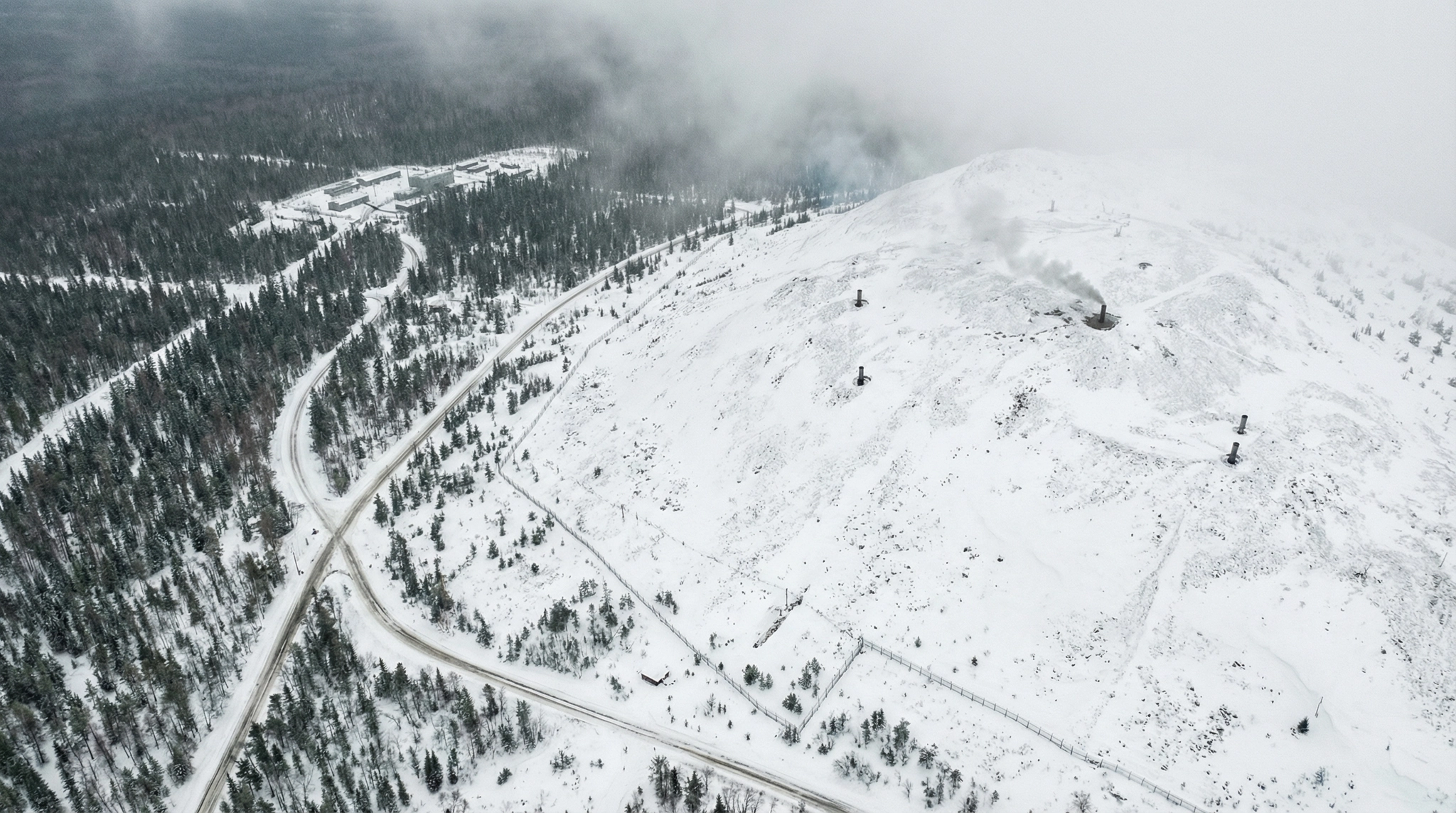
The crown jewel of Russia’s doomsday infrastructure remains the sprawling complex beneath Mount Yamantau in the Republic of Bashkortostan. A relic of Cold War anxiety, the site has seen renewed activity since the onset of the invasion of Ukraine. Satellite imagery and analysis of Russian procurement contracts indicate significant upgrades to ventilation systems, power generation, and satellite communication nodes.
Yamantau is not simply a hole in the ground; it is a subterranean city. Intelligence estimates suggest the facility can house tens of thousands of people for months, if not years. Its location is strategic: deep in the Russian interior, shielded by thousands of feet of quartz and granite, it is impervious to conventional strikes and highly resistant to direct nuclear impacts.
“The revitalization of Yamantau suggests a shift in the Kremlin's risk calculus. They are moving from a posture of deterrence to a posture of survivability. You do not harden a command center this deeply unless you genuinely believe the command chain is at risk of decapitation.”
Unlike the luxury dachas that dot the Black Sea coast, Yamantau serves a military function: Continuity of Government (COG). In a NATO-Russia conflict scenario, this is where the General Staff and the political directorate would retreat to maintain control over the Strategic Rocket Forces. The recent modernization efforts imply that the current leadership views a “decapitation strike” as a tangible probability rather than a theoretical risk.
The Black Sea and Valdai: Luxury Meets Fortification
While Yamantau represents the military backbone, Putin’s personal residences reveal a hybrid approach: opulence fused with extreme security. Investigations into the infamous “Putin’s Palace” near Gelendzhik on the Black Sea coast exposed more than just gold toilets and aqua-discos; they revealed a complex engineering project involving a 16-story underground bunker system carved into the rock face.
Engineering blueprints leaked by whistleblowers depict elevator shafts descending deep into the cliffside, leading to tunnels capable of providing egress to the beach or serving as hardened shelters. This facility is equipped with its own water supply, ventilation filtration systems capable of scrubbing radioactive isotopes, and independent power grids.
Similarly, the residence at Lake Valdai—a favorite retreat of the Russian President located halfway between Moscow and St. Petersburg—has been fortified with anti-aircraft systems. In 2023 and 2024, Pantsir-S1 air defense systems were spotted installed on towers in the immediate vicinity, a clear indication that the Kremlin fears long-range drone strikes could target the leadership even in their sanctuaries.
The Moscow Metro-2 and Urban Resilience
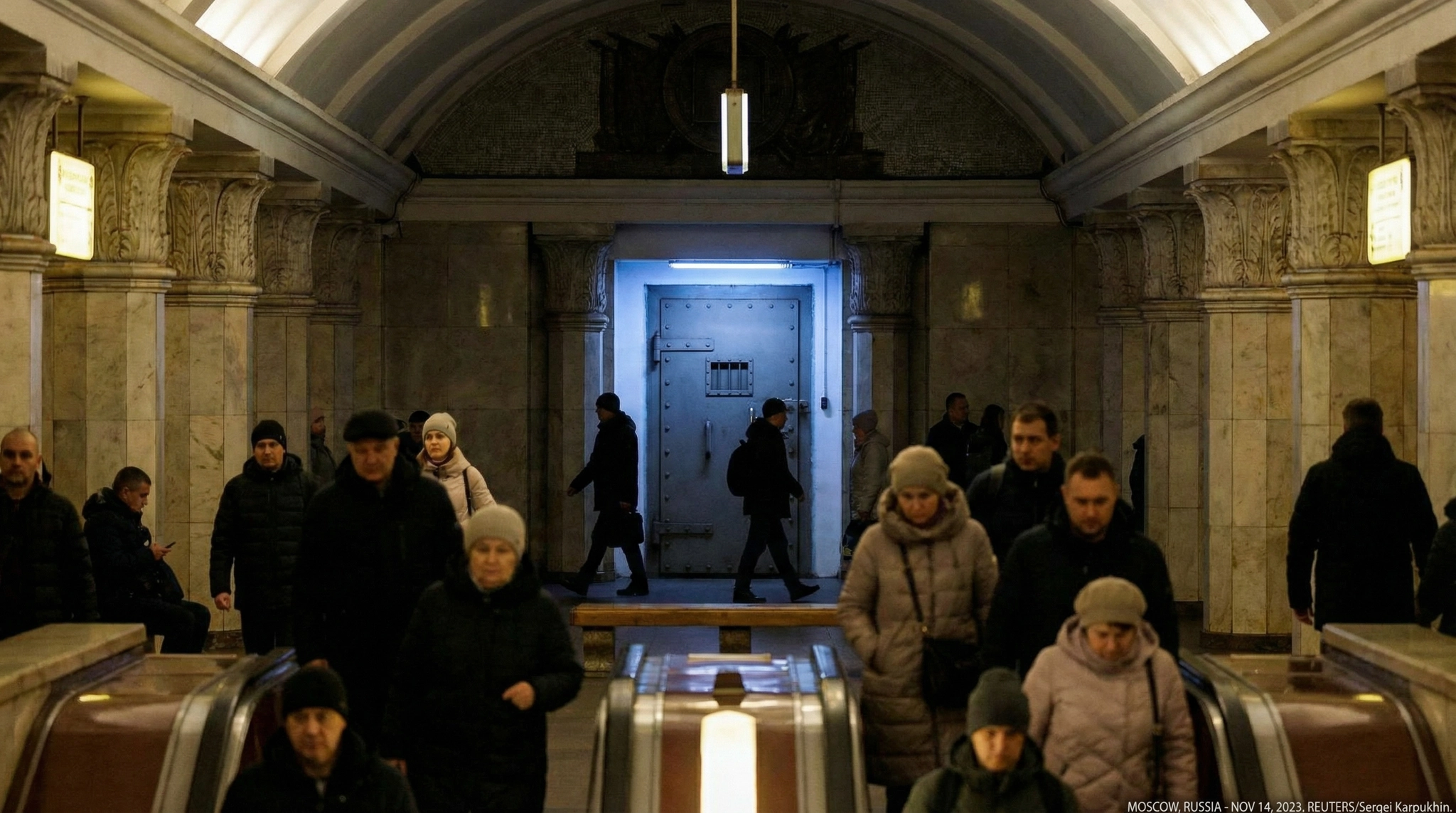
Beneath the streets of Moscow lies another layer of the puzzle: the rumored “Metro-2” (D-6) system. While officially unconfirmed by the Russian government, its existence is an open secret within intelligence circles. This parallel subway system, deeper than the public metro, connects the Kremlin, the Federal Security Service (FSB) headquarters, the government airport at Vnukovo-2, and an underground city in the Ramenki district.
During the Soviet era, this network was designed to ferry the Politburo to safety. Today, it serves as the arteries for the modern Russian “Deep State.” Reports indicate that maintenance and expansion of these tunnels have continued, ensuring that in the event of civil unrest or a surprise attack, the leadership can vanish from the capital’s surface within minutes.
Strategic Implications of Bunkerization
The existence of these secret locations offers critical insights into current Russian geopolitical strategy:
- Nuclear Brinkmanship: The hardening of command and control (C2) centers lowers the psychological threshold for nuclear use. If the leadership believes they can survive a retaliatory strike, the deterrent value of Mutual Assured Destruction (MAD) is marginally eroded.
- Regime Insulation: These bunkers are not just protection against NATO missiles; they are protection against the Russian people. In a scenario of violent revolution or coup, these facilities serve as citadels where the loyalist core can hold out.
- Resource Allocation: The astronomical cost of maintaining and upgrading these facilities—estimated in the billions of dollars—highlights the regime's priorities. While the Russian army in Ukraine often relies on refurbished Soviet tanks and crowd-funded drones, the safety of the supreme leader commands unlimited budget access.
Conclusion: The Architecture of Fear
The vast network of secret locations, from the granites of the Urals to the cliffs of the Black Sea, paints a picture of a leader who is preparing for the ultimate worst-case scenario. Vladimir Putin has built a state within a state, a hardened shell designed to withstand the apocalypse.
However, history offers a stark warning for leaders who retreat into bunkers. While they offer physical safety, they deepen the isolation from reality that leads to strategic errors. As the Kremlin buries itself deeper, its connection to the world above—and the consequences of its war—becomes ever more tenuous. The concrete is thick, but it cannot filter out the inevitable political and economic consequences of the war raging on the surface.


Reader discussion
No comments yet. Start the discussion.
Comments are closed for this article.