
The Caribbean Sea has long been regarded as the American Mediterranean, a sphere of influence where Washington’s naval supremacy is rarely questioned. Yet, in late November 2025, a digital proclamation from President Donald Trump transformed this maritime expanse from a zone of patrol into a potential theater of war.
With a succinct declaration that Venezuelan airspace was effectively “closed,” the President did not merely issue a threat; he upended the geopolitical chessboard of the Western Hemisphere. While the immediate shockwaves were felt in Caracas, where the Nicolás Maduro regime decried a violation of sovereignty, the tremors were perhaps most acute in the energy trading floors of Houston, London, and Singapore.
To the casual observer, the administration’s posture appears to be a continuation of the hardline approach toward narco-trafficking and illegal migration—pillars of the President’s domestic platform. Defense Secretary Pete Hegseth has reinforced this narrative, citing the need to dismantle the cartels that use Venezuela as a transit hub.
However, a deeper strategic calculus is visibly at play. Beneath the jungle canopy of the Orinoco Belt lies the world’s largest proven oil reserve—303 billion barrels of heavy crude that have largely sat dormant. As U.S. naval assets cast long shadows over the Caribbean, the question is whether the objective is security, regime change, or the grandest resource acquisition in modern history.
The Hegseth Doctrine: Coercion by Containment

The announcement of a de factono-fly zone over a sovereign nation, absent a formal declaration of war or a UN Security Council resolution, represents a paradigm shift in American force projection. Analysts at the Institute for the Study of War (ISW) have noted that this move aligns with a broader strategy of “suffocation” rather than immediate invasion. By declaring the airspace closed, the White House has effectively severed the logistical arteries that keep the Maduro regime on life support.
The operational tempo in the Southern Command (SOUTHCOM) area of responsibility has shifted from surveillance to active interdiction. This is not just about stopping drugs; it is about demonstrating the capability to isolate a state actor entirely.
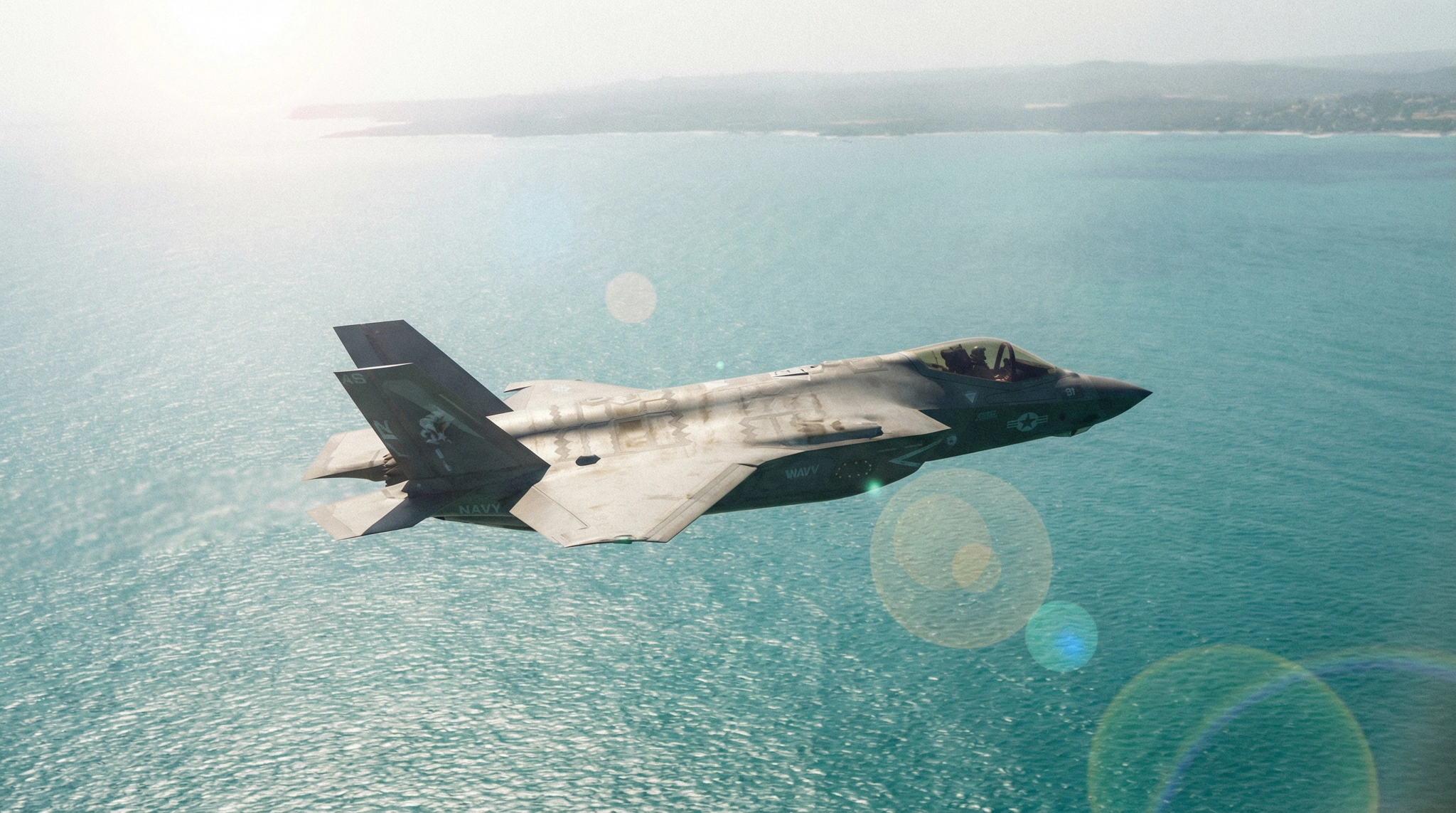
Defense Secretary Hegseth’s rhetoric has provided the martial cadence for this diplomatic maneuver. By framing the Venezuelan state apparatus as indistinguishable from the narco-terrorist networks it harbors, the Pentagon has created a legal and moral framework for intervention. The presence of U.S. Navy assets in the Caribbean serves as a floating reminder of the kinetic power available should the “closure” be challenged.
The Migration Nexus
While energy security provides the strategic allure, the political capital for such a bold move is derived from the migration crisis. The Trump administration views the stabilization of Venezuela not merely as a foreign policy objective but as a border security imperative. Millions of Venezuelans have fled the economic collapse, creating a migration corridor that stretches from the Darién Gap to the Rio Grande.
By exerting maximum pressure on Caracas, the White House is betting on a “break-fix” strategy: shatter the current paralysis to enforce a new political order that can eventually stem the flow of refugees. It is a high-risk gamble where short-term chaos is traded for long-term containment.
The 303 Billion Barrel Question
To understand the magnitude of the stakes, one must look below the surface. Venezuela possesses approximately 303 billion barrels of proven crude oil reserves, eclipsing even Saudi Arabia. However, geology is destiny, and Venezuela’s geology is complex. The vast majority of these reserves are located in the Orinoco Oil Belt and consist of extra-heavy crude.
For decades, Petróleos de Venezuela, S.A. (PDVSA) was the envy of the developing world, but today it is a shell of its former self. Following the purge of technical experts under the Chávez era and years of deferred maintenance under Maduro, production has plummeted. As of late 2025, output hovers near one million barrels per day—a tragic underutilization of national wealth.
- Proven Reserves: ~303 Billion Barrels
- Current Export Value (2023 Est.): ~$4.05 Billion
- Crude Type: Extra-Heavy (High Sulfur, High Density)
- Infrastructure Status: Critical Degradation
This technical reality creates a symbiotic, albeit currently adversarial, relationship with the United States. The U.S. Gulf Coast refinery complex is uniquely engineered to process heavy sour crude. Geographically and industrially, the United States is the natural partner for Venezuelan oil.
The Trump administration’s calculus likely involves a scenario where American capital and engineering expertise are deployed to rehabilitate the Orinoco Belt. Such a project would not only revitalize the Venezuelan economy but would also integrate Caracas into the North American energy orbit, effectively severing its dependence on Chinese loans and Russian protection.
The Geopolitics of Energy Realism
The concept of Energy Realism appears to be driving the administration’s thinking. In a world where global supply chains are increasingly weaponized, securing a massive energy reserve within the Western Hemisphere is a matter of national security. The Atlantic Council has frequently warned of the dangers posed by Russian and Chinese influence in Latin America.
President Trump’s move can be interpreted as a forceful reassertion of the Monroe Doctrine. The message is clear: the Western Hemisphere is closed to hostile foreign influence. If the Maduro regime cannot guarantee stability and excludes Western energy interests, the United States reserves the right to alter the equation.
The Transactional Peace
Is there a “Deal” to be made? President Trump’s history suggests a preference for transactional diplomacy over ideological crusades. The closure of airspace and the naval pressure could be the stick intended to force a negotiation. The carrot? A pathway to lifting sanctions and massive foreign direct investment (FDI) in the oil sector, provided the regime concedes to a transition of power.
The reconstruction of Venezuela’s oil sector would require an estimated $200 billion over a decade. Only Western capital markets, backed by U.S. security guarantees, can mobilize resources on that scale.
If successful, such a deal would be a trifecta for the administration: it would lower global oil prices by bringing massive supply online, it would stabilize the Venezuelan economy to halt migration, and it would deliver a foreign policy win that has eluded the past three presidents. However, the distance between the current standoff and that hypothetical future is filled with peril.
The Risks of Intervention
The specter of a resource grab carries immense diplomatic baggage. Across Latin America, memories of 20th-century U.S. interventions remain fresh. A move perceived as imperialistic plunder could ignite a firestorm of anti-American sentiment, alienating key allies like Brazil and Mexico.
Furthermore, the risk of asymmetric warfare is high. The Venezuelan military, while top-heavy and corrupt, possesses sophisticated air defense systems supplied by Russia. Moreover, the regime has organized armed militias (colectivos) that could wage a protracted insurgency against any stabilizing force.
There is also the economic risk. Flooding the market with Venezuelan oil, while beneficial for consumers, could destabilize U.S. domestic shale producers by driving prices below the break-even point. The administration would need to thread a needle, managing the influx of supply to maintain price stability while ensuring the geopolitical benefits are realized.
Conclusion: The December Brinkmanship
As December 2025 unfolds, the Caribbean remains on a knife-edge. The “closed” airspace declaration has not yet precipitated a shooting war, but it has fundamentally altered the rules of engagement. The Trump administration has signaled that the status quo—a narco-state allied with American adversaries sitting atop the world’s largest oil reserve—is no longer tolerable.
Whether this brinkmanship leads to a negotiated transition or a kinetic conflict depends on the calculations made in Miraflores Palace. For Washington, the objective is clear: reclaim the energy advantage and secure the southern periphery. The 303 billion barrels of oil in the Orinoco Belt are no longer just a statistic; they are the center of gravity in a new era of hemispheric power projection.


Reader discussion
No comments yet. Start the discussion.
Comments are closed for this article.