
The Rubicon Crossed: Asian Infantry in a European War
By April 2026, the static, scarred landscapes of the eastern Ukrainian front have witnessed a strategic anomaly that fundamentally rewrites the rules of global conflict. Ukrainian reconnaissance drones hovering over the contested ruins of the Donbas are no longer just capturing images of Russian convict battalions or newly mobilized conscripts from Siberia. Intercepted radio traffic, thermal imagery, and captured prisoners of war have confirmed a reality that Western intelligence agencies warned about for years: North Korean combat brigades are now holding active defensive lines in Europe.
What began in late 2023 as covert shipments of 152mm artillery shells, and evolved in 2024 into the transfer of KN-23 ballistic missiles, has reached its logical, if terrifying, conclusion. Facing a catastrophic domestic labor shortage and unsustainable battlefield attrition, Russian President Vladimir Putin has outsourced a critical segment of his war effort to Kim Jong Un's Korean People's Army (KPA). This is not merely a proxy arrangement; it is the physical fusion of two heavily militarized, heavily sanctioned authoritarian regimes.
"This is no longer just a war of industrial capacity," notes a recent strategic assessment from the Royal United Services Institute (RUSI). "By injecting thousands of Asian infantrymen into a European theater, Moscow and Pyongyang have effectively collapsed the geographic firewall between Euro-Atlantic and Indo-Pacific security architectures."
The implications of this deployment extend far beyond the tactical challenges faced by Ukrainian assault units. It represents a watershed moment in 21st-century geopolitics, forcing a radical recalculation in Washington, Brussels, and Seoul. To understand the gravity of this shift, we must examine the driving forces behind the deployment, the tactical realities of North Korean troops on the ground, and the geopolitical shockwaves reverberating from the Korean Peninsula to NATO headquarters.
The Demographic Imperative: Solving Putin's Manpower Deficit
As previously analyzed by this publication, Russia's war machine is currently slamming into a demographic brick wall. Entering the fifth year of high-intensity conflict, the Russian Federation is grappling with an acute labor deficit of approximately 4.8 million workers. The defense-industrial base, tasked with running shifts 24/7 at facilities like Uralvagonzavod, has actively cannibalized the civilian workforce. Simultaneously, the Kremlin has remained acutely aware of the domestic political risks associated with declaring another mass mobilization wave targeting the urban middle classes in Moscow and St. Petersburg.
Pyongyang offers a brutal, perfectly timed solution to this demographic crisis. With a standing army of over 1.2 million personnel—most of whom have spent their entire lives in rigorous ideological and physical training but lack any modern combat experience—North Korea possesses the one resource Russia desperately lacks: expendable, highly disciplined manpower.
Intelligence estimates from the Institute for the Study of War (ISW) indicate that up to 15,000 North Korean personnel are currently integrated into the Russian order of battle as of early 2026. Their deployment has been phased meticulously:
- Phase 1 (Mid-2025): Deployment of combat engineering battalions to the deep rear, tasked with expanding the "Surovikin Line" fortifications and repairing logistical infrastructure beyond the range of Ukrainian HIMARS.
- Phase 2 (Late 2025): Integration of specialized logistics and munitions handling units to manage the massive influx of North Korean artillery shells and ballistic missiles.
- Phase 3 (Spring 2026): The deployment of light infantry and mechanized elements to secondary defensive lines in the occupied territories, freeing up elite Russian VDV (Airborne) and Naval Infantry units for offensive operations.
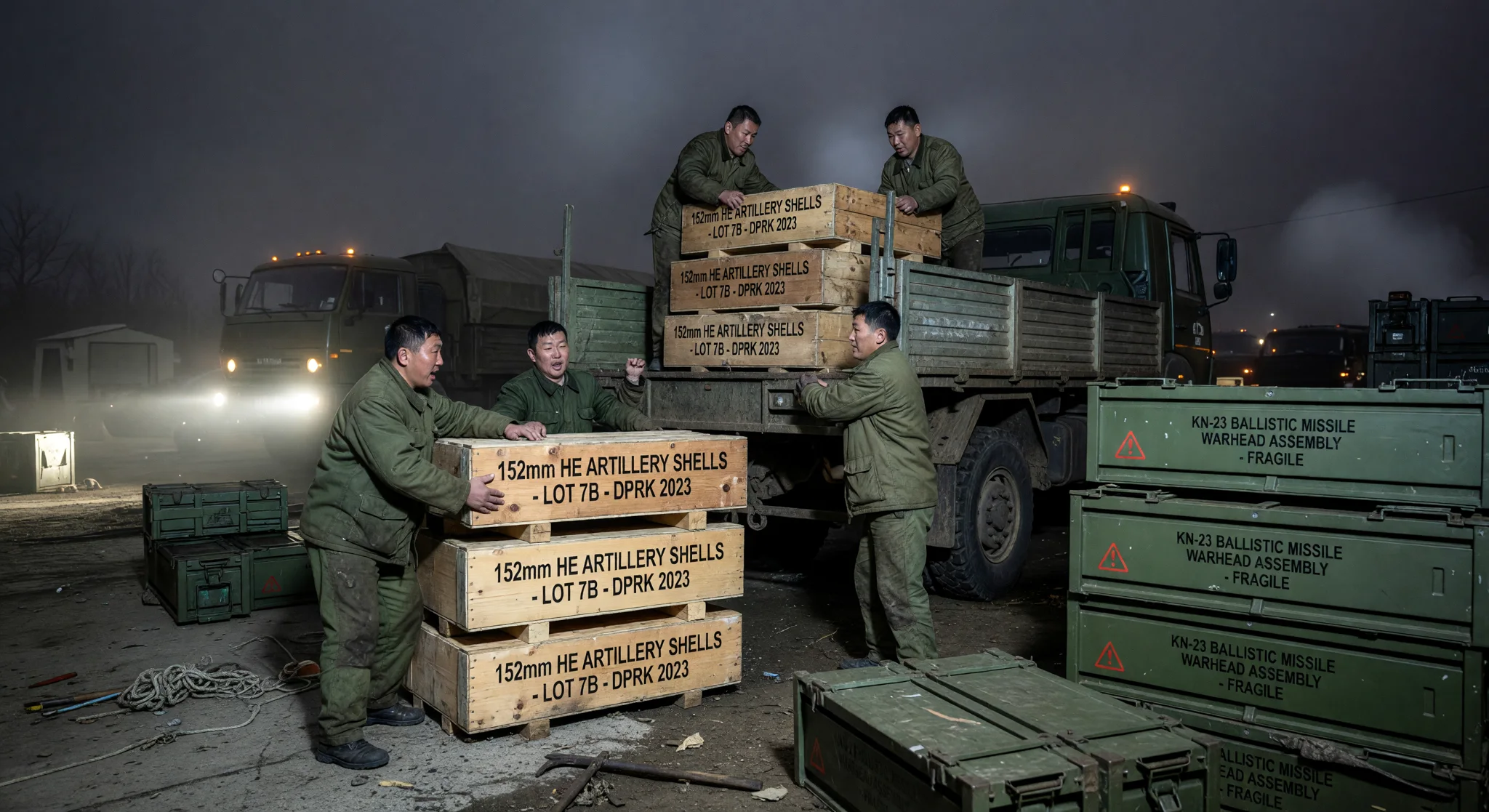
For the Kremlin, the math is entirely pragmatic. Paying Pyongyang a premium in hard currency, subsidized oil, and technology transfers is vastly cheaper—politically and economically—than conscripting another 300,000 Russian men and stripping the domestic economy of its remaining productive capacity.
The Tactical Reality: Command, Control, and Cannon Fodder
The practical integration of a highly insular, foreign military force into the Russian command structure has not been without significant friction. The Russian military is notoriously rigid in its command and control (C2) architecture, and bolting on North Korean brigades has created unique operational vulnerabilities.
The Language and Communications Barrier
The most immediate hurdle is communication. North Korean tactical officers do not speak Russian, and Russian theater commanders do not speak Korean. Western defense analysts tracking the conflict note that Moscow has attempted to solve this by embedding Russian-speaking North Korean liaison officers—often drawn from diplomatic security or intelligence backgrounds—at the battalion level. However, in the chaotic environment of modern drone and electronic warfare (EW), this centralized translation bottleneck severely limits tactical agility.
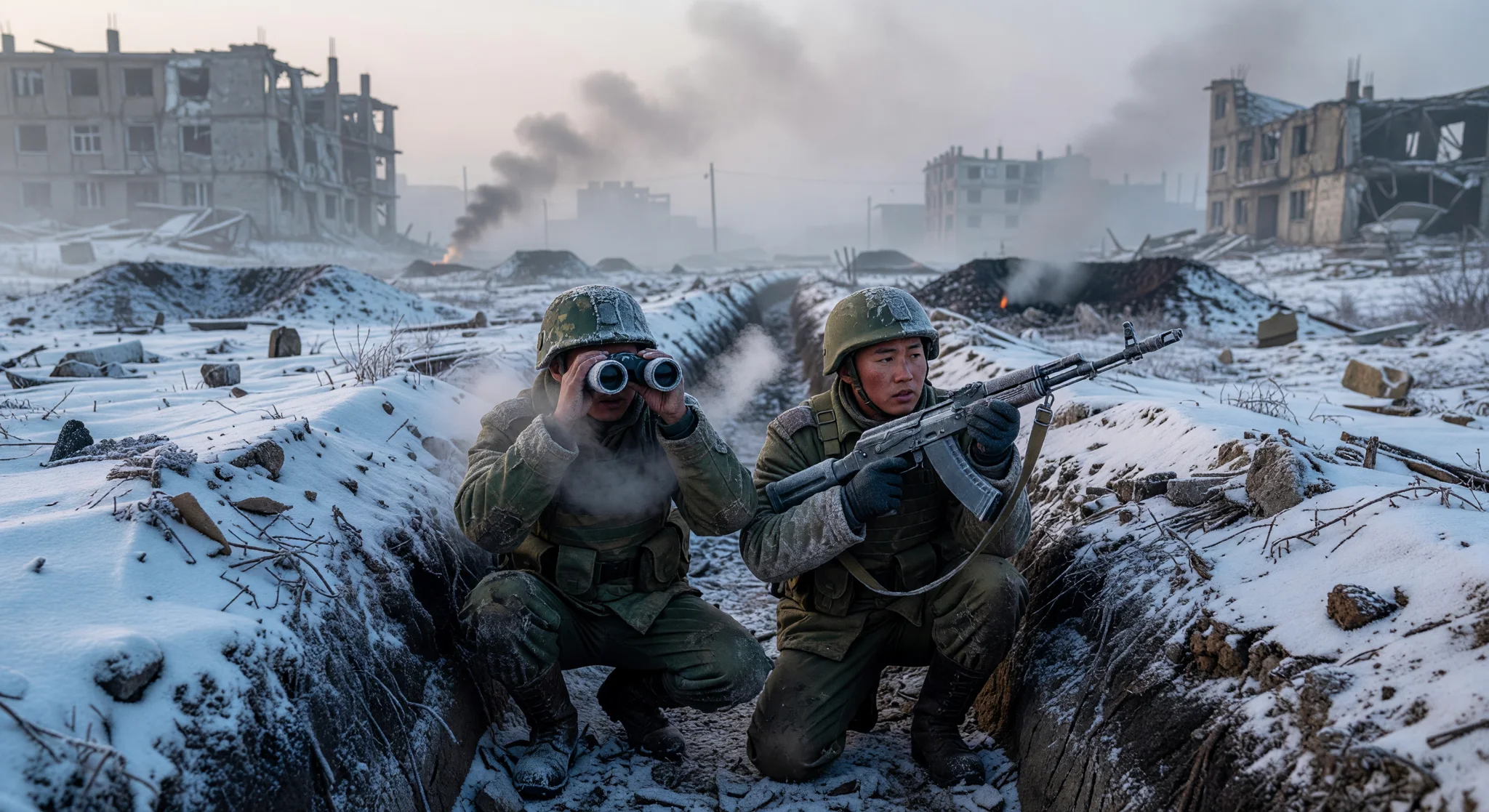
Consequently, North Korean units are rarely used in dynamic, combined-arms offensives. Instead, they are assigned to static defense roles or mass-assault "meat grinder" operations where complex maneuverability is deemed unnecessary. They are holding trenches, absorbing Ukrainian artillery fire, and forcing Kyiv to expend valuable FPV (first-person view) drones on targets that hold zero domestic political cost for Vladimir Putin.
Technological Culture Shock
Furthermore, the KPA troops are experiencing a profound technological culture shock. Trained for decades to fight a massive, conventional artillery and infantry war against South Korea, these soldiers are suddenly facing the hyper-transparent battlefield of 2026 Ukraine. They are encountering autonomous fiber-optic drone swarms, satellite-guided precision munitions, and persistent spectral warfare—domains where North Korean military doctrine is woefully outdated.
Adapting to the Digital Kill-Chain
However, this steep and bloody learning curve is precisely why Kim Jong Un agreed to the deployment. The troops who survive and return to Pyongyang will possess invaluable combat experience in 21st-century warfare. They are learning how to operate under constant drone surveillance, how to counter modern electronic warfare, and how to integrate into a digital kill-chain—knowledge that will be immediately applied to Pyongyang's posture against South Korea and US Forces Korea (USFK).
The Strategic Quid Pro Quo: What Pyongyang Gains
If Russia is gaining manpower, what is North Korea extracting in return? The price of North Korean blood is being paid in high-end military technology that fundamentally alters the balance of power in the Pacific.
According to assessments by the Center for Strategic and International Studies (CSIS), the Kremlin has lifted its historical embargo on transferring advanced dual-use and strategic technologies to the Kim regime. The immediate dividends for Pyongyang include:
- Aerospace and Satellite Tech: Following a string of humiliating launch failures in the early 2020s, North Korea's military reconnaissance satellite program has seen a sudden, dramatic leap in reliability. Russian telemetry data and solid-fuel rocket technology are widely suspected to be the catalyst.
- Submarine Modernization: Pyongyang has long sought to field a credible sea-based nuclear deterrent. Russian naval engineers are reportedly assisting in quieting North Korea's diesel-electric submarine fleet and transferring blueprints for vertical launch systems capable of firing submarine-launched ballistic missiles (SLBMs).
- Air Defense and Fighter Aviation: With its air force still reliant on obsolete Soviet-era MiG-29s, Pyongyang is negotiating the acquisition of Russian Su-35 multirole fighters and advanced S-400 air defense batteries to contest its airspace against South Korean and American stealth aircraft.
- Economic Lifelines: Russia has functionally dismantled the UN sanctions regime against North Korea, providing regular shipments of refined petroleum, wheat, and access to Russian banking networks to bypass global financial isolation.
This technology transfer represents a catastrophic failure of global non-proliferation efforts. By purchasing manpower with nuclear and aerospace technology, Moscow is ensuring that the Indo-Pacific will become increasingly unstable over the next decade.
The Geopolitical Fallout: Seoul and NATO React
The appearance of KPA patches on European battlefields has shattered the illusion that the wars in Ukraine and the tensions in the Pacific are separate phenomena. The immediate strategic backlash is hitting Moscow from an actor it desperately wanted to keep neutral: South Korea.
For years, Seoul maintained a strict policy of providing only non-lethal aid and financial support to Ukraine, fearful of provoking Moscow into arming Pyongyang. With that red line decisively crossed, the geopolitical calculus in Seoul has inverted. The South Korean government, recognizing that North Korean troops are gaining combat experience to be used against the South, is aggressively pivoting.
Seoul's Lethal Pivot
In early 2026, South Korea's massive defense-industrial base—one of the few in the democratic world capable of matching Russian artillery output—began direct shipments of 155mm artillery shells and tactical vehicles to Kyiv, abandoning the "backfill" agreements previously used with the United States and Poland. South Korean military intelligence officers have also deployed to Ukraine as observers, tasked with interrogating captured North Korean soldiers and analyzing KPA tactical adaptations in real-time.
NATO's Indo-Pacific Reality
For NATO, the deployment confirms the emergence of an integrated Axis of Upheaval. The alliance can no longer view the defense of its Eastern Flank in isolation. European security planners are now forced to factor North Korean troop rotations and Iranian ballistic missile production directly into their threat models for the Baltics and the Black Sea.
This has accelerated NATO's institutional deepening with its IP4 partners (Japan, South Korea, Australia, and New Zealand). Joint intelligence-sharing agreements regarding arms proliferation, cyber defense, and sanctions enforcement have rapidly expanded, bridging the security architectures of two hemispheres into a single, cohesive front against authoritarian aggression.
Conclusion: The End of Regional Wars
The deployment of North Korean troops to the Russian frontlines in 2026 marks the definitive end of localized conflict. The Ukraine war has metamorphosed from a regional territorial dispute into a global proxy war, drawing in the industrial bases, technologies, and now the militaries of states thousands of miles away.
For Vladimir Putin, the influx of North Korean infantry provides a temporary, albeit critical, reprieve from domestic demographic collapse. It allows the Kremlin to sustain a war of attrition that it otherwise could not man.
But the long-term cost is immense. Moscow has permanently mortgaged its leverage in Asia, empowering a volatile North Korean regime with advanced strategic technologies and invaluable combat experience.
As Asian troops dig trenches into European soil, the strategic reality of the 2020s is laid bare. The adversaries of the democratic world are no longer operating in silos; they are pooling their resources, trading their comparative advantages, and fighting a coordinated war against the global order. If NATO and its Pacific allies are to outlast this challenge, they must recognize that the frontlines of Seoul, Taipei, and Kyiv are increasingly, inextricably linked.


Reader discussion
No comments yet. Start the discussion.
Comments are closed for this article.