
The Anatomy of a Near-Miss
In early March 2026, a disaster of historic proportions was narrowly averted off the coast of Gotland. An aging Aframax tanker, sailing under a Gabonese flag and laden with 700,000 barrels of Russian Urals crude, suffered a total engine failure in high winds. Drifting perilously close to a fragile marine sanctuary, the vessel was ultimately secured by Swedish coast guard tugs. Upon inspection, Swedish authorities discovered a nightmare scenario: the crew was untrained for emergency anchoring, the ship's navigation software was severely outdated, and crucially, its Protection and Indemnity (P&I) insurance was a fabricated document tied to a shell company in Dubai.
This incident served as the catalyst for a radical shift in European security policy. For three years, NATO and the European Union had watched with growing frustration as Moscow bypassed Western price caps and sanctions by assembling a 'shadow fleet' of over 600 decaying tankers. These vessels, operating outside mainstream insurance and regulatory frameworks, have been ferrying millions of barrels of crude from the Russian ports of Primorsk and Ust-Luga through the Baltic Sea to markets in India and China.
Now, the geopolitical calculus has changed. Empowered by the full integration of Sweden and Finland into the alliance, NATO has effectively transformed the Baltic Sea into a 'NATO lake.' Denmark and Sweden, long hesitant to disrupt maritime traffic due to freedom of navigation norms, are now weaponizing environmental law to blockade Vladimir Putin's shadow fleet. This gray-zone naval strategy represents a masterclass in asymmetrical statecraft, legally throttling Moscow's primary energy export route while avoiding direct kinetic escalation.
The Oresund Chokepoint: Geography as Destiny
To understand the devastating impact of this Nordic strategy, one must look at a map of the Danish Straits. Every drop of oil leaving Russia's Baltic ports must traverse the Oresund, the Great Belt, or the Little Belt—narrow, shallow, and treacherous waterways separating Denmark and Sweden. Historically, passage through these straits has been governed by the 1857 Copenhagen Treaty and the United Nations Convention on the Law of the Sea (UNCLOS), which guarantee the right of 'transit passage' to all merchant vessels.
However, UNCLOS is not a suicide pact for coastal states. Article 234 of the convention grants coastal nations specific rights to enforce non-discriminatory environmental regulations in ice-covered areas, while Article 220 allows states to intervene if there is clear objective evidence that a vessel threatens major damage to the coastline. For years, legal scholars debated whether the threat posed by uninsured Russian tankers met this threshold.
The March incident off Gotland settled the debate. According to maritime analysts at the Royal United Services Institute (RUSI), the Nordic states seized the political momentum to implement a stringent new inspection regime. Denmark, which controls the Great Belt—the only channel deep enough for fully laden Suezmax tankers—has begun mandating rigorous proof of legitimate Tier-1 P&I insurance and requiring state-certified harbor pilots for all vessels carrying hazardous cargo.
"We are no longer playing a game of maritime whack-a-mole," noted a recent policy brief from the Atlantic Council. "By shifting the domain of confrontation from sanctions enforcement to environmental sovereignty, Copenhagen and Stockholm have trapped Moscow in a legal snare that is incredibly difficult to break without initiating an overt act of war."
Weaponizing Environmental Law
The mechanics of this blockade are bureaucratic but brutally effective. The strategy relies on a coordinated effort between naval forces, coast guards, environmental protection agencies, and financial regulators. Here is how the Nordic shield operates in practice:
- Mandatory Pilotage Enforcement: The Danish Maritime Authority now strictly enforces the requirement for local pilots. Vessels that cannot produce valid, verifiable insurance from a recognized International Group of P&I Clubs are denied pilotage services. Navigating the Great Belt without a pilot is practically suicidal for large tankers.
- Targeted Boardings: Leveraging the precedent set by the Gotland incident, the Swedish Navy and Coast Guard have begun intercepting vessels exhibiting 'anomalous behavior'—such as spoofing AIS tracking data or engaging in ship-to-ship (STS) transfers in Sweden's Exclusive Economic Zone (EEZ).
- Port State Control Detentions: Ships found with severe safety deficiencies during these inspections are impounded in designated holding areas until repairs are made and massive environmental safety bonds are posted in euros, effectively freezing the asset.
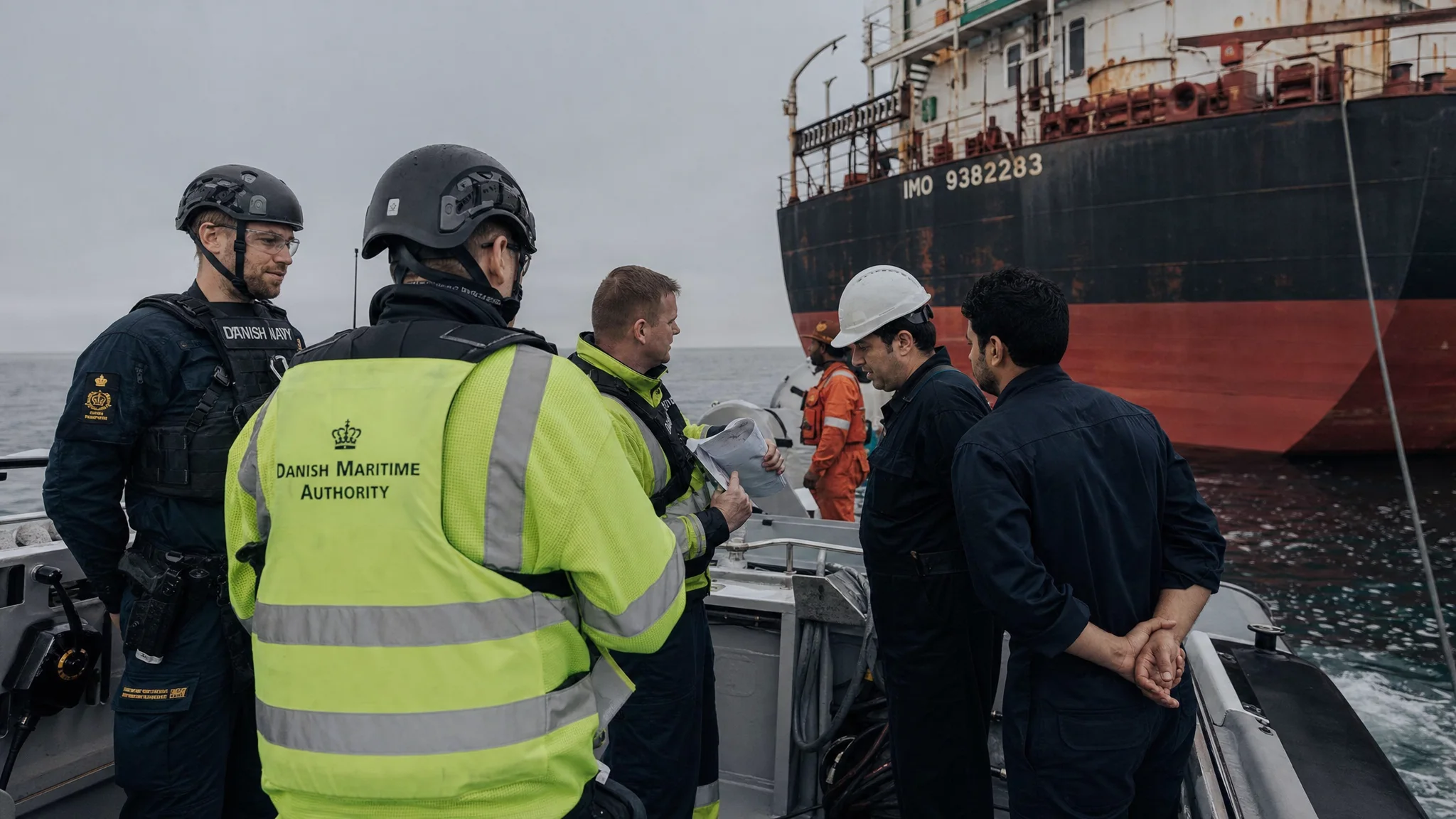
The genius of this approach lies in its universal applicability. It does not target 'Russian oil' directly, which would violate complex WTO and UNCLOS trade norms. Instead, it targets 'unsafe shipping practices.' Because Moscow's sanctions evasion relies entirely on using dilapidated, end-of-life vessels operating under opaque corporate structures, the shadow fleet falls disproportionately under the crosshairs of these environmental regulations.
The Economic Attrition of the Shadow Fleet
The economic ramifications for the Kremlin have been swift and severe. Data compiled by the Center for Strategic and International Studies (CSIS) indicates that since the implementation of the Nordic inspection regime in April 2026, transit volumes of Russian crude through the Baltic have plummeted by nearly 40 percent.
The bottleneck has created a cascade of logistical failures for Moscow. Tankers lacking proper documentation are forced to anchor in the Gulf of Finland, waiting for diplomatic clearance that rarely comes. This massive traffic jam reduces the turnaround time of the shadow fleet, creating a severe shortage of available hulls. Consequently, freight rates for Russian crude have skyrocketed, eating directly into the already compressed margins of Urals oil.
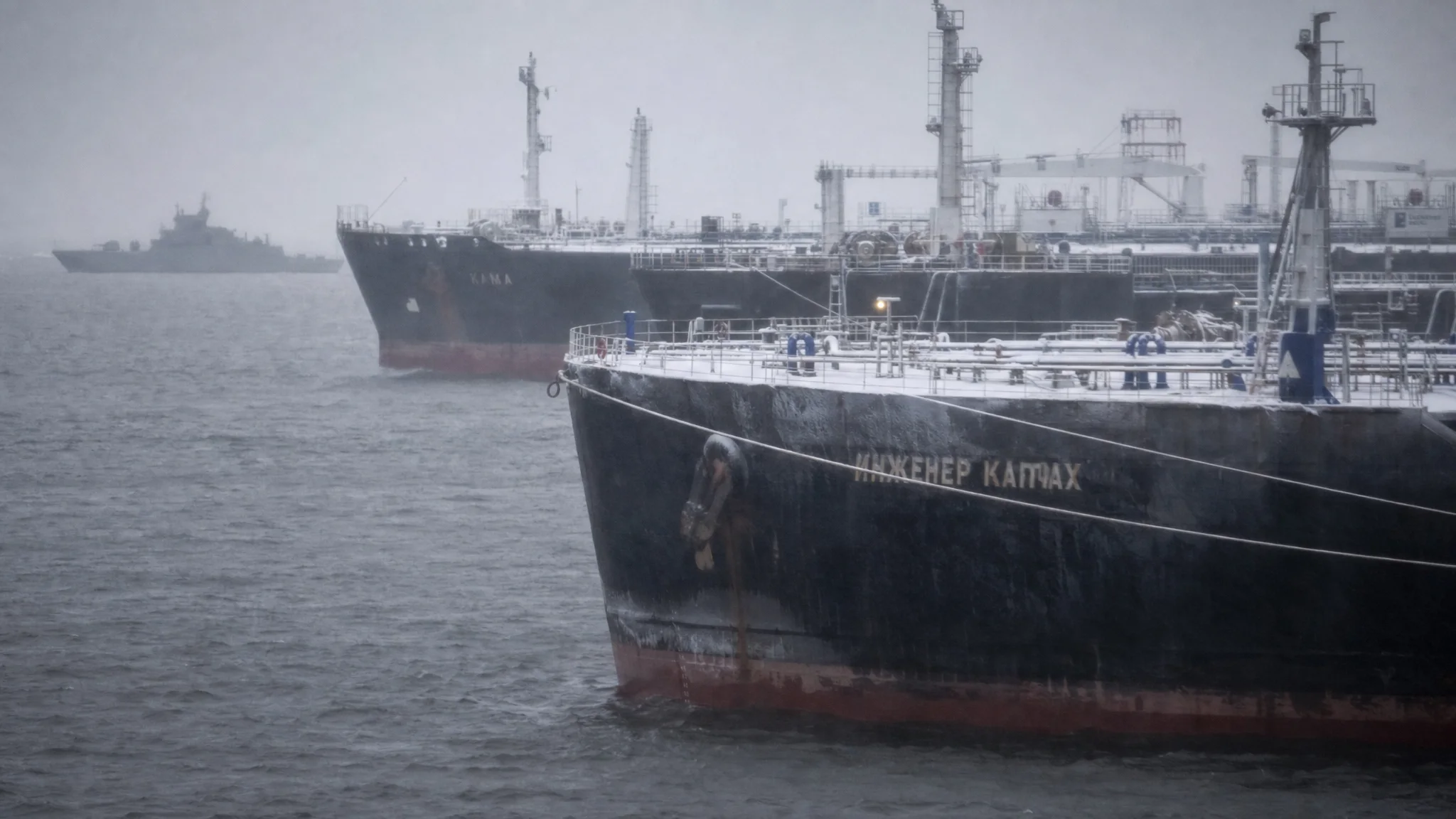
Furthermore, the unpredictability of Baltic transit has unnerved Moscow's primary buyers. Refineries in India and China operate on strict delivery schedules. As delays stretch from days into weeks, these Asian buyers have begun demanding even steeper discounts on Russian oil to compensate for the logistical risk. The Kremlin's energy revenues, already battered by the collapse of Gazprom and structural labor shortages, are facing a critical squeeze.
To compensate, Russia has attempted to divert exports to its Arctic port of Murmansk and the Pacific port of Kozmino. However, Kozmino is already operating at maximum capacity, and expanding the Northern Sea Route requires specialized ice-class tankers that Moscow simply does not possess in sufficient numbers. The Baltic route remains the irreplaceable jugular of the Russian war economy, and NATO has finally placed its hands firmly around it.
Moscow's Escalatory Options
Vladimir Putin is acutely aware of the strategic strangulation occurring in the Baltic. Unsurprisingly, the Kremlin's reaction has been characterized by vitriolic rhetoric and asymmetric threats. The Russian Foreign Ministry has denounced the Danish and Swedish actions as "piracy" and an "illegal blockade," threatening unspecified military-technical responses.
In practice, Russia's options are severely limited. Direct military escorts of shadow fleet vessels by the Russian Baltic Fleet—headquartered in Kaliningrad—would be highly provocative and tactically disastrous. With Sweden and Finland in NATO, the Baltic Sea is ringed by advanced Western anti-ship missile batteries, stealth submarines, and F-35 fighter squadrons. The Russian Baltic Fleet is effectively a hostage in its own home waters.
Instead, Western defense analysts warn that Moscow is likely to escalate via the gray zone. According to a recent assessment by the Institute for the Study of War (ISW), Russia may respond by intensifying its campaign of sabotage against European critical infrastructure. This could include cutting undersea telecommunications cables, accelerating GPS jamming campaigns from Kaliningrad, or orchestrating targeted cyberattacks against Nordic maritime logistics hubs.
There is also the dark, unspoken fear among Baltic environmental ministers: the 'kamikaze tanker' scenario. In an act of ultimate brinkmanship, Russia could intentionally allow one of its decrepit tankers to run aground in the Oresund, creating an environmental catastrophe designed to punish the Nordic states and force a reopening of the straits during the cleanup effort. While extreme, the Kremlin's willingness to weaponize civilian infrastructure—as seen with the destruction of the Kakhovka Dam in Ukraine—means this threat must be taken seriously by NATO planners.
Conclusion: A New Era of Maritime Containment
The unfolding drama in the Danish Straits represents a pivotal evolution in modern geopolitics. For too long, the West's response to Russian aggression has been reactive, characterized by sweeping sanctions regimes that were easily circumvented by state-backed smuggling networks and opaque maritime registries.
By enforcing an environmental blockade on the shadow fleet, Sweden and Denmark have demonstrated that NATO can go on the offensive without firing a single shot. They have proven that the bureaucratic instruments of the state—harbor masters, insurance auditors, and environmental inspectors—can be just as devastating to an adversary's war machine as HIMARS or stealth bombers.
As the conflict in Ukraine drags into the latter half of the 2020s, this model of maritime containment offers a potent blueprint for dealing with rogue states. It signals the end of the era where authoritarian regimes could exploit the openness of the global maritime commons to finance their wars of conquest. In the cold, shallow waters of the Baltic, Putin's shadow fleet has finally met an immovable object.


Reader discussion
No comments yet. Start the discussion.
Comments are closed for this article.