
Introduction: The Invisible Trade Route
In early May 2026, a fleet of Russian railcars loaded with liquefied natural gas departed the Amur region, crossing the Heilongjiang border into northeastern China. Simultaneously, warehouses in Shenzhen dispatched thousands of dual-use optical sensors and heavy machinery components destined for defense production facilities in the Urals. The goods moved efficiently, but more remarkably, the financial transactions that underwrote this massive bilateral exchange were entirely invisible to Western financial monitors.
No SWIFT messages were broadcast. No correspondent banks in New York or Frankfurt processed the clearing. No US dollars changed hands. Instead, the multi-million dollar trade was settled instantaneously through a ledger linking the Central Bank of Russia's (CBR) newly operational Digital Ruble directly with the People's Bank of China's e-CNY.
As the war in Ukraine grinds into its fifth year, the West's primary non-kinetic weapon against Moscow—total financial isolation—is facing an existential threat. For years, the US Treasury's Office of Foreign Assets Control (OFAC) relied on the threat of secondary sanctions to terrify global financial institutions into cutting ties with Russia. Today, by migrating sovereign trade to Central Bank Digital Currencies (CBDCs), Moscow and Beijing are building a fortified, sanctions-proof financial corridor that fundamentally undermines the hegemony of the US dollar.
The Architecture of Financial Defiance
The architecture of financial defiance relies on bypassing traditional systems to prevent global trade from being monitored and weaponized. The Society for Worldwide Interbank Financial Telecommunication (SWIFT) has long served as the central nervous system of global finance. Because most cross-border transactions pass through Western correspondent banks and clear in US dollars or Euros, Washington and Brussels possess an unparalleled panopticon over global commerce.
Russia's expulsion from SWIFT in 2022 was heralded as a crushing blow. However, under the guidance of CBR Governor Elvira Nabiullina, Moscow accelerated a project that had been quietly gestating for years. The Digital Ruble is not a cryptocurrency like Bitcoin; it is a centralized, programmable liability of the Russian state, existing on a proprietary blockchain controlled exclusively by the central bank.
"The rollout of the Digital Ruble in late 2025 and its rapid institutional adoption in 2026 marks the transition from theoretical de-dollarization to practical, operational decoupling," notes a recent working paper from the Atlantic Council's GeoEconomics Center. "By bypassing correspondent banking entirely, the Kremlin has effectively blinded Western financial intelligence."
How the Ledger Operates
In practice, the system relies on bilateral bridges between authoritarian CBDCs. Building upon the framework of the Bank for International Settlements' mBridge project—which China actively shaped—Russia and China have established a bespoke digital settlement node.
- Instantaneous Settlement: Instead of taking days to clear through multiple international intermediaries, a transaction between a Russian energy exporter and a Chinese state-owned enterprise settles in milliseconds.
- Zero Dollar Exposure: The trade is denominated in digital local currencies, with exchange rates pegged daily through direct bilateral agreements rather than open currency markets.
- Programmability: The smart contracts embedded in the Digital Ruble allow Moscow to dictate exactly how and where the currency can be spent, heavily restricting capital flight while optimizing state-directed defense spending.
Closing the Secondary Sanctions Loophole
The secondary sanctions loophole is closed because the Digital Ruble-e-CNY bridge vaporizes US leverage over Beijing. Throughout 2024 and 2025, the primary leverage the United States held was the threat of secondary sanctions; whenever Chinese regional banks facilitated payments for Russian dual-use technology, the US Treasury threatened to sever them from the dollar system, keeping major lenders like ICBC compliant with Western red lines.
Because transactions now occur directly between the central bank ledgers of the two nations, commercial banks in China no longer face exposure to the Western financial system. The transaction data never touches an American server, nor does it require a dollar-clearing operation.
"We are witnessing the weaponization of blockchain technology by revisionist states," argues a senior fellow at the Center for Strategic and International Studies (CSIS). "Washington's sanctions regime operates on the assumption that global trade requires Western plumbing. Moscow and Beijing have just built their own pipes."
This digital architecture has profound implications for Russia's defense industrial base. As explored in our previous coverage of Chinese semiconductor smuggling, Moscow's ability to produce precision-guided munitions relies heavily on Chinese microelectronics. Previously, these procurements required convoluted webs of shell companies in the UAE, Central Asia, and Hong Kong to launder the financial trail. Now, state-backed defense conglomerates like Rostec can transact directly with Chinese suppliers using digital ledgers, drastically reducing transaction costs, eliminating the risk of frozen assets, and accelerating the delivery of critical components to the Ukrainian front lines.
Expanding the Authoritarian Financial Ecosystem
Moscow is aggressively expanding the authoritarian financial ecosystem by exporting its digital architecture to other heavily sanctioned states, creating a parallel global economy that operates in the shadows of Western regulation. While the Sino-Russian digital bridge is the most consequential development, it is not occurring in a vacuum.
The Tehran Connection
Iran, a pioneer in enduring Western financial isolation, has seamlessly integrated its own digital rial into the Russian framework. According to intelligence analysis from the Royal United Services Institute (RUSI), the joint production of Shahed-series attack drones—now localized at facilities in Russia's Tatarstan region—is increasingly financed through direct CBDC transfers.
This integration solves a major logistical headache for both regimes. In the past, Russia reportedly paid for Iranian military hardware using physical gold bullion flown into Tehran, or through highly inefficient barter arrangements involving advanced fighter jets like the Su-35. The digital ledger allows for fluid, liquid transfers of capital, enabling a much more dynamic and integrated defense industrial relationship between the two nations.

The BRICS Dimension
Looking beyond the immediate war effort, the Kremlin is leveraging its presidency of the BRICS+ format to push for a broader, multilateral digital currency platform. Dubbed "BRICS Pay" in its early iterations, the goal is to create a unified clearing mechanism that allows countries like India, Brazil, and South Africa to trade with Russia without fearing US Treasury reprisals.
While India has aggressively pivoted away from Russian military hardware—a shift driven by Moscow's delivery failures—New Delhi remains addicted to deeply discounted Russian crude oil. By adopting a localized digital settlement mechanism, India can continue to absorb Russian energy exports while maintaining plausible deniability with its Western strategic partners.
The Diminishing Returns of Economic Statecraft
The successful deployment of the Digital Ruble exposes the diminishing returns of economic statecraft by revealing a critical vulnerability in modern Western sanctions. For the past three decades, the United States and the European Union have relied on financial sanctions as the ultimate coercive tool short of military intervention, an effectiveness predicated on a unipolar financial world order dominated by the US dollar and Western institutions.
As we observe in mid-2026, that unipolarity is fracturing. The physical sanctions evasion tactics—the "shadow fleets" of aging oil tankers navigating the Baltic, the maritime insurance workarounds, the smuggling of consumer drones through Kazakhstan—were merely the improvised, chaotic first phase of Russia's economic defense. The Digital Ruble represents the second, mature phase: institutionalized, state-level decoupling.
Scholars at the Carnegie Endowment for International Peace warn that the long-term consequences of this shift extend far beyond the war in Ukraine. "By proving that a major economy can survive and even sustain a high-intensity conflict while entirely disconnected from the dollar system, Russia has provided a blueprint for other revisionist powers. If Beijing decides to blockade Taiwan in 2028 or 2030, it will do so knowing that the financial architecture to survive Western sanctions has already been built and beta-tested by Moscow."
Strategic Implications for NATO and the West
The realization that financial sanctions are losing their lethality forces a fundamental recalculation within NATO and Western policy circles. If the Kremlin's war machine cannot be starved of capital through banking restrictions, the burden of containing Russian aggression shifts heavily back to kinetic, physical deterrence and export controls.
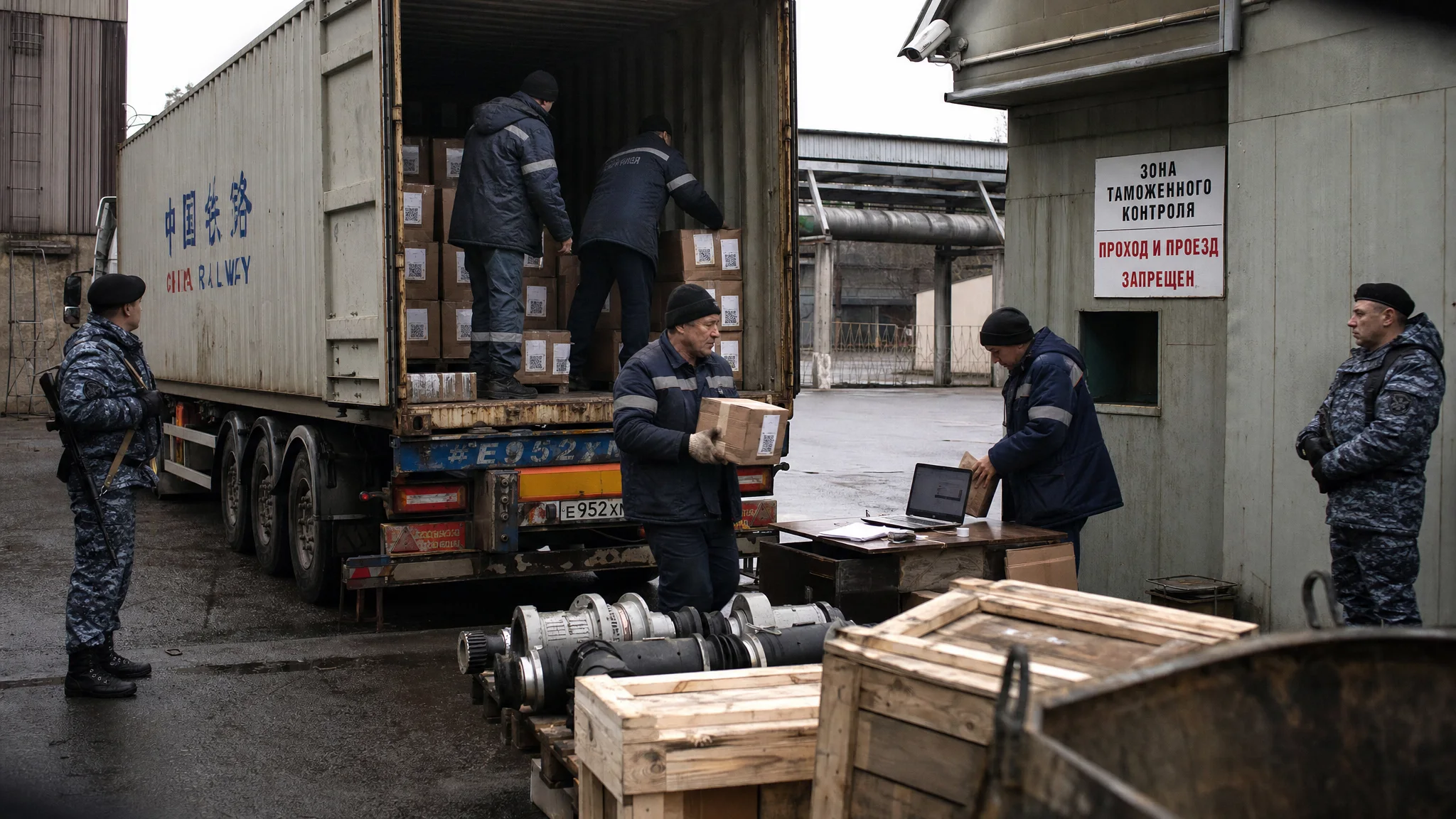
- The Return to Physical Interdiction: If the money cannot be tracked, the physical goods must be stopped. This places immense pressure on NATO's border states—Poland, Finland, the Baltics, and Romania—to enforce draconian physical customs barriers. It also increases the strategic importance of maritime blockades, such as the Nordic effort to throttle the Baltic shadow fleet.
- The End of Financial Omniscience: Western intelligence agencies must adapt to a world where financial intelligence (FININT) is significantly degraded. Tracking the proliferation of weapons of mass destruction, terrorist financing, and state-sponsored espionage will require greater reliance on human intelligence (HUMINT) and signals intelligence (SIGINT), as the easy visibility provided by SWIFT data evaporates.
- Accelerated Technological Competition: The US Federal Reserve and the European Central Bank must accelerate their own CBDC programs, not necessarily to interoperate with authoritarian ledgers, but to ensure that the dollar and euro remain attractive, efficient, and dominant mediums of exchange in the Global South.
Conclusion: A New Digital Iron Curtain
The history of the 2020s will not only be defined by the return of trench warfare to the European continent, but by the shattering of a unified global financial system. The deployment of the Digital Ruble, and its seamless integration with Chinese and Iranian ledgers, demonstrates a chilling reality: the authoritarian axis has successfully engineered its way out of the Western financial chokehold.
For policymakers in Washington and Brussels, the illusion that economic warfare alone can halt Russian imperial ambitions has been thoroughly dispelled. The physical Iron Curtain currently hardening from the Arctic to the Black Sea is now mirrored by a digital, financial curtain.
As the Kremlin routes its oil wealth through untraceable blockchain ledgers to purchase the microchips and drones raining down on Ukrainian cities, the West must recognize that the era of uncontested financial hegemony has definitively ended. The next phase of global conflict will not be won in the clearinghouses of New York, but on the physical battlefields and sovereign digital networks of a deeply divided world.


Reader discussion
No comments yet. Start the discussion.
Comments are closed for this article.