
For decades, the idea of a nuclear-powered Japanese fleet was a political third rail—a conversation silenced by the specter of Hiroshima and Nagasaki. Yet, as the geopolitical tectonic plates in the Indo-Pacific grind together with increasing violence, Tokyo is quietly recalculating its strategic red lines. Prompted by a recent U.S.–South Korea nuclear submarine agreement, aggressive Chinese naval maneuvers around Taiwan, and the sheer physical limitations of diesel-electric propulsion, Japan is debating a shift that would transform the Japanese Maritime Self-Defense Force (JMSDF) into a global naval heavyweight.
The strategic calculus is brutal but simple: the Pacific is vast, and diesel engines, no matter how advanced, have limits. As senior officials and expert panels in Tokyo open discussions on next-generation propulsion, the implications for the balance of power in Asia are profound.
The Diesel Ceiling: Why the Taigei Class Isn't Enough
Japan currently operates some of the most sophisticated conventional submarines in the world. The Taigei-class, equipped with lithium-ion batteries and advanced Air-Independent Propulsion (AIP) systems, represents the pinnacle of non-nuclear submarine technology. These vessels are ultra-quiet, capable of lurking in the littorals and choke points of the First Island Chain with lethal silence.
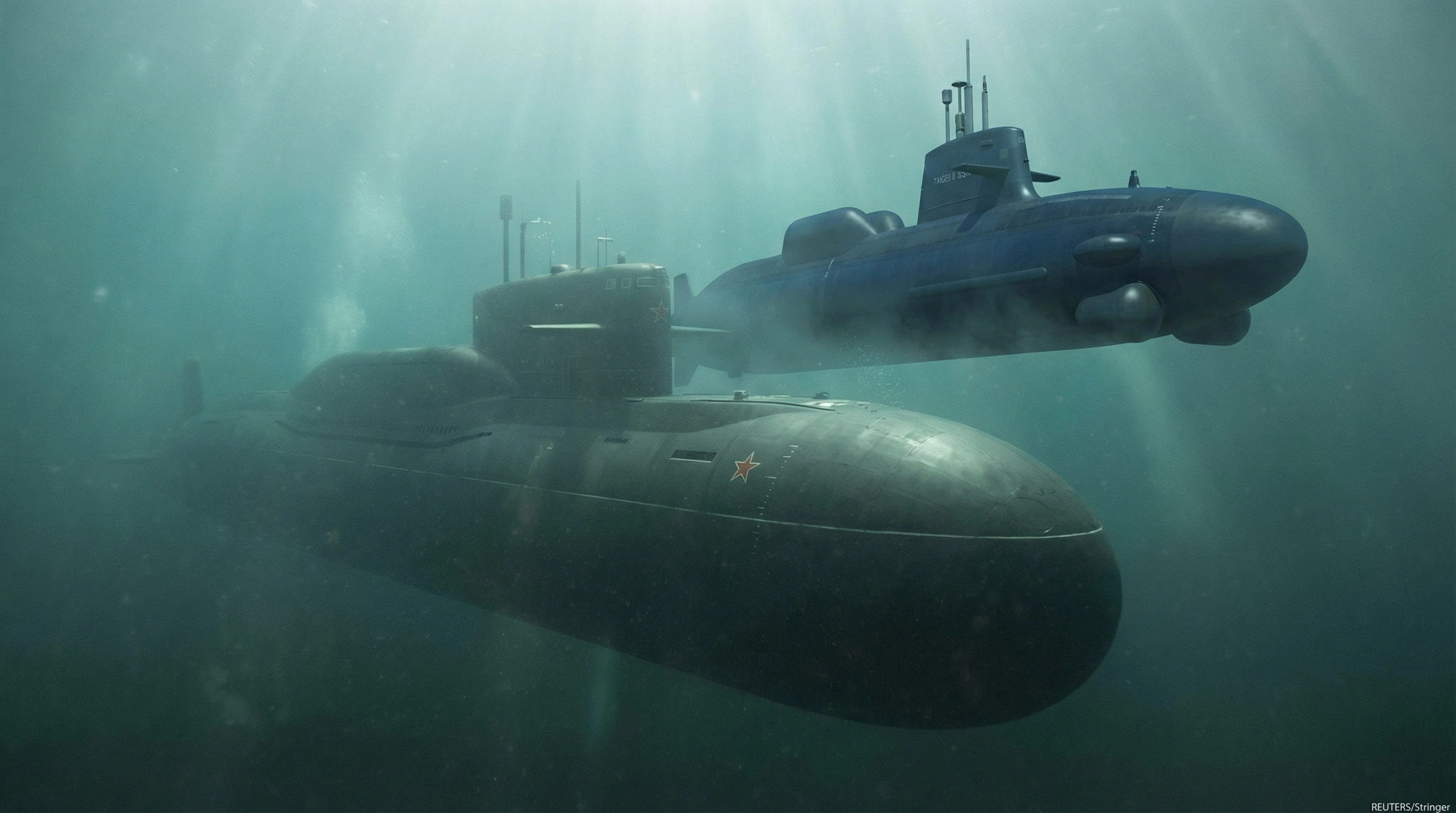
However, the mission profile is changing. Chasing Chinese nuclear ballistic missile submarines (SSBNs) into the deep Pacific or maintaining long-duration patrols in the South China Sea requires speed and endurance that batteries cannot provide. A diesel-electric submarine must eventually snorkel to recharge or resurface, creating a window of vulnerability. In contrast, a nuclear-powered attack submarine (SSN) is limited only by the endurance of its crew and food supplies. It can transit at high speeds underwater to a crisis zone—something a diesel boat, which must creep slowly to conserve battery, cannot do.
"The geography of the Pacific dictates the technology. If Tokyo wants to project power beyond the Ryukyu Islands and effectively track the expanding Chinese carrier strike groups, nuclear propulsion is not a luxury; it is a physics-based necessity."
The Catalyst: The US-ROK Precedent
The conversation in Tokyo did not happen in a vacuum. It was accelerated by the precedent set during recent U.S. diplomatic maneuvers with South Korea. The announcement that the U.S. would cooperate deeply with Seoul on nuclear submarine technology—and potentially build hulls in American shipyards like Philadelphia—shattered the assumption that Washington would hoard this technology even from its closest allies (AUKUS notwithstanding).
Japanese policymakers are now asking a difficult question: If South Korea, which faces a primary threat from the North, is moving toward nuclear capabilities, can Japan afford to remain tethered to diesel technology while facing the far more potent People's Liberation Army Navy (PLAN)? The Trump-era signals regarding burden-sharing have further emboldened voices in the Liberal Democratic Party (LDP) who argue that Japan must possess independent, high-end deterrent capabilities.
Breaking the Taboo: Domestic Politics and Industry
The hurdle for Japan is less technological and more political. Japan possesses a world-class nuclear energy sector and advanced heavy industry giants like Mitsubishi Heavy Industries and Kawasaki Heavy Industries, which already build the nation's submarine fleet. Adapting micro-reactor technology for naval use is an engineering challenge, but one well within Japan's industrial competence.
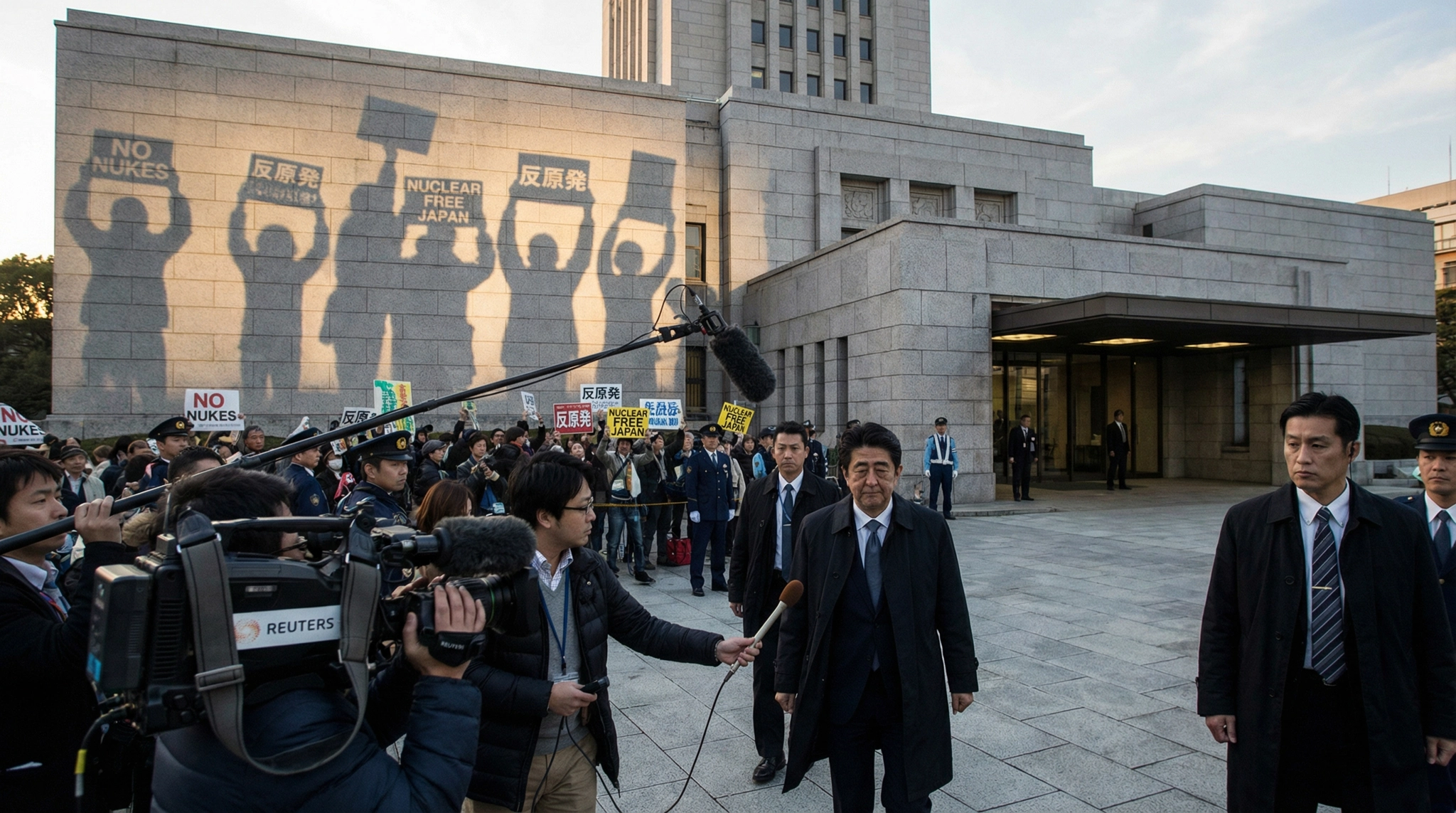
The real barrier is the "atomic allergy"—the deep-seated public aversion to military nuclear applications stemming from World War II. Japan upholds the Three Non-Nuclear Principles: not possessing, not producing, and not permitting the introduction of nuclear weapons. However, proponents argue that nuclear propulsion is distinct from nuclear weaponry. An SSN does not carry nuclear warheads; it is simply a conventionally armed vessel with a nuclear engine.
Strategic Implications for China
A fleet of Japanese SSNs would complicate Beijing's naval planning exponentially. Currently, the PLAN can estimate the endurance and range of JMSDF diesel boats. They know that Japanese submarines are formidable "goalies" defending the straits, but less effective as deep-ocean hunters.
- Denial of Sanctuary: Japanese SSNs could trail Chinese SSBNs leaving the "bastion" of the South China Sea, threatening China's second-strike nuclear capability.
- Speed of Response: In a Taiwan contingency, Japanese nuclear submarines could deploy from Yokosuka to the Taiwan Strait in a fraction of the time required for diesel boats, and arrive fully charged and ready to fight.
- AUKUS Synergy: A nuclear-equipped Japan would integrate seamlessly with U.S., British, and future Australian nuclear submarine operations, creating a standardized, high-tech underwater coalition.
The Path Forward: Microreactors and Hybrid Fleets?
The transition will likely be gradual. Defense analysts suggest Japan may first explore small modular reactors (SMRs) or microreactors, which offer safer and more compact power sources than traditional naval reactors. There is also the possibility of a mixed fleet—keeping the Taigei and Soryu classes for littoral defense while building a small cadre of SSNs for blue-water operations.
While the political debate remains explosive, the silence is broken. Japan is no longer dismissing the nuclear option out of hand. Facing a rapidly modernizing Chinese fleet and an increasingly volatile security environment, Tokyo is realizing that to preserve peace, it may need to embrace the one technology it has sworn to avoid. The era of the diesel monopoly in the Japanese Navy is drawing to a close.


Reader discussion
No comments yet. Start the discussion.
Comments are closed for this article.