
Beyond the Dogfight: The Fifth-Generation Shift
For decades, air superiority was defined by kinematics: speed, turn rate, and thrust-to-weight ratios. The Sukhoi Su-35 and the F-15 Eagle were built on the philosophy that energy management wins fights. The F-35 Lightning II represents a fundamental break from this doctrine. It is not merely a fighter jet; it is an airborne data center designed to act as the quarterback of the digital battlefield.
This analysis strips away the procurement controversies to focus on the engineering reality: the F-35 remains the only operational platform capable of penetrating high-density Anti-Access/Area Denial (A2/AD) bubbles, such as those created by Russia’s S-400 and S-500 batteries. The advantage lies not in how fast it flies, but in how it processes information.
The Architecture of Stealth: More Than Skin Deep
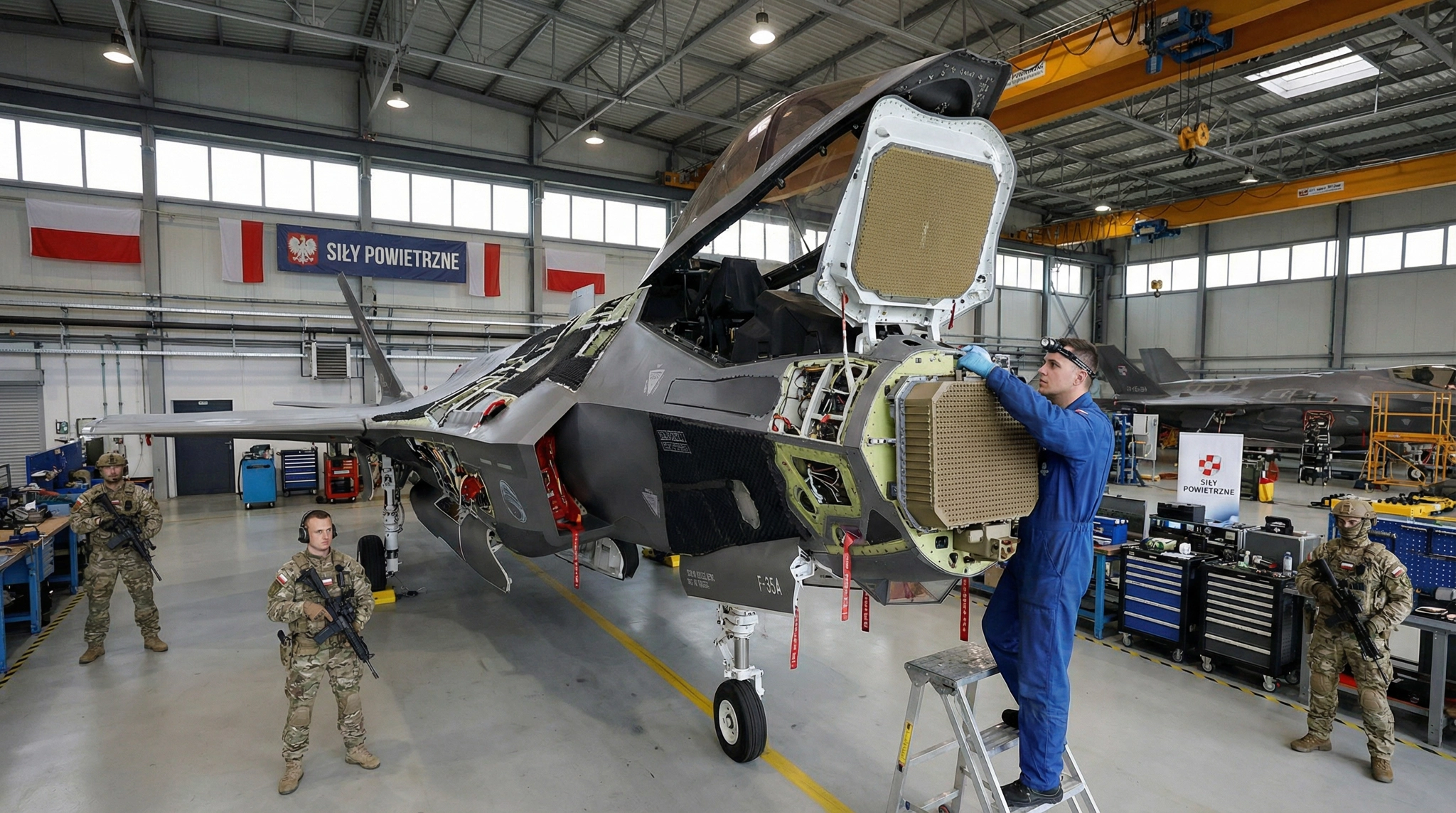
Stealth is often misunderstood as simple invisibility. In engineering terms, it is the rigorous management of the aircraft's Radar Cross Section (RCS) and infrared signature. The F-35 employs planform alignment—ensuring that leading and trailing edges of the wings and tail are parallel to scatter radar waves away from the source.
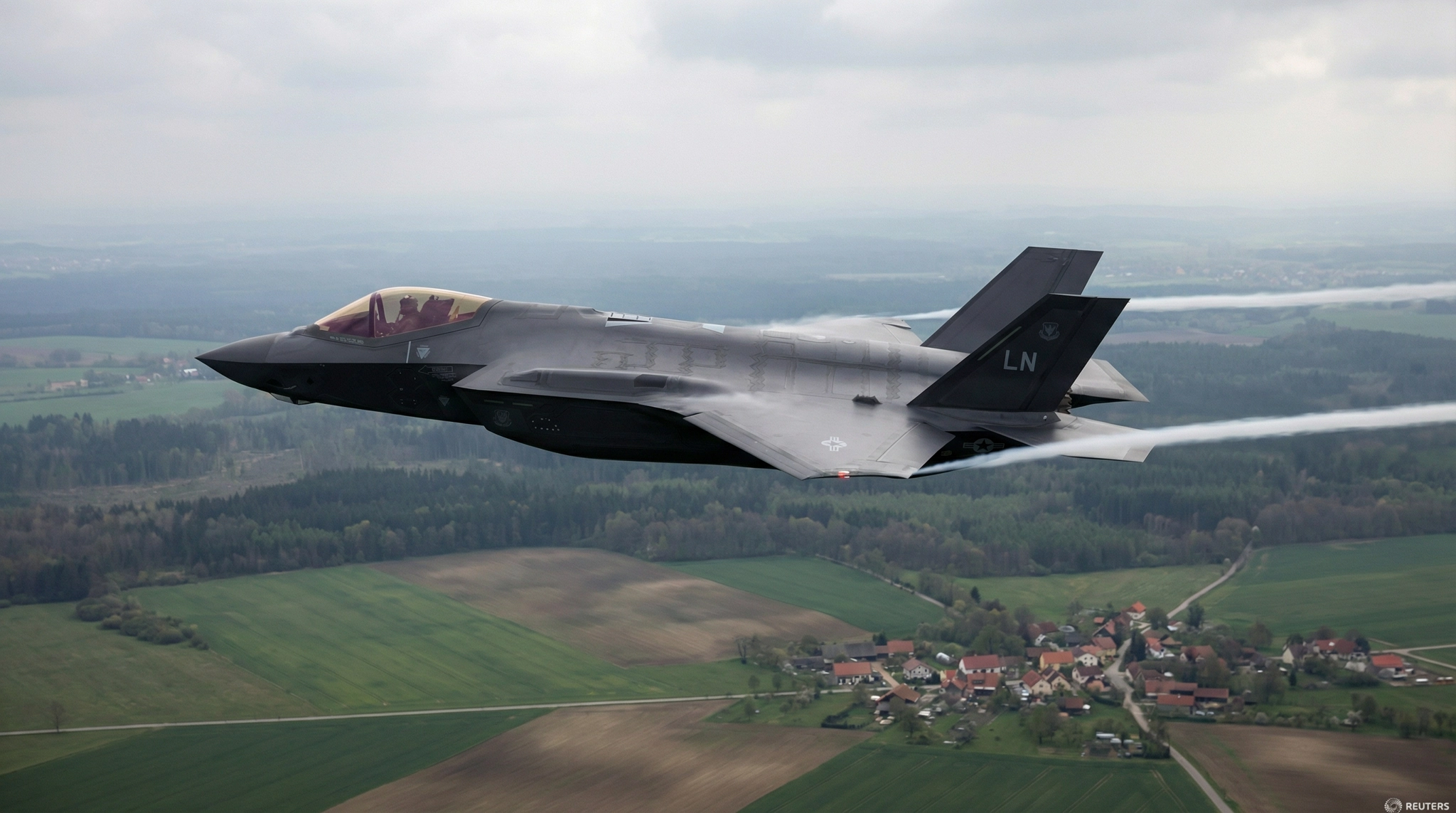
However, the critical differentiator is the embedded nature of its stealth. Unlike 4th-generation fighters that rely on external pods for targeting and electronic warfare—which significantly increase radar returns—the F-35 carries its sensors internally. The airframe utilizes advanced Radar-Absorbent Materials (RAM) baked into the composite skin, specifically tuned to absorb high-frequency X-band tracking radars used by fire control systems.
Technical Note: While lower-frequency L-band radars (often touted by Russian defense marketing) can detect the presence of stealth aircraft, they lack the resolution to provide a "weapons-grade" lock. The F-35 is engineered to remain invisible to the fire-control radars necessary to guide a missile to impact.
The AN/APG-81 AESA: Seeing Without Being Seen
At the nose of the aircraft sits the AN/APG-81 Active Electronically Scanned Array (AESA) radar. Unlike mechanical radars that physically pivot a dish, an AESA system uses over 1,000 transmit/receive modules that can steer beams electronically in milliseconds.
The critical capability here is Low Probability of Intercept (LPI) operations. Traditional radars act like a flashlight in a dark room: they illuminate the target but instantly reveal the emitter's location. The AN/APG-81 rapidly hops frequencies and modulates its power output to look like background noise to enemy Radar Warning Receivers (RWR). This allows the F-35 to track ground and air targets actively without alerting them that they are being painted.
Electronic Warfare Capabilities
The AESA radar also functions as a potent electronic warfare weapon. By focusing high-energy beams, the APG-81 can jam enemy sensors or inject cyber payloads into hostile networks. This convergence of hardware—where the radar is also the jammer and the cyber tool—drastically reduces the weight and complexity compared to legacy aircraft like the EA-18G Growler, which requires dedicated jamming pods.
Sensor Fusion: The God’s-Eye View
The most significant technical leap in the F-35 is Sensor Fusion. In a 4th-generation cockpit, a pilot must mentally correlate data from different screens: radar, radar warning receiver, and infrared search. This imposes a high cognitive load during combat.
The F-35's core processor aggregates data from three primary sources:
- The AESA Radar: Long-range active/passive detection.
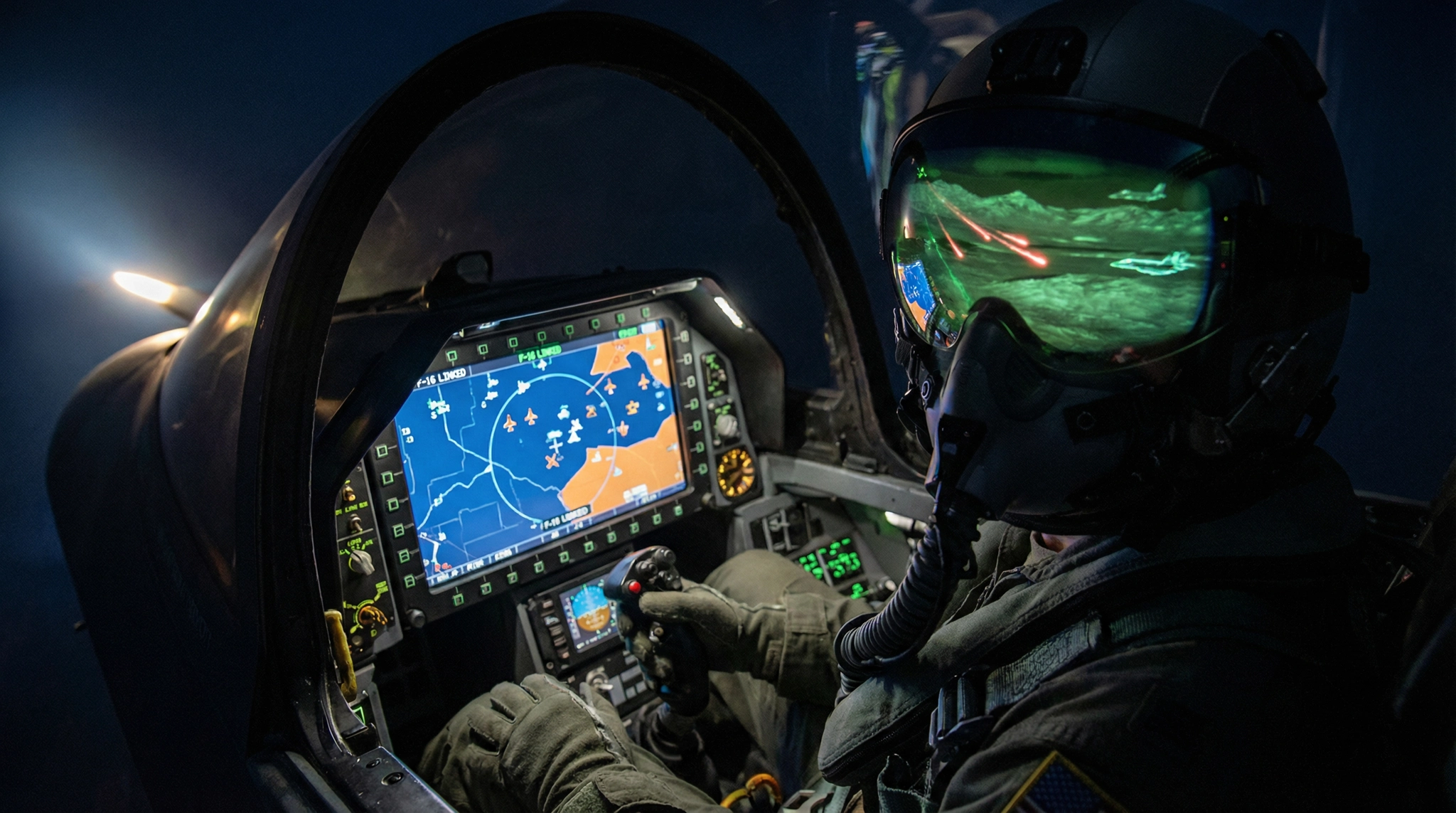
- Distributed Aperture System (DAS): Six infrared cameras mounted around the airframe providing a seamless 360-degree sphere of coverage. The DAS automatically detects missile launches and aircraft, projecting the video directly onto the pilot's helmet visor (HMD).
- Electro-Optical Targeting System (EOTS): A chin-mounted sensor combining forward-looking infrared (FLIR) and infrared search and track (IRST) for precise air-to-ground targeting without breaking stealth.
The central computer fuses these inputs into a single, intuitive picture. If the radar sees a blip, the DAS confirms it thermally, and the Electronic Support Measures (ESM) identify the radar emissions, the pilot sees a single red symbol identifying the threat type (e.g., "SA-21 Growler"). The jet automates the detection logic, allowing the pilot to focus on tactical decision-making rather than sensor management.
MADL: The Network Effect
The final pillar of the F-35’s technical dominance is the Multifunction Advanced Data Link (MADL). Legacy Link-16 systems emit omnidirectional signals that can be detected and triangulated by adversaries. MADL uses narrow, directional, high-bandwidth Ku-band beams to daisy-chain data between F-35s securely.
This creates a "wolfpack" logic. One F-35 can operate passively, keeping its radar off to remain completely silent, while another F-35 miles away illuminates the target. The data is shared instantly via MADL, allowing the silent jet to fire a missile at a target it cannot technically "see" with its own radar. This cooperative targeting capability fundamentally breaks the "OODA Loop" (Observe, Orient, Decide, Act) of Russian Integrated Air Defense Systems (IADS).
Conclusion: The Asymmetric Advantage
Technically, the F-35 is less a dogfighter and more a strategic sensor node. Its ability to vacuum up electronic emissions, process them into a coherent battlefield map, and distribute that data to older aircraft (like F-16s) or ground units (like HIMARS) changes the geometry of modern war. While critics often cite its kinematic limitations compared to the thrust-vectoring Su-57, such comparisons miss the point. In modern aerial warfare, if you are turning and burning in a visual range dogfight, the information war has already been lost. The F-35 is engineered to ensure the war never gets that close.


Reader discussion
No comments yet. Start the discussion.
Comments are closed for this article.