
On the frozen shores of Lake Baikal in early 2026, the geopolitical reality of Russia's devastating war in Ukraine is measured not in artillery shells, but in industrial-scale water extraction pipelines. As the Kremlin continues to pour its national wealth, manpower, and political capital into the grinding conflict in Eastern Europe, a profound and largely silent transformation is occurring across the vast expanse of Siberia. Driven by an insatiable need for foreign currency and diplomatic cover, Vladimir Putin is quietly executing one of the largest transfers of sovereign wealth and territorial control in modern history, effectively mortgaging deep Siberia to the People's Republic of China.
The Price of Empire: Selling the East to Fight in the West
While Western defense analysts remain laser-focused on NATO's eastern flank and the tactical realities of the Donbas, a slow-motion territorial revisionism is unfolding thousands of miles to the east. Beijing is not deploying tanks or infantry across the Amur River. Instead, it is using state-backed capital, long-term resource leases, and demographic gravity to achieve what centuries of Qing dynasty emperors could not: the functional subjugation of Russian Siberia.
This economic annexation represents a catastrophic strategic failure for the Kremlin. By sacrificing the geopolitical sovereignty of its resource-rich interior to sustain a neo-imperial adventure in Ukraine, Russia is rapidly transitioning from a great power to a vast, resource-extracting vassal state serving China's industrial ambitions.
The Aigun Reversal: Cartography and Capital
To understand the depth of Beijing's strategy in Siberia, one must look past the superficial declarations of a "no-limits partnership" and examine the historical memory of the Chinese Communist Party. For over a century, Chinese maps and nationalist discourse have quietly remembered the Treaty of Aigun (1858) and the Convention of Peking (1860)—the "unequal treaties" that ceded vast tracts of Siberia and the Russian Far East to the Tsar.
In recent years, Beijing has begun to subtly flex its cartographic muscle. Following the 2023 release of standard maps that reinstated Chinese names for Russian cities in the Far East, Chinese state media and officially sanctioned bloggers have increasingly referred to deep Siberia as a "historical zone of Chinese interest." In 2026, this rhetorical shift has manifested into aggressive economic policy.
According to recent reports from the Carnegie Russia Eurasia Center, Chinese foreign direct investment (FDI) in Russia is no longer categorized by equitable joint ventures. Instead, Chinese state-owned enterprises (SOEs) are securing exclusive, 99-year leases on millions of hectares of Siberian taiga and mineral deposits in the Sakha Republic (Yakutia). With Western sanctions completely locking Moscow out of European and American capital markets, Chinese negotiators are exacting punishing concessions.
"What we are witnessing in Siberia is not investment; it is foreclosure," notes a senior analyst at the Center for Strategic and International Studies (CSIS). "Moscow is entirely bereft of leverage. They need the yuan to purchase dual-use technologies for the war effort, and in exchange, they are handing Beijing unilateral control over the defining natural resources of the 21st century."
Timber, Water, and Rare Earths: The Mechanics of Extraction
The scale of the resource extraction is staggering, fundamentally altering the environmental and economic landscape of Siberia.
The Taiga Clearances
Chinese timber consortiums have effectively established monopolies over forestry rights in the Irkutsk and Tomsk regions. Satellite imagery analyzed by the RAND Corporation shows a 400% increase in clear-cutting operations over the past 24 months, with nearly all raw timber bypassing Russian processing facilities and heading directly south via dedicated rail links into Inner Mongolia and Heilongjiang.
Liquid Sovereignty at Lake Baikal
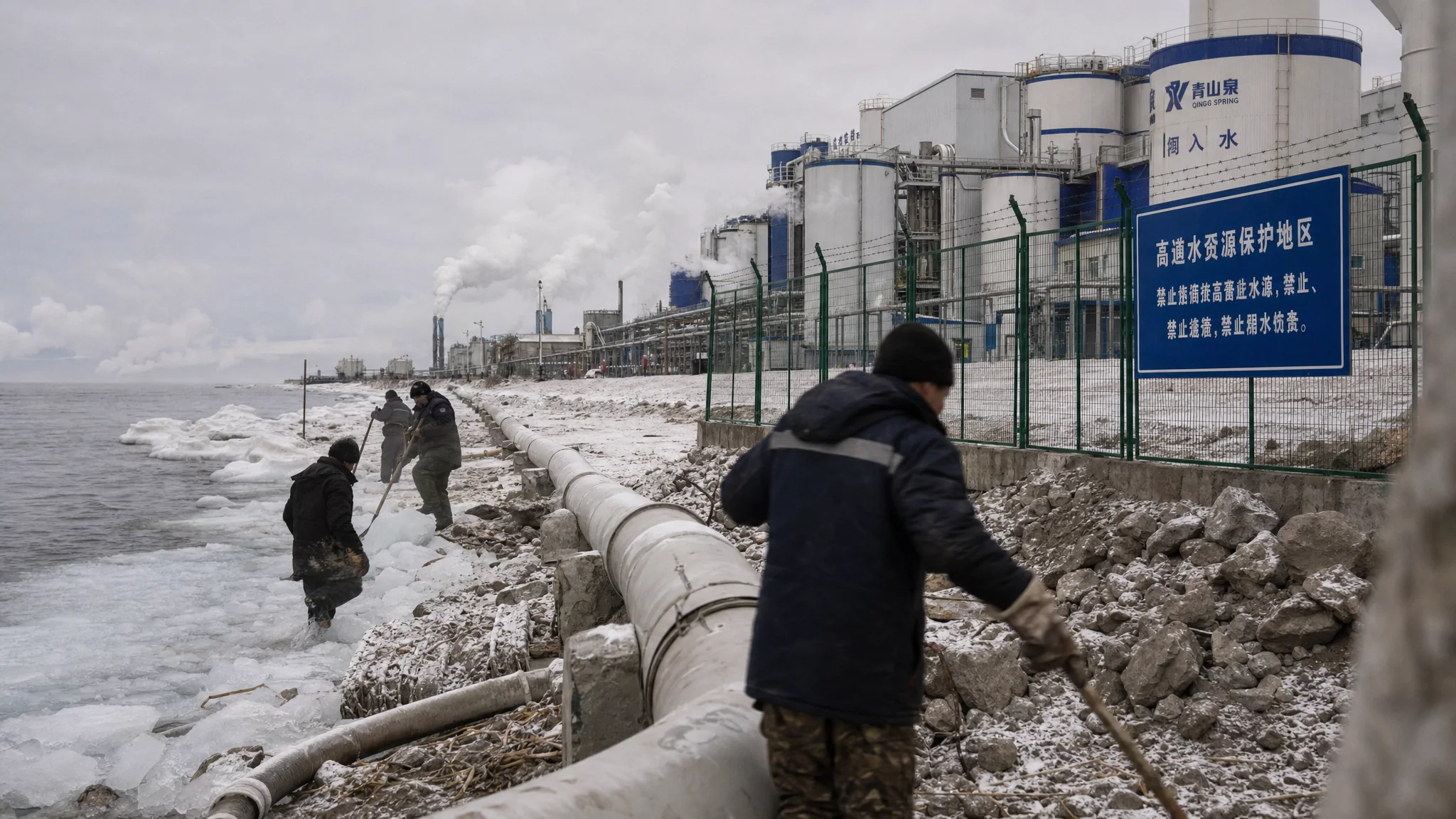
Holding 20% of the world's unfrozen freshwater, Lake Baikal has long been a sacred site for Russian environmentalists. Today, it is ringed by Chinese-owned mega-bottling plants. With Northern China facing acute, systemic water shortages, Beijing views Baikal's pristine reserves as a critical strategic asset. Under new 2025 regulatory exemptions personally approved by the Kremlin, Chinese firms are extracting millions of cubic meters of water annually with virtually no ecological oversight or taxation.
Strategic Minerals in Yakutia
As the global race for clean energy technology accelerates, Chinese mining giants have moved aggressively into Yakutia to secure lithium, cobalt, and rare earth element (REE) deposits. These extraction sites operate as sovereign Chinese enclaves. Russian inspectors are routinely denied entry, and the extracted minerals are priced well below global market rates, reflecting the predatory nature of Beijing's localized monopolies.
Demographic Gravity and the Rise of Chinese PSCs
The economic takeover of Siberia is inextricably linked to a severe demographic crisis. The war in Ukraine has accelerated the depopulation of Russia's eastern territories. Hundreds of thousands of fighting-age men from Siberian regions like Buryatia and Tuva have been disproportionately drafted and killed on the front lines. Simultaneously, educated professionals continue to flee the isolated interior for Moscow or abroad.
Into this vacuum steps a highly organized influx of Chinese migrant labor. To service the vast new timber and mining concessions, Chinese SOEs have imported tens of thousands of workers, claiming that the local Russian labor pool is insufficient to meet industrial demands. Whole towns in regions bordering Lake Baikal have seen their demographic makeup fundamentally altered, characterized by:
- Chinese-language signage in public spaces
- Localized supply chains serving foreign workers
- Distinct economic ecosystems that bypass the ruble entirely in favor of the digital yuan
More alarmingly for Russian sovereignty is the introduction of Chinese Private Security Companies (PSCs). Citing the "remoteness" of Siberian operations and the stretched capacity of Russian law enforcement—whose ranks have been depleted by deployments to occupied Ukraine—Chinese firms have begun deploying armed, state-affiliated security contractors to guard their installations.
According to intelligence assessments from the Atlantic Council, these PSCs function as an informal extension of the People's Armed Police. They control checkpoints, patrol transport corridors, and exert de facto law enforcement authority over vast swaths of Russian territory, creating extraterritorial zones where Russian law simply does not apply.
The FSB's Silent Panic and Local Backlash
The Kremlin's desperate capitulation to Beijing has not gone unnoticed by the local population, sparking a dangerous political crisis that Moscow is struggling to suppress. In Irkutsk, Ulan-Ude, and Yakutsk, 2025 and early 2026 saw an unprecedented wave of localized protests. Russian citizens, enraged by the environmental devastation of their forests and the blatant arrogance of Chinese corporate managers, have taken to the streets in defiance of wartime anti-dissent laws.
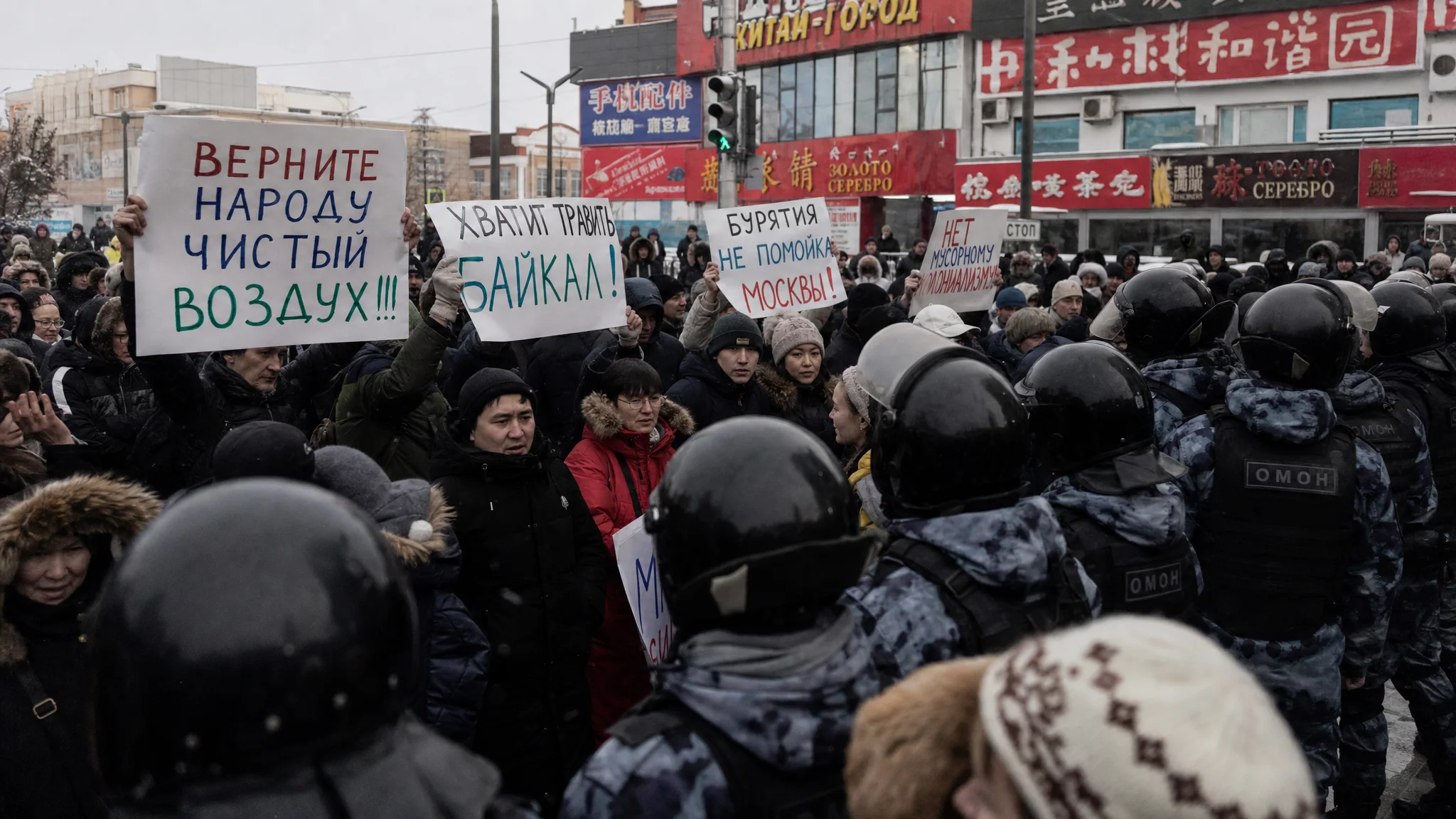
These protests place the Kremlin in an agonizing bind. To maintain the vital flow of Chinese dual-use components and financial lifelines, Putin must guarantee a frictionless environment for Beijing's extraction operations. Consequently, Moscow has deployed OMON riot police to violently crush local Russian environmentalists and nationalists who dare to complain about Chinese encroachment. The optic of Russian state security forces beating Russian citizens to protect Chinese corporate profits has deeply fractured the Kremlin's domestic patriotic narrative.
Within the halls of the FSB, this dynamic is generating acute, albeit silent, panic. Leaked intelligence summaries obtained by European investigative journalists indicate that regional FSB directors in the Siberian Federal District have repeatedly warned the Security Council about the loss of territorial integrity. These memos reportedly describe the situation as a "creeping annexation," warning that the integration of Siberian infrastructure into the Chinese economy has passed the point of reversibility.
"The local population increasingly views Moscow not as a protector, but as an occupying administration facilitating foreign plunder," one purported FSB assessment noted. Yet, these warnings fall on deaf ears in a Kremlin where short-term survival in Ukraine trumps the long-term survival of the Russian Federation.
Conclusion: The Architecture of Vassalage
The tragedy of Russia's strategic posture in 2026 is defined by a supreme geopolitical irony. In its obsessive, blood-soaked quest to subjugate Ukraine and push back against a perceived Western threat, the Kremlin has voluntarily surrendered the crown jewels of its sovereign wealth to an authoritarian neighbor with deep pockets and a long memory.
Beijing's strategy in Siberia is a masterclass in modern, asymmetric statecraft. Without firing a single shot or triggering a diplomatic crisis, China has secured the natural resources necessary to fuel its superpower ambitions for the next century, while simultaneously turning a heavily armed neighbor into a permanently dependent tributary state.
As the conflict in Europe drags on, the map of Asia is being quietly redrawn. The true legacy of Vladimir Putin will not be the ruins of Donbas villages or the expansion of Russia's western borders. Rather, it will be the hollowing out of the Russian interior—the transformation of Siberia into a Chinese resource colony, and the permanent relegation of the Russian Federation to the status of Beijing's northern vassal.


Reader discussion
No comments yet. Start the discussion.
Comments are closed for this article.