
February 24, 2026. Today marks exactly four years since Russian tanks rolled across the border in a "special military operation" that the Kremlin envisioned as a seventy-two-hour regime change. Instead, the world is witnessing the dawn of the war's fifth year—a grinding, transformative conflict that has irrevocably altered the global order, rewritten military doctrine, and severed Russia from the West for generations.
What began as a localized attempt to extinguish Ukrainian sovereignty has metastasized into the defining geopolitical struggle of the 21st century. The war has revitalized NATO, exposed the hollowness of Russia’s conventional military pretentions, and accelerated a technological revolution in warfare that is being studied in war colleges from West Point to Beijing.
The Death of the Post-Cold War Order
For three decades following the Soviet collapse, European security was predicated on the assumption that economic interdependence would prevent major continental war. That illusion shattered four years ago. The Europe of 2026 is fundamentally different from the Europe of early 2022.
The continent has rearmed at a pace unseen since the 1950s. Defense budgets across NATO have surged, with Poland spending nearly 5% of its GDP on defense and the Baltic states transforming into armed fortresses. The accession of Finland and Sweden has turned the Baltic Sea into a "NATO Lake," strategically isolating Russia's St. Petersburg hub—a geopolitical disaster for Moscow that was entirely self-inflicted.
"The strategic map of Europe hasn't just been adjusted; it has been redrawn," notes Dr. Elena Cote of the Atlantic Council. "The buffer zones are gone. The grey zones are gone. There is now a hard line running from the Arctic to the Black Sea."
The First Drone War
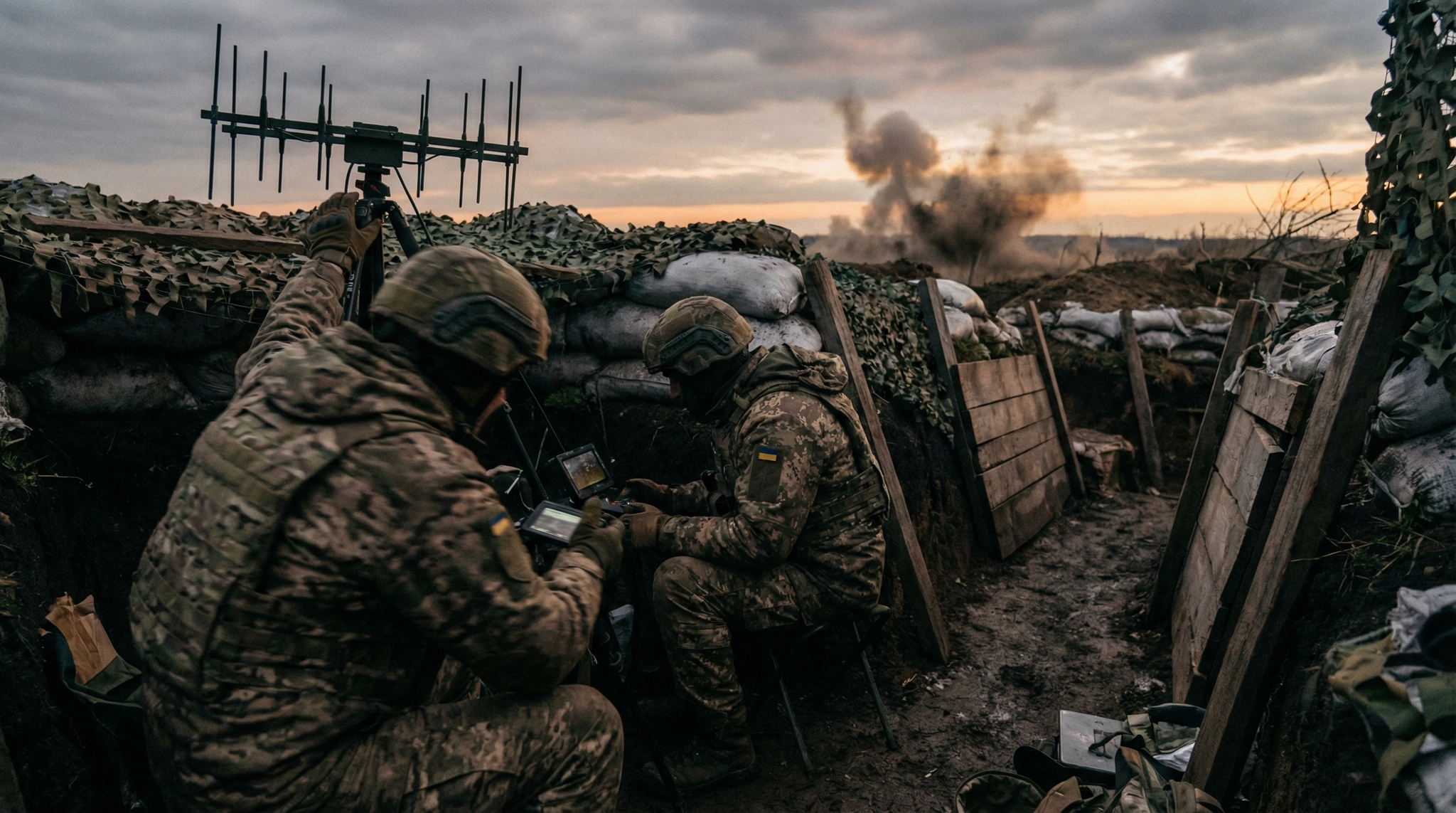
If the 2022 invasion began with 20th-century tank columns, the war in 2026 is defined by 21st-century robotics. Over four years, Ukraine has become the world's premier laboratory for autonomous warfare. The evolution has been staggering:
- Year 1 (2022): The era of the Bayraktar TB2 and commercial quadcopters used for simple surveillance.
- Year 2 (2023): The rise of FPV (First Person View) suicide drones challenging artillery dominance.
- Year 3 (2024-25): The integration of AI targeting to overcome electronic warfare (EW) jamming.
- Year 4 (2025-26): The deployment of autonomous drone swarms and unmanned ground vehicles (UGVs) for logistics and medevac.
Military analysts at RUSI estimate that 70% of armored vehicle losses on both sides in the last twelve months were caused by FPV drones rather than traditional anti-tank guided missiles or tank-on-tank fire. This shift has rendered traditional massed armor tactics obsolete, forcing a rethink of force structure in every major military worldwide.
Russia: The Fortress Siege Economy
Internally, the Russia of 2026 bears little resemblance to the autocracy of 2022. It has transitioned into a totalitarian war state. As our recent coverage on labor shortages highlighted, the Kremlin has cannibalized its civilian economy to feed the military-industrial complex.
While sanctions failed to induce an immediate collapse, they have caused a slow, agonizing sclerosis. Russia has lost its primary energy market in Europe—a relationship built over fifty years—and is now entirely dependent on China for technology and capital. The Kremlin's reliance on rogue states has deepened, with North Korean artillery shells and Iranian drones becoming the backbone of Russian firepower.
The social contract has also shifted. The "passive neutrality" of the Russian public has been replaced by a grim mobilization. With hundreds of thousands of casualties, the war is no longer a distant television event but a pervasive reality in every region from Karelia to Kamchatka.
Ukraine’s Resilience and the Long War
For Ukraine, the four-year mark is a testament to existential resilience. Despite massive infrastructure damage and demographic displacement, the state functions, the army fights, and the society remains mobilized.
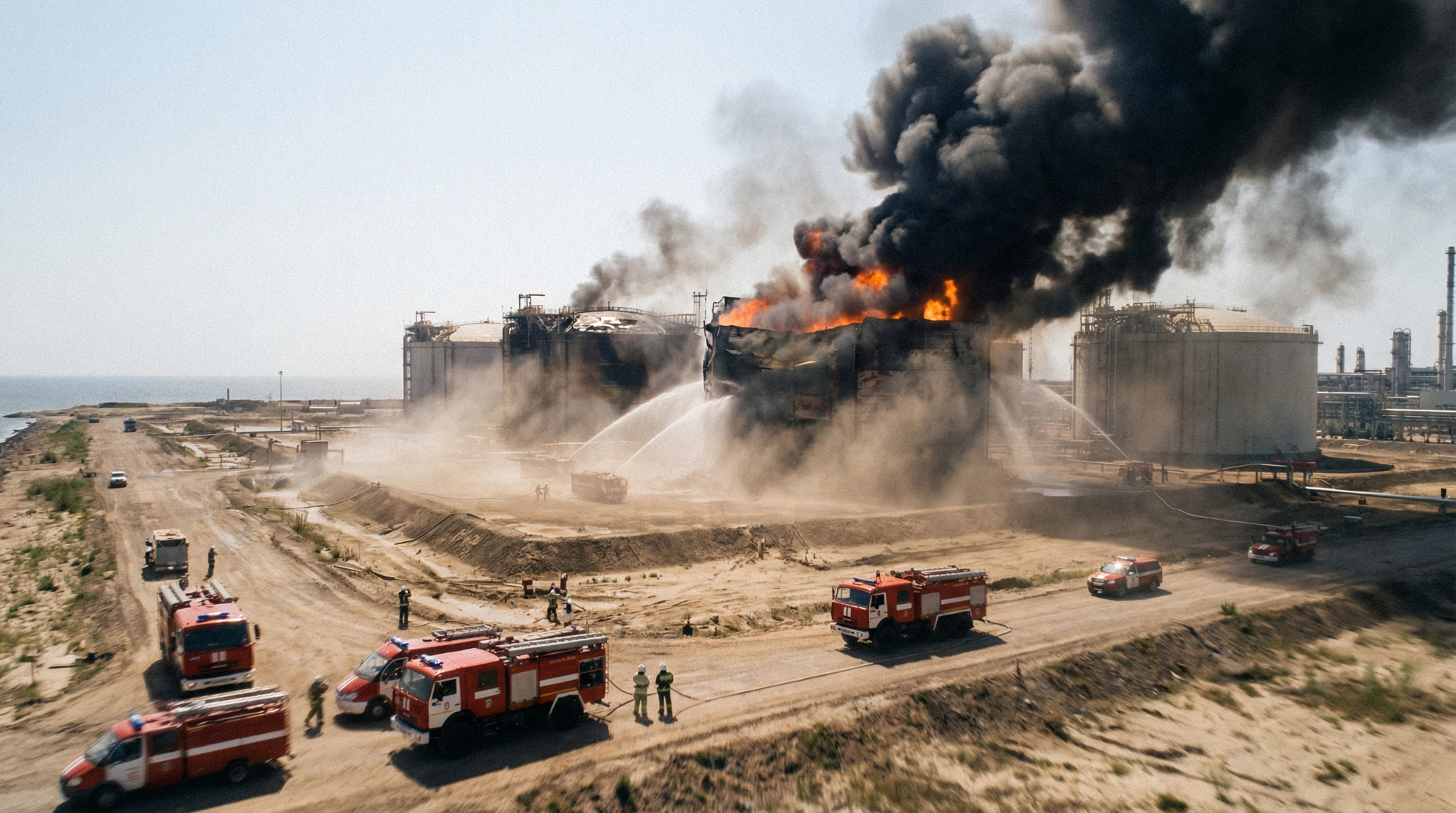
Kyiv has transitioned from seeking rapid liberation to a strategy of "active defense" and deep strikes—taking the war to Russian oil refineries, airfields, and command centers hundreds of kilometers behind the front lines.
However, the challenges remain immense. Fatigue is a tangible factor. The West's ability to sustain ammunition supplies has improved with the ramping up of production in the US and EU, but political cohesion remains the center of gravity. Moscow is betting that Western resolve will fracture before the Russian economy implodes.
Conclusion: No Return to Status Quo Ante
As we enter the fifth year, one reality is stark: there is no "off-ramp" that leads back to the world of January 2022. The trust required for diplomatic normalization is non-existent. The security architecture of Europe is now defined by containment and deterrence, not engagement.
The war in Ukraine has ceased to be merely a regional conflict; it is the fulcrum upon which the future of global security rests. Whether this fifth year brings a decisive breakthrough or continues the grinding attrition, the legacy of these four years is already written in the remilitarization of the West and the permanent estrangement of Russia from the civilized world.


Reader discussion
No comments yet. Start the discussion.
Comments are closed for this article.